

Healthy Life

A healthy lifestyle can help you thrive as you move through your life’s journey. Making healthy choices isn’t always easy – it can be hard to find the time and energy to exercise regularly or prepare healthy meals. However, your efforts will pay off in many ways, and for the rest of your life.
Steps you can take:
- Be physically active for 30 minutes most days of the week. Break this up into three 10-minute sessions when pressed for time. Healthy movement may include walking, sports, dancing, yoga or running.
- Eat a well-balanced, low-fat diet with lots of fruits, vegetables, and whole grains. Choose a diet that’s low in saturated fat and cholesterol, and moderate in sugar, salt and total fat.
- Avoid injury by wearing seatbelts and bike helmets, using smoke and carbon monoxide detectors in the home, and using street smarts when walking alone. If you own a gun, recognize the dangers of having a gun in your home. Use safety precautions at all times.
- Don’t smoke, and quit if you do. Ask your health care provider for help. UCSF offers a smoking cessation program.
- If you drink alcohol, drink in moderation. Never drink before or when driving, or when pregnant.
- Ask someone you trust for help if you think you might be addicted to drugs or alcohol.
- Help prevent sexually transmitted infections (STIs) and HIV/AIDS by using condoms every time you have sexual contact. Keep in mind, condoms are not 100 percent foolproof, so discuss STI screening with your provider. Birth control methods other than condoms, such as pills and implants, won’t protect you from STIs or HIV.
- Brush your teeth after meals with a soft or medium bristled toothbrush. Also brush after drinking, before going to bed. Use dental floss daily.
- Stay out of the sun, especially between 10 a.m. and 3 p.m. when the sun’s harmful rays are strongest. Don’t think you are safe if it is cloudy or if you are in the water, as harmful rays pass through both. Use a broad spectrum sunscreen that guards against both UVA and UVB rays, with a sun protection factor (SPF) of 15 or higher. Select sunglasses that block 99 to 100 percent of the sun’s rays.
Healthy Outlook
You may feel pulled in different directions and experience stress from dealing with work, family and other matters, leaving little time for yourself. Learning to balance your life with some time for yourself will pay off with big benefits – a healthy outlook and better health.
Steps you can take:
- Stay in touch with family and friends.
- Be involved in your community.
- Maintain a positive attitude and do things that make you happy.
- Keep your curiosity alive. Lifelong learning is beneficial to your health.
- Healthy intimacy takes all forms but is always free of coercion.
- Learn to recognize and manage stress in your life. Signs of stress include trouble sleeping, frequent headaches and stomach problems; being angry a lot; and turning to food, drugs and alcohol to relieve stress.
Good ways to deal with stress include regular exercise, healthy eating habits, and relaxation exercises such as deep breathing or meditation. Talking to trusted family members and friends can help a lot. Some women find that interacting with their faith community is helpful in times of stress.
- Get enough sleep and rest – adults need around eight hours of sleep a night.
- Talk to your health care provider if you feel depressed for more than a few days. Depression is a treatable illness. Signs of depression include feeling empty and sad, crying a lot, loss of interest in life, and thoughts of death or suicide. If you or someone you know has thoughts of suicide, get help right away.
Behavior Modification Ideas for Weight Management

Weight management involves adopting a healthy lifestyle that includes a knowledge of nutrition and exercise, a positive attitude and the right kind of motivation. Internal motives such as better health, increased energy, self-esteem and personal control increase your chances of lifelong weight management success.
Remember to have realistic goals and think long-term success. Believe in yourself and you can do it. The following information will give you ideas to help you meet your goals.
Control Your Home Environment
- Eat only while sitting down at the kitchen or dining room table. Do not eat while watching television, reading, cooking, talking on the phone, standing at the refrigerator or working on the computer.
- Keep tempting foods out of the house — don’t buy them.
- Keep tempting foods out of sight. Have low-calorie foods ready to eat.
- Unless you are preparing a meal, stay out of the kitchen.
- Have healthy snacks at your disposal, such as small pieces of fruit, vegetables, canned fruit, pretzels, low-fat string cheese and nonfat cottage cheese.
- Do not eat at your desk or keep tempting snacks at your desk.
- If you get hungry between meals, plan healthy snacks and bring them with you to work.
- During your breaks, go for a walk instead of eating.
- If you work around food, plan in advance the one item you will eat at mealtime.
- Make it inconvenient to nibble on food by chewing gum, sugarless candy or drinking water or another low-calorie beverage.
- Do not work through meals. Skipping meals slows down metabolism and may result in overeating at the next meal.
- If food is available for special occasions, either pick the healthiest item, nibble on low-fat snacks brought from home, don’t have anything offered, choose one option and have a small amount, or have only a beverage.
Control Your Mealtime Environment
- Serve your plate of food at the stove or kitchen counter. Do not put the serving dishes on the table. If you do put dishes on the table, remove them immediately when finished eating.
- Fill half of your plate with vegetables, a quarter with lean protein and a quarter with starch.
- Use smaller plates, bowls and glasses. A smaller portion will look large when it is in a little dish.
- Politely refuse second helpings.
- When fixing your plate, limit portions of food to one scoop/serving or less.
Daily Food Management
- Replace eating with another activity that you will not associate with food.
- Wait 20 minutes before eating something you are craving.
- Drink a large glass of water or diet soda before eating.
- Always have a big glass or bottle of water to drink throughout the day.
- Avoid high-calorie add-ons such as cream with your coffee, butter, mayonnaise and salad dressings.
Shopping
- Do not shop when hungry or tired.
- Shop from a list and avoid buying anything that is not on your list.
- If you must have tempting foods, buy individual-sized packages and try to find a lower-calorie alternative.
- Don’t taste test in the store.
- Read food labels. Compare products to help you make the healthiest choices.
Preparation
- Chew a piece of gum while cooking meals.
- Use a quarter teaspoon if you taste test your food.
- Try to only fix what you are going to eat, leaving yourself no chance for seconds.
- If you have prepared more food than you need, portion it into individual containers and freeze or refrigerate immediately.
- Don’t snack while cooking meals.
Eating
- Eat slowly. Remember it takes about 20 minutes for your stomach to send a message to your brain that it is full. Don’t let fake hunger make you think you need more.
- The ideal way to eat is to take a bite, put your utensil down, take a sip of water, cut your next bite, take a bit, put your utensil down and so on.
- Do not cut your food all at one time. Cut only as needed.
- Take small bites and chew your food well.
- Stop eating for a minute or two at least once during a meal or snack. Take breaks to reflect and have conversation.
Cleanup and Leftovers
- Label leftovers for a specific meal or snack.
- Freeze or refrigerate individual portions of leftovers.
- Do not clean up if you are still hungry.
Eating Out and Social Eating
- Do not arrive hungry. Eat something light before the meal.
- Try to fill up on low-calorie foods, such as vegetables and fruit, and eat smaller portions of the high-calorie foods.
- Eat foods that you like, but choose small portions.
- If you want seconds, wait at least 20 minutes after you have eaten to see if you are actually hungry or if your eyes are bigger than your stomach.
- Limit alcoholic beverages. Try a soda water with a twist of lime.
- Do not skip other meals in the day to save room for the special event.
At Restaurants
- Order à la carte rather than buffet style.
- Order some vegetables or a salad for an appetizer instead of eating bread.
- If you order a high-calorie dish, share it with someone.
- Try an after-dinner mint with your coffee. If you do have dessert, share it with two or more people.
- Don’t overeat because you do not want to waste food. Ask for a doggie bag to take extra food home.
- Tell the server to put half of your entree in a to go bag before the meal is served to you.
- Ask for salad dressing, gravy or high-fat sauces on the side. Dip the tip of your fork in the dressing before each bite.
- If bread is served, ask for only one piece. Try it plain without butter or oil. At Italian restaurants where oil and vinegar is served with bread, use only a small amount of oil and a lot of vinegar for dipping.
At a Friend’s House
- Offer to bring a dish, appetizer or dessert that is low in calories.
- Serve yourself small portions or tell the host that you only want a small amount.
- Stand or sit away from the snack table. Stay away from the kitchen or stay busy if you are near the food.
- Limit your alcohol intake.
At Buffets and Cafeterias
- Cover most of your plate with lettuce and/or vegetables.
- Use a salad plate instead of a dinner plate.
- After eating, clear away your dishes before having coffee or tea.
Entertaining at Home
- Explore low-fat, low-cholesterol cookbooks.
- Use single-serving foods like chicken breasts or hamburger patties.
- Prepare low-calorie appetizers and desserts.
Holidays
- Keep tempting foods out of sight.
- Decorate the house without using food.
- Have low-calorie beverages and foods on hand for guests.
- Allow yourself one planned treat a day.
- Don’t skip meals to save up for the holiday feast. Eat regular, planned meals.
Exercise Well
- Make exercise a priority and a planned activity in the day.
- If possible, walk the entire or part of the distance to work.
- Get an exercise buddy. Go for a walk with a colleague during one of your breaks, go to the gym, run or take a walk with a friend, walk in the mall with a shopping companion.
- Park at the end of the parking lot and walk to the store or office entrance.
- Always take the stairs all of the way or at least part of the way to your floor.
- If you have a desk job, walk around the office frequently.
- Do leg lifts while sitting at your desk.
- Do something outside on the weekends like going for a hike or a bike ride.
Have a Healthy Attitude
- Make health your weight management priority.
- Be realistic. Have a goal to achieve a healthier you, not necessarily the lowest weight or ideal weight based on calculations or tables.
- Focus on a healthy eating style, not on dieting. Dieting usually lasts for a short amount of time and rarely produces long-term success.
- Think long term. You are developing new healthy behaviors to follow next month, in a year and in a decade.
Body Mass Index Chart

Body Mass Index (BMI)
Body mass index (BMI) is a tool that healthcare providers use to estimate the amount of body fat by using your height and weight measurements. It can help assess risk factors for certain health conditions. The BMI isn’t always an accurate representation of body fatness.
What is body mass index (BMI)?
Body mass index (BMI) is a medical screening tool that measures the ratio of your height to your weight to estimate the amount of body fat you have. Healthcare providers calculate BMI by using weight in kilograms (kg) divided by the square of height in meters (m2).
In most people, BMI correlates to body fat — the higher the number, the more body fat you may have — but it’s not accurate in some cases. BMI alone doesn’t diagnose health. Healthcare providers use BMI and other tools and tests to assess someone’s health status and risks.
High body fat may lead to heart disease, stroke and Type 2 diabetes. Low body fat may be related to malnutrition. Just the right amount of body fat helps vitamins and minerals get into your body. It also provides a source of energy for your body, helps maintain body temperature and protects your organs.
You shouldn’t use the standard BMI chart to evaluate a child’s or teenager’s weight. Talk to your child’s healthcare provider about the optimum weight range for their age and height.
What is BMI used for?
Healthcare providers use BMI to help diagnose weight types and as a screening tool for certain health conditions.
Diagnosing weight types with BMI
In general, the following BMI ranges (in kg/m2) classify different weight types:
- Underweight: Less than 18.5
- Optimum range: 18.5 to 24.9
- Overweight: 25 to 29.9
- Class I obesity: 30 to 34.9
- Class II obesity: 35 to 39.9
- Class III obesity: More than 40
BMI isn’t the only tool providers use to classify weight types. Other tools include:
- Measuring waist circumference
- Measuring skin thickness using skinfold calipers in certain areas of your body, such as the back of your upper arms and under your shoulder blades
- DEXA scan and air displacement plethysmography (ADP) — these are used less often
Screening for health risks with BMI
If you have a BMI less than 18.5 (underweight), you may be at a higher risk for developing the following conditions:
- Malnutrition
- Anemia
- Weakened immune system, which could lead to more frequent infections and illnesses
- Osteoporosis
- Infertility
If you have underweight, your healthcare provider will likely order certain blood tests and other tests to check your overall health and to see if you’re malnourished.
In general, the higher your BMI, the higher your risk for the following conditions:
- Heart disease
- High blood pressure (hypertension)
- Type 2 diabetes
- Gallstones
- Osteoarthritis
- Sleep apnea
- Certain cancers, including colon, breast, endometrial and gallbladder
- Depression and other mental health conditions
It’s important to remember that you could have any of the above health conditions without having a high BMI. Similarly, you could have a high BMI without having any of these conditions. Genetics and other factors, such as smoking cigarettes, play a large role in the development of these conditions.
If your BMI reveals you may have obesity, your provider will likely order certain blood tests to check your general health, such as a comprehensive metabolic panel and lipid panel.
How do I calculate my BMI?
You can calculate BMI yourself with these steps:
- Multiply your weight in pounds by 703.
- Divide that answer by your height in inches (there are 12 inches in 1 foot).
- Divide that answer by your height in inches again.
For example, a person who weighs 180 lbs. and is 5 feet and 5 inches tall (65 inches total) would calculate their BMI in the following way:
- 180 x 703 = 126,540
- 126,540 / 65 = 1,946.769
- 1,946.769 / 65 = 29.95
Their BMI would be 29.9.
What is a healthy BMI?
The optimum range for a healthy BMI is considered to be 18.5 to 24.9.
It’s important to remember that body fatness isn’t the only determiner of overall health. Several other factors, such as genetics, activity level, smoking cigarettes or using tobacco, drinking alcohol and mental health conditions all affect your overall health and your likelihood of developing certain medical conditions.
What are the limitations of BMI?
The standard BMI chart has limitations for various reasons. Because of this, it’s important to not put too much emphasis on your BMI.
Even though the BMI chart can be inaccurate for certain people, healthcare providers still use it because it’s the quickest tool for assessing a person’s estimated body fat amount.
Limitations of using BMI to help diagnose weight types
The standard BMI has limitations in regards to diagnosing weight types, including:
- BMI doesn’t differentiate between lean body mass (the weight of everything in your body except fat) and fat mass. Because of this, a person can have a high BMI (by being muscular) but still have a very low fat mass and vice versa.
- The same BMI chart is used for males and females even though adult females typically have more body fat than adult males.
- The BMI chart hasn’t been adjusted for the increasing average adult height over the years.
You shouldn’t use the standard BMI chart to assess the amount of body fat of the following populations:
- Athletes and bodybuilders
- Children and teenagers
- Anyone who’s pregnant
- Anyone over the age of 65
- People who have muscle atrophy (wasting) due to medical conditions
Limitations of using BMI as a screening tool for health conditions
The BMI as a screening tool for assessing the risk of certain health conditions, such as Type 2 diabetes and heart disease, has some limitations, including:
- The BMI doesn’t measure the location or distribution of body fat. This is an issue because excess fat accumulation in certain areas of your body, such as in your belly (abdomen), is associated with a higher risk of health conditions than excess fat accumulation in other areas of your body, such as in your thighs.
- The relationship between BMI and rate of death often doesn’t account for such factors as family history of diabetes, high blood pressure, cardiovascular disease and high cholesterol (dyslipidemia), familial longevity (average lifespan) or family history of cancer.
Guidelines for Losing Weight

Since food equals calories, in order to lose weight you must either eat fewer calories, exercise more to burn off calories with activity, or both. Food that is not used to fuel the body is stored as fat.
A major component of losing weight is to make smarter food choices. Here’s how:
Limit non-nutritious foods, such as:
- Sugar, honey, syrups and candy
- Pastries, donuts, pies, cakes and cookies
- Soft drinks, sweetened juices and alcoholic beverages
Cut down on high-fat foods by:
- Choosing poultry, fish or lean red meat
- Choosing low-fat cooking methods, such as baking, broiling, steaming, grilling and boiling
- Using low-fat or non-fat dairy products
- Using vinaigrette, herbs, lemon or fat-free salad dressings
- Avoiding fatty meats, such as bacon, sausage, franks, ribs and luncheon meats
- Avoiding high-fat snacks like nuts, chips and chocolate
- Avoiding fried foods
- Using less butter, margarine, oil and mayonnaise
- Avoiding high-fat gravies, cream sauces and cream-based soups
Eat a variety of foods, including:
- Fruit and vegetables that are raw, steamed or baked
- Whole grains, breads, cereal, rice and pasta
- Dairy products, such as low-fat or non-fat milk or yogurt, low-fat cottage cheese and low-fat cheese
- Protein-rich foods like chicken, turkey, fish, lean meat and legumes, or beans
Change your eating habits:
- Eat three balanced meals a day to help control your hunger
- Watch portion sizes and eat small servings of a variety of foods
- Choose low-calorie snacks
- Eat only when you are hungry and stop when you are satisfied
- Eat slowly and try not to perform other tasks while eating
- Find other activities to distract you from food, such as walking, taking up a hobby or being involved in the community
- Include regular exercise in your daily routine
- Find a support group, if necessary, for emotional support in your weight loss effort
Guidelines for a Low Cholesterol, Low Saturated Fat Diet

Fat
- Limit total intake of fats and oils.
- Avoid butter, stick margarine, shortening, lard, palm and coconut oils.
- Limit mayonnaise, salad dressings, gravies and sauces, unless they are homemade with low-fat ingredients.
- Limit chocolate.
- Choose low-fat and nonfat products, such as low-fat mayonnaise, low-fat or non-hydrogenated peanut butter, low-fat or fat-free salad dressings and nonfat gravy.
- Use vegetable oil, such as canola or olive oil.
- Look for margarine that does not contain trans fatty acids.
- Use nuts in moderate amounts.
- Read ingredient labels carefully to determine both amount and type of fat present in foods. Limit saturated and trans fats.
- Avoid high-fat processed and convenience foods.
Meats and Meat Alternatives
- Choose fish, chicken, turkey and lean meats.
- Use dried beans, peas, lentils and tofu.
- Limit egg yolks to three to four per week.
- If you eat red meat, limit to no more than three servings per week and choose loin or round cuts.
- Avoid fatty meats, such as bacon, sausage, franks, luncheon meats and ribs.
- Avoid all organ meats, including liver.
Dairy
- Choose nonfat or low-fat milk, yogurt and cottage cheese.
- Most cheeses are high in fat. Choose cheeses made from non-fat milk, such as mozzarella and ricotta cheese.
- Choose light or fat-free cream cheese and sour cream.
- Avoid cream and sauces made with cream.
Fruits and Vegetables
- Eat a wide variety of fruits and vegetables.
- Use lemon juice, vinegar or “mist” olive oil on vegetables.
- Avoid adding sauces, fat or oil to vegetables.
Breads, Cereals and Grains
- Choose whole-grain breads, cereals, pastas and rice.
- Avoid high-fat snack foods, such as granola, cookies, pies, pastries, doughnuts and croissants.
Cooking Tips
- Avoid deep fried foods.
- Trim visible fat off meats and remove skin from poultry before cooking.
- Bake, broil, boil, poach or roast poultry, fish and lean meats.
- Drain and discard fat that drains out of meat as you cook it.
- Add little or no fat to foods.
- Use vegetable oil sprays to grease pans for cooking or baking.
- Steam vegetables.
- Use herbs or no-oil marinades to flavor foods.
Living Without Violence in Society: Causes, Effects, and Practical Solutions
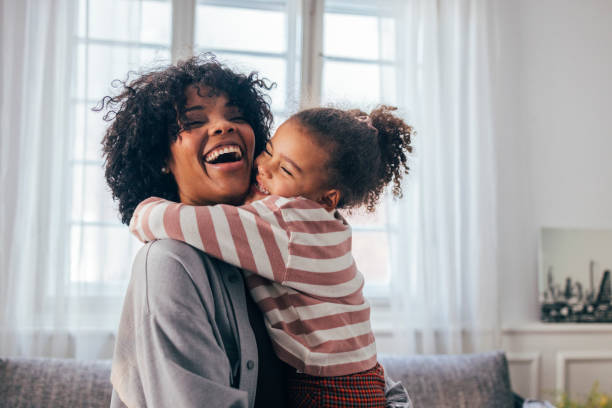
Violence is one of the biggest challenges facing societies today. It affects individuals, weakens communities, and destroys the sense of safety that every human being deserves. To build a peaceful society, we must understand the roots of violence and work together on realistic solutions.
1. Causes of Violence
Before finding solutions, it is important to understand what leads to violent behavior:
*Lack of communication and conflict-resolution skills.
*Family problems and domestic abuse.
*Poverty and unemployment.
*Exposure to violence through media.
*Peer pressure and negative social environments.
*Weak emotional intelligence and stress management.
2. Effects of Violence on Society
Violence does not only harm individuals; it affects the entire community:
*Increases fear and insecurity.
*Damages trust between citizens.
*Causes psychological trauma and long-term stress.
*Raises healthcare and security expenses.
*Weakens education, productivity, and community development.
3. Practical Solutions to Reduce Violence in Society
Below are real, effective, and achievable solutions that communities can adopt.
A. Education-Based Solutions
1. Teach conflict resolution skills
Schools and family environments should teach children:
*How to express feelings without aggression.
*How to handle disagreements peacefully.
*How to apologize and forgive.
2. Promote emotional intelligence
Programs that teach empathy, self-awareness, and anger control help reduce violent reactions.
3. Encourage respectful communication
Children and adults must learn:
*Listening skills.
*Avoiding insults.
*Using calm, respectful language.
B. Family and Home Solutions
1. Build strong family relationships
Open conversations, shared activities, and emotional support help reduce tension that may lead to violence.
2. Positive parenting
Instead of shouting or hitting:
*Use explanations.
*Set clear rules.
*Encourage good behavior through rewards.
3. Seek help for family problems
Counseling, therapy, and support groups can prevent small issues from turning into violence.
C. Social and Community Solutions
1. Community awareness campaigns
Workshops, seminars, and social media campaigns can educate people about:
*The harm caused by violence.
*How to deal with anger.
*How to support victims.
2. Safe public spaces
Developing well-lit parks, sports areas, and community centers helps reduce crime and bring people together.
3. Youth engagement
Sports clubs, art programs, and training centers keep young people active and away from dangerous behaviors.
D. Legal and Governmental Solutions
1. Strengthen laws against violence
Clear consequences for domestic abuse, street violence, and bullying discourage aggressive behavior.
2. Accessible reporting systems
Hotlines, online platforms, and community centers should allow victims to report violence safely and quickly.
3. Social justice and equality
Fair distribution of opportunities reduces frustration and prevents violence caused by economic pressure.
E. Mental Health Solutions
1. Provide affordable mental health services
Counseling, stress-management workshops, and therapy sessions help individuals control emotions and avoid violence.
2. Early intervention
Schools and workplaces should identify:
*Individuals under severe stress.
*People showing aggressive patterns
And provide support before violence escalates.
Heart Healthy Tips
Although cardiovascular disease remains the number one cause of death and disability in the United States, there are a number of things you can do to keep your heart healthy and reduce your risk of heart disease.
Eat Right
Healthy food habits can help you reduce three of the major risk factors for heart attack: high cholesterol, high blood pressure and excess body weight. The best way to help lower your blood cholesterol level is to eat less saturated fat, avoid cholesterol and control your weight. Here are some other nutrition tips:
- Eat a variety of fruits, vegetables and grain products, especially whole grains.
- Consume fat-free and low-fat dairy products, fish, beans, skinless poultry and lean meats.
- Limit foods high in saturated fat, trans fat and cholesterol.
- Eat less than 6 grams of salt a day.
- Have no more than one alcoholic drink (no more than 1/2 ounce of pure alcohol) per day if you’re a woman and no more than two drinks if you’re a man.
Be Active
Physical activity is good for your entire body, especially your heart. While getting into a regular exercise routine is great, there are a number of quick ways to easily add more physical activity into your days:
- Take the stairs Get in the habit of taking the stairs instead of the elevator. If you are going to a high floor, take the elevator part of the way – either walk up a few flights and then catch the elevator, or get off early and walk the rest of the way.
- Go for a walk Even a short walk around the block or through your office can help get your heart rate up and invigorate your body.
- Clean the house Vacuuming, dusting and even doing laundry gets you up and moving around.
- Garden Raking leaves, mowing the lawn and pruning plants all get you outside and active.
- Shop When running errands or going to the mall, park farther away and walk the extra distance. Wear your walking shoes and take an extra lap or two around the mall.
- Talk on the phone Stand up while talking on the phone or, better yet, walk around when using a cordless or cellular phone.
- Play Play and recreation are important for good health. Look for opportunities to be active and have fun at the same time.
- Find a buddy For many, it is easier to be active with a partner. Make a date with a friend to enjoy your favorite physical activities and try to get into a regular routine of being active together.
- Go dancing Both fun and physical, dancing is a great way to enjoy moving and grooving.
These are just a handful of the many simple ways you can increase the physical activity in your daily routine. The trick is to be creative and consistent.
Improve Your Sleep Hygiene

- Sleep as much as needed to feel refreshed and healthy during the following day, but not more. Limiting the time in bed seems to solidify sleep, while spending excessively long times in bed seems related to fragmented and shallow sleep.
- Wake up at a regular and consistent time in the morning. This strengthens sleep cycles and can help you fall asleep at similar times each night.
- A steady, daily amount of exercise may deepen sleep, but occasional exercise does not necessarily improve sleep the following night. Also, do not exercise right before bedtime.
- Occasional loud noises, such as traffic and airplanes, disturb sleep even in people who are not awakened by noises and cannot remember them in the morning. Playing white noise, using earplugs or sound-proofing bedrooms may help those who must sleep close to noise.
- Although excessively warm rooms disturb sleep, there is no evidence that an excessively cold room promotes sleep.
- Hunger may disturb sleep. Therefore a light snack may help you sleep. Some good snacks include milk and cereal or a turkey sandwich, both of which have trypophan, an ingredient that helps you sleep.
- An occasional sleeping pill may be of some benefit, but the chronic use of sleeping pills is ineffective for most insomniacs.
- Caffeine in the evening disturbs sleep, even in those who feel it does not. Therefore, it is a good idea to avoid drinking caffeinated beverages in the evening.
- Alcohol helps tense people fall asleep more easily, but the resulting sleep is more fragmented. We recommend avoiding alcohol before going to sleep.
- If you feel angry and frustrated because you can’t sleep, you should not stay in bed. Instead, get up, turn on the light and do something different, such as reading, watching television or doing simple crafts. Once you are sleepy again, go back to bed.
- The chronic use of tobacco disturbs sleep. Promoting good sleep habits is another reason to stop smoking.
Tips for a Better Night's Sleep

Patients with sleep problems can follow some simple guidelines for a better night’s sleep.
DO:
- Maintain a regular time to go to bed and wake up every day. Sleep for a consistent number of hours, but not more. Excessively long periods of sleep often result in fragmented and shallow sleep.
- Create a comfortable, quiet, clean and dark place for sleeping. Your bed and the temperature of your bedroom should be comfortable.
- Establish a regular pattern of relaxing behaviors, such as reading, for 10 minutes to an hour before bedtime.
- Use the bed for sleeping or relaxing only. For example, don’t bring your laptop to bed to finish a pressing assignment before trying to fall asleep.
- Exercise on a regular basis but not immediately before bedtime.
DON’T:
- Don’t nap during the day or evening.
- Don’t eat heavy meals or drink large amounts of liquid before bedtime. If you are hungry, a light snack or glass of milk may help you sleep.
- Don’t drink caffeine in the evening.
- Don’t smoke. Chronic tobacco use disturbs sleep.
- Don’t dwell on intense thoughts or feelings before bedtime.
- Don’t lie awake in bed for long periods. If you’re not asleep within 20 to 30 minutes, get up and read or watch TV until you feel sleepy.
- Don’t rely on sleeping pills for extended periods. Long-term use is ineffective for most insomniacs.
- Don’t use alcohol to help you fall asleep. Alcohol may cause a fragmented night’s sleep, causing you to wake up during the night.
Melatonin and Sleeping Pills

Melatonin
Melatonin is a hormone naturally found in the brain in the pineal gland, which is affected by light. When there is an absence of light, the pineal gland secretes natural melatonin, which may make you sleepy.
Ingesting melatonin causes some people to become sleepy. Studies show that melatonin is not only good for helping you sleep, but it also has been found, in laboratory studies using rats and mice, to be an antioxidant, which can help slow the aging process. However, we do not know the long-term consequences of taking melatonin.
The concern with taking melatonin is that it is not regulated by the Food and Drug Administration (FDA), because it is considered to be a food supplement and not a medication. By law, the manufacturers are only required to include the distribution address on the container, not the ingredients or how the melatonin was made.
Sleeping Pills
Most sleeping medications are meant to be taken for a short period of time, usually for two weeks to two months. When taken for a longer period of time, the effectiveness of the medications wear off. Therefore, dosages usually have to be increased in order for them to work.
If sleeping medications are indicated for longer periods of time, then a “medication holiday” should be taken. Taking a medication holiday means not taking a regular medication for a period of time, so the same small dosage can work once you take it again.
Some sleeping pills can cause a drugged effect the morning after taking them. These medications tend to have longer “half lives,” which means they stay in your system longer. Some medications have shorter half lives, and you do not feel the drugged effect in the morning after taking the medication.
Overnight Sleep

Overnight Sleep: Why It Matters and How to Improve It
Sleep is one of the strongest pillars of human health. Just like nutrition and physical activity, overnight sleep plays a vital role in maintaining physical strength, mental clarity, emotional balance, and overall well-being. Yet millions of people struggle to get enough quality sleep, leading to stress, exhaustion, low productivity, and long-term health issues.
This article explains the importance of overnight sleep, the common causes of poor sleep, and effective solutions to enjoy restful nights.
Why Overnight Sleep Is Important
1. Restores the Body
During deep sleep, the body repairs muscles, builds tissues, and strengthens the immune system. This recovery is essential for athletes, workers, and anyone facing daily physical challenges.
2. Boosts Brain Function
Quality sleep enhances memory, learning, focus, and decision-making. Lack of sleep slows reaction time and weakens problem-solving abilities.
3. Regulates Mood
Insufficient sleep increases anxiety, irritability, and emotional instability. Good sleep stabilizes mood and improves stress management.
4. Supports Long-Term Health
Chronic lack of sleep is linked to heart disease, diabetes, obesity, and depression. A consistent sleep routine protects long-term health.
Common Causes of Poor Overnight Sleep:
*Stress and anxiety
*Excessive screen time before bed
*Irregular sleep schedule
*Caffeine intake late in the day
*Noise or light pollution
*Medical conditions (sleep apnea, insomnia)
*Uncomfortable mattress or sleeping environment.
Practical Solutions for Better Overnight Sleep
1. Build a Consistent Sleep Routine
Go to bed and wake up at the same time every day — even on weekends. This trains your body’s internal clock.
2. Create a Relaxing Pre-Sleep Ritual:
Try:
*Reading a book.
*Warm shower.
*Light stretching.
*Meditation or breathing exercises.
*Avoid screens at least 45 minutes before bed.
3. Optimize Your Sleep Environment:
Make your bedroom:
*Dark
*Quiet
*Cool (18–20°C is ideal)
*Comfortable with proper pillows and mattress
4. Limit Stimulants
Avoid caffeine, energy drinks, or heavy meals 4–6 hours before sleep. Choose herbal tea or warm milk instead.
5. Exercise Regularly
Daily physical activity improves sleep quality — but avoid intense training 2 hours before bedtime.
6. Manage Stress
Use journaling, deep breathing, or mindfulness exercises to calm the mind and reduce racing thoughts at night.
7. Reduce Naps
If you nap, keep it under 20 minutes and avoid napping late in the afternoon.
8. Seek Medical Help When Needed
If you snore heavily, choke during sleep, or stay awake for hours regularly, consult a sleep specialist.
Snoring

An estimated 20 percent of the population snores. Snoring is a symptom of a narrow or closed airway that can be caused by a number of things, including:
- Large tonsils or adenoids
- Large or soft palate
- Large tongue
- Blocked nasal passage due to allergies or other conditions such as a deviated septum
Some people snore only when they sleep on their backs. Others snore regardless of their sleeping position. Snoring can be more severe after drinking alcohol or taking sedatives.
Obstructive sleep apnea
Snoring can be a symptom of a serious sleep disorder called obstructive sleep apnea, which occurs when your breathing passages are partially or completely blocked. This can cause a drop in your oxygen levels, creating health risks such as high blood pressure and heart disease.
Obstructive sleep apnea can prevent you from getting a deep, restful sleep and leave you tired during the day.
If someone has noticed that you sometimes stop breathing when you snore, you should see a sleep specialist for diagnosis and treatment of sleep apnea.
What can be done for snoring?
There are a number of ways to help relieve snoring:
- Weight loss. If you are overweight, losing weight may help.
- Surgery. There are many surgical procedures available to treat snoring and sleep apnea. These procedures include repositioning or removing tissue of the nose, throat and jaw.
- Dental devices. A dentist specializing in dental devices for snoring can fit you with a dental guard that can either hold your jaw forward, or pull your tongue out to allow for more space in your airway.
- Positional training. If you snore only when on your back, then you can train yourself to sleep only on your side.
Get Started Today with Find Your Perfect Trainer.
✨ Enroll yourself today with Find Your Perfect Trainer
HOW TO KEEP YOUR CHILD ACTIVE
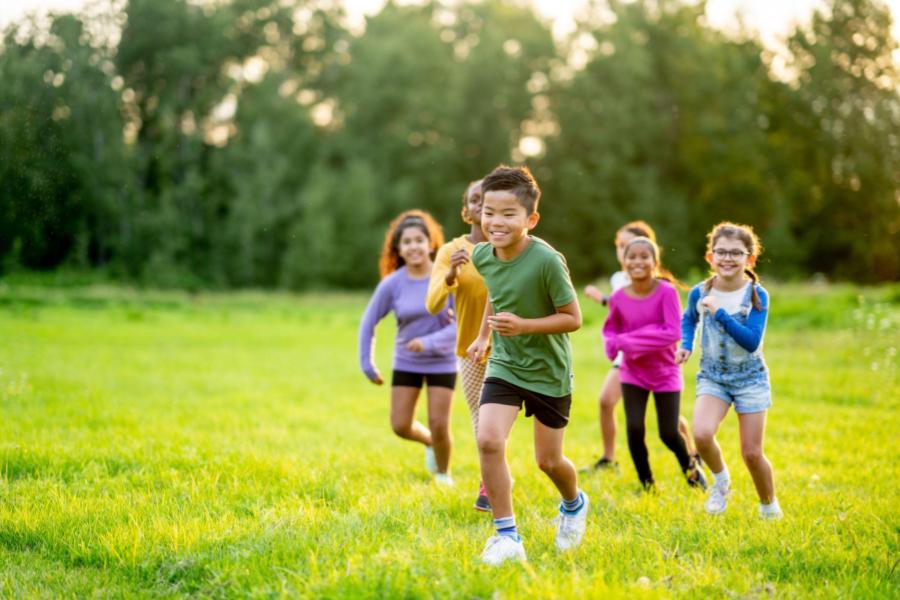
Keeping your child active throughout their formative years is essential to ensuring that they grow up to be healthy and strong. There are many methods that you can use to encourage your child to be as active as possible. It’s recommended that you try several of the following, as what’s beneficial for one child might not be for another.
Sign Your Child Up For a Martial Arts Class
Martial arts is one of the premier types of physical activity for a child, as it provides a wide range of benefits. Martial arts classes will keep your child healthy and fit, while also providing them with the tools necessary to develop useful skills that will help them later in life. Classes of this nature have the added advantage of being very fun to participate in, so your child should require very little convincing to consider attending martial arts classes.
Not only does practicing martial arts keep your child active, it also boosts their strength, balance, coordination and speed. These classes have been known to assist children in the development of positive character traits, while also helping them learn problem solving skills. A healthy self-esteem is also essential to a child’s development, which martial arts classes can provide. These classes can be even more fun for your child if they attend with a friend.
Act As a Role Model
One of the most important aspects of getting your kid to actually be interested in staying active is to be active yourself as well. Being a role model to your child in this regard has proven to work wonders in pushing them to start enjoying these activities. Consider planning an active family outing that everyone in the family can enjoy together.
13 Feb HOW TO KEEP YOUR CHILD ACTIVE
Keeping your child active throughout their formative years is essential to ensuring that they grow up to be healthy and strong. There are many methods that you can use to encourage your child to be as active as possible. It’s recommended that you try several of the following, as what’s beneficial for one child might not be for another.
Sign Your Child Up For a Martial Arts Class
Martial arts is one of the premier types of physical activity for a child, as it provides a wide range of benefits. Martial arts classes will keep your child healthy and fit, while also providing them with the tools necessary to develop useful skills that will help them later in life. Classes of this nature have the added advantage of being very fun to participate in, so your child should require very little convincing to consider attending martial arts classes.
Not only does practicing martial arts keep your child active, it also boosts their strength, balance, coordination and speed. These classes have been known to assist children in the development of positive character traits, while also helping them learn problem solving skills. A healthy self-esteem is also essential to a child’s development, which martial arts classes can provide. These classes can be even more fun for your child if they attend with a friend.
Act As a Role Model
One of the most important aspects of getting your kid to actually be interested in staying active is to be active yourself as well. Being a role model to your child in this regard has proven to work wonders in pushing them to start enjoying these activities. Consider planning an active family outing that everyone in the family can enjoy together.
Limit TV and Computer Time
Getting your children to spend their free time wisely is oftentimes a tricky thing to do. In order to promote a more active lifestyle, consider placing a limit on the amount of time your child can spend on the TV and computer during the day. It’s recommended that total screen time across all electronic devices is limited to around 1-2 hours each day. Encourage your child to spend their free time doing some sort of physical activity.
Choose a Physical Activity Depending on Age
Not all types of physical activity are suitable for younger children. For instance, the types of activities that a five year old might find interesting and fun can differ greatly from what a 13 year old enjoys. There are also certain activities that are suitable for all ages, such as riding bicycles and swimming. As your child grows older, start to suggest additional types of physical activities that will expand their interests and keep them active. These activities can include martial arts, hiking, school sports or even yoga.
Make Sure Physical Activity Is Fun Instead of Overdone
Many adults that attempt to stay active are put off of it by working out too strenuously at the very beginning. This issue is particularly difficult to navigate when it comes to children, as the best way to ensure that a child stays active is for the physical activities they participate in to be fun, instead of feeling like work. Tell your child that they need to pay attention to what their body is telling them. When they start to feel some slight pain or frustration when working out, they need to understand that this is the exact time when they need to quit and move on to less demanding activities.Overdoing a physical activity is not only painful, but can be a huge detriment to actually enjoying the physical activity. In order to make sure that your child isn’t overdoing it, pay attention to their weight. If it drops too much, this may be a sign that they’re working out too strenuously. You also don’t want the physical activities they do to interfere with their workout. To avoid this, try to make a scheduled time for your child to complete these physical activities. This schedule will act as a reminder to them as well.
Suggesting a Variety of Activities Will Keep Your Child Interested
The key towards keeping your child active is for that child to find an activity, or multiple activities, that they will be interested in. While you might find baseball fun, your child might not and could quickly grow bored of it. You want them to develop their interests on their own, so simply encourage your child by providing them with a list of suggestions. There are a many physical activities that can be enjoyed by both boys and girls. Soccer, basketball, gymnastics, hide-and-seek and jumping rope are just some of the many activities that you should recommend. Even when a child enjoys something at one time, this doesn’t mean that they will continue to enjoy that activity months down the road.This is another reason as to why it’s so important that they try out several different physical activities. It’s also important to understand that children need three basic types of exercise, including aerobic, bone-strengthening and muscle-strengthening exercises. For aerobic exercises, running, biking and swimming are some of the most popular among children. Muscle-strengthening exercises include everything from climbing to sit-ups and push-ups, though children might find gymnastics more fun. As for bone-strengthening exercises, suggest activities like jumping rope and tennis to your child.
Provide the Toys and Equipment Necessary For Physical Activities
It’s important that your child has all of the toys and equipment necessary for the physical activities that they enjoy. For instance, if your child is interested in play soccer with a school team, make sure that they have all of the padding, shoes and equipment that’s necessary for such an activity. If not, they will quickly grow bored and won’t see the point in continuing. Keeping active toys around the home, such as a jumping rope and light weights, will encourage physical activity.
Get Started Today with Find Your Perfect Trainer.
✨ Enroll your child today with Find Your Perfect Trainer and give them the tools they need to stand tall, stay confident, and face the world without fear.
BENEFITS OF MARTIAL ARTS FOR OTHER SPORTS
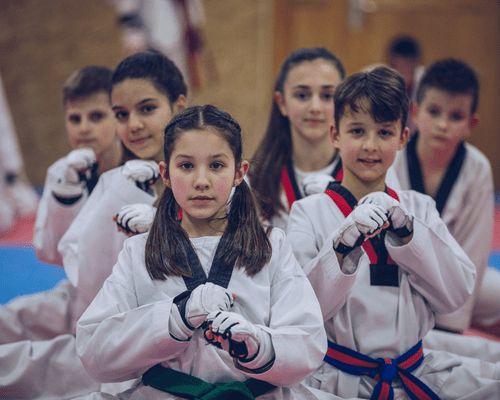
Playing sports as a kid gave me some of the fondest memories growing up. The thrill of competition, the camaraderie among teammates, and reward of self-improvement are more often found in sports than not. I’ve done it all. I was thrown into the pool at five years old. I grew up playing basketball. Neighborhood softball and football games were tradition. I ran, I jumped, and I caught. Still though, I have yet to find an endeavor as physically and mentally rewarding as martial arts.
I’ve been in a gi since I got out of diapers. I started off in karate, then jiu-jitsu and Muay Thai, and finally wrestled in high school. Practicing martial arts has not only made me better at kicking and punching. The endurance, the mental discipline, the balance and flexibility, and the strength I’ve gained from martial arts have tremendous carryover to my performance in other sports.Endurance is important when practicing martial arts. In practice, in competition, and in self-defense situations, having the endurance to execute techniques is vital to safety. Martial arts emphasizes endurance with cross-training and technique drills.
Before and after martial arts practice, classes will typically jog around for 10-15 minutes to increase heart rate and warm up the muscles. Sometimes the time spent jogging will be longer. Other times the intensity of the jog will be higher.
Endurance is also improved through technique drills. Hitting pads and shadowboxing for prolonged periods increases heart rate and over time, improves overall endurance. This endurance translates well to sports with lots of running and prolonged periods of play such as soccer, basketball, and tennis.
Martial arts teaches mental discipline. In most schools, students are discouraged from picking fights, abusing drugs, and bullying others. Students are rather taught to be humble, to live a healthy lifestyle, and to work hard. My school had its own honor system, with rules that emphasized the values of good character and good work ethic.
The values and discipline learned through martial arts follow students to school, work, and other sports. Martial arts training requires focus inside and outside of the dojo. Being attentive and obeying instructors is crucial to martial arts learning. Success only follows consistent hard work and focus towards one’s craft.
The discipline gained from martial arts makes an athlete more coachable and disciplined in other sports. Athletes will be able to pick up techniques more quickly and have greater focus on the court or field.
Many of the techniques in martial arts require great balance and flexibility. Both of these skills are emphasized in schools with drills, and static and dynamic stretching. Static and dynamic stretching is a key part of every warm-up.
Some techniques require more balance and flexibility than others. Front kicks, for example, require balance to plant one foot on the ground while kicking with the other. Front kicks also require great flexibility to bring the kicking foot to appropriate height. The consistent repetition of techniques like this will improve flexibility and balance over time.
The balance and flexibility gained from martial arts can be almost universally beneficial to performance in other sports. In fact, I can’t think of a single sport where increased balance and flexibility wouldn’t be helpful. Balance and flexibility is even crucial in dynamic sports like football, wrestling, and basketball.
Another benefit of martial arts training is strength. No, doing karate or jiu-jitsu won’t make anyone look like a bodybuilder, but the functional strength necessary to perform techniques will be useful in other sports.
In martial arts, core strength is the base of every technique. The power generated for every kick, punch, and throw goes through the core. The core is also responsible for keeping proper posture and breathing. Many classes will emphasize core strength by doing core workouts such as planks and crunches.
While the core is the primary focus of martial arts strength training, the rest of the muscles are not neglected. Drilling techniques makes the body more efficient at channeling its own strength. For example, an inexperienced martial artist may only throw punches using their arms. But a more experienced artist understands how to use the entire body to punch.
Core strength is important for any sport, especially ones requiring a repeated exertion of force. Martial arts core training will help anyone’s performance in kicking a ball, throwing a ball, etc. Martial arts will also improve an athlete’s efficiency in using their own strength. Being more efficient will conserve energy and increase output in any sport.
Martial arts is one of the most challenging and rewarding sports there is. Training requires a serious amount of focus and athleticism that will not only make a better martial artist, but a better overall athlete. The passive skills such as endurance, strength, flexibility, and balance cross over to almost every sport. The mental discipline will help out in sports, school, and everything in between.
Get Started Today with Find Your Perfect Trainer.
✨ Enroll your child today with Find Your Perfect Trainer and give them the tools they need to stand tall, stay confident, and face the world without fear.
HOW MARTIAL ARTS CAN HELP YOUR CHILD IN SCHOOL
The problems that children have in school can be academic, social, or some other challenge. Involvement in the martial arts can help with any of these kinds of problems. The following are the specific problems that your child may face in school and how the martial arts can help to resolve them.
Bullying
Lately, the problem of bullying has received a lot of attention in the news. Children are being bullied both in school and on social media. Some children have even taken their own lives as a result of severe bullying. The martial arts can help with this problem in two ways. First, your child will learn how to defend himself or herself. This means both that your child will be able to engage another child in a fight if they must, and that they will be able to avoid or deescalate a fight if they can. Second, your child will grow in self-confidence and self-esteem. This will help your child to feel impervious to the verbal abuse that other children may heap upon them. This self-confidence is built through achievement in the martial arts. Also, their martial arts teacher will teach them how to respect themselves and others.
Coordination
Many children have difficulty in sports activities because they lack certain motor skills and coordination. This makes them feel uncomfortable when they must perform in physical education classes or participate in sports during recess. The martial arts directly work on a child’s coordination skills to produce a person who is graceful in their movements. Physical coordination is not just an inborn skill. It can be taught.
Learning the Value of Hard Work
To succeed in the martial arts, it takes commitment and a lot of hard work. A person must give 100 percent of their energy to make progress. Your child’s martial arts instructor will emphasize that this is the case with any goal in life. As a result, your child’s commitment to goals in school will intensify.
Discipline
Not only does it take a lot of hard work to succeed in the martial arts but also an attitude of discipline. Discipline means that a person keeps to their training schedule no matter what kind of obstacles intervene. This obviously transfers to school, where the child must have a stick-to-it attitude to excel.
Mental Toughness
Many times, a child will feel timid because of their size or a lack of certain innate abilities. The martial arts teach that even a small person can be trained to overcome a big person in a confrontation. This is achieved by both practice, strategy, and a self-confident attitude. Whatever challenges your child may face in life, the martial arts can give them the tough attitude that they need to persevere.
Focus
A lack of focus has infected the younger generation. We live in a culture where everything is designed to conform to a short attention span. To succeed in the martial arts it takes focus and concentration on what you are doing. This is a trait that can be improved on. The martial arts instructor will lead by example, and their traits will transfer over to your child. Even if your child has subjects in school that are hard for them to focus on, they will be trained to focus for success.
Confidence
Many times, it is difficult for a child to excel because they lack the right amount of confidence. It has nothing to do with their innate abilities. A child’s martial arts instructor can teach them to develop confidence by appreciating the achievements that they make. Mastery of a level of martial arts can be slow, but eventually with hard work almost everyone succeeds. The instructor will challenge your child to overcome any barriers that they have towards succeeding. This ability to inspire is a special trait that martial arts instructors have.
Working Under Pressure
School can be difficult for many children because they must work under pressure. Not only does your child have to perform well, but also they must do so under a time constraint. The martial arts develop the ability to think on your feet and react fast to situations. There is no time to deliberate and make a slow response. For this reason, a child will learn how to work well under pressure and time constraints. They also will be taught how to remain calm in various types of pressured situations.
Respect
Children nowadays seem to have no respect for anyone, including themselves. One of the outstanding features of the martial arts is that it teaches people why they must respect others. It does this by giving them an appreciation of the worth of others. For instance, you should respect your teacher because of the level of knowledge and skill that they have. In this way, respect is not only based on authority but rather on the true value of other people.
A Philosophy of Peace
Finally, the martial arts can develop an attitude of peace and serenity in your child. The martial arts are not only a physical training and discipline. A beautiful philosophy of peace, harmony, and serenity goes along with the physical aspects of the training. This philosophy is something that can help your child attain happiness in school and life in general.
Conclusion
The martial arts can help your child with every aspect of their life. This is particularly the case with issues that come up in school. Right now, it is early in the school year. The process of developing the benefits of the martial arts is a slow one as with anything that has true value in life. Therefore, it is good to get a head start on enrolling your child in a respected martial arts program.
Get Started Today with Find Your Perfect Trainer.
✨ Enroll your child today with Find Your Perfect Trainer and give them the tools they need to stand tall, stay confident, and face the world without fear.
MENTAL HEALTH BENEFITS PROVIDED BY MARTIAL ARTS PROGRAMS
Many people enroll their children into a martial arts program so they can have a physical activity and spend their time more productively. Did you know that there are also many emotional and mental health benefits for children who participate in martial arts? In this post, we’ll discuss the mental health benefits that practicing martial arts can provide.
1 – Social Skills and Friendship
The ability to make and have friends is a major factor in a child’s satisfaction and comfort level in school. It is also a key factor in their abilities to interact with the world as they get older. Martial arts provides children the ability to feel incorporated in a nonthreatening family environment. Dojos are extremely structured and facilitate a family-like atmosphere. Ultimately, that makes it a perfect environment for shy children to begin to open up and make friends. Martial arts training also teaches the concepts of compassion to opponents, patience and conflict resolution.
2 – Discipline
Having discipline will help a child in many ways. Discipline will allow a child to learn how to structure important aspects of their lives to accomplish tasks and goals. In martial arts, discipline is a foundational practice. Martial arts instructors are keen on not tolerating disruptions, excessive talking or goofing around. This type of discipline is especially important if the child is not receiving it in school. The discipline taught in martial arts also teaches how to control anger, how to diffuse situations without fighting and how to be self-accountable.
3 – Respect
Along with discipline, respect is another foundational practice taught in virtually every martial art. Children are taught to respect their instructors, their co-students, opponents and themselves. Respect is deeply engrained in martial arts and it is a lesson that it taught from day one until the end of practicing martial arts. The respect associated with martial arts comes from the close interaction students have with their teachers. Naturally, as the student learns more from the instructor they begin to increase in belt ranks, which also facilitates respect for their techniques, knowledge and abilities.
4 – Confidence
Learning new skills, self-defense techniques and how to acquire higher level belts provides a system of accomplishment that rewards the child with increased confidence. Because there is a competitiveness within martial arts, the ability to face an opponent and win also allows the child’s self-confidence to grow. Because it is a one-on-one sport, the child becomes more self-aware in a loss than in a team sport environment. These factors combine to boost the confidence of children, which is something that can help them become more daring in their future dreams and wants.
5 – Awareness of Personal Safety
Martial arts provide children with the ability to be self-accountable in an adult world. This dynamic not only makes a child more confident, but more aware of their personal environment as well. For children, many dojos will teach about stranger awareness and what to do when encountering a stranger. While parents also teach these rules to their children, their martial arts instructor also reinforce that from different angles as well. Ultimately, children taught about stranger awareness and personal safety in dojos can come away learning better decision making methods.
6 – Physical Fitness
Physical fitness is a growing concern these days when it comes to children. Because of technology, downgraded quality of food and busier parental schedules, children are becoming more sedentary. Martial arts provide an avenue for children to work on their balance, posture, coordination and an understanding about the importance of health and fitness from an early age. Studies have shown that physical activity is incredibly helpful to a healthy mind.
7 – Focus
A child with a strong attention span is one that will do better in school, have more discipline and have the ability to better handle situations without feeling overwhelmed. Martial Arts teaches children how to focus on a particular task, set of moves and reactions to an opponent’s moves. This also goes together with the discipline built through martial arts.
8 – Responsibility
In many dojos, children are required to maintain the cleanliness of their uniforms, the dojo and to be punctual. Along with the personal responsibility children have in memorizing moves, these elements impact their ability to achieve higher belts. Ultimately, that system of personal responsibility is important in the independence felt by a growing child.
9 – Listening
Listening to instructions from martial arts instructors is a vital aspect of the success a child will have in their martial arts program. Because children need to listen to their instructors, clear lines of authority and respect are drawn. By listening to their instructors, children are taught that following directions, accountability and focus are important to success.
10 – Attention to Detail
Martial arts are all about details. When children learn moves, they will learn how important every little movement needs to be and how it can impact outcomes. This emphasis on attention to detail helps a child increase their focus, concentration and memorization.
Martial arts are great for boosting a child’s physical and mental health. Many of the positive aspects of healthy mental health are incorporated within the martial arts system of respect, rewards, accountability and confidence.
Get Started Today with Find Your Perfect Trainer.
✨ Enroll your child today with Find Your Perfect Trainer and give them the tools they need to stand tall, stay confident, and face the world without fear.
3 REASONS WHY MARTIAL ARTS IS THE RIGHT ACTIVITY FOR 2017
Ready to Start 2026 with a New Habit? Don’t Miss These 3 Top Reasons Why Martial Arts is the Right Activity for 2026
As the new year begins, are you on the hunt for a new exercise routine? Do you want to try something new and exciting — but you also want to make sure you’re getting the most out of the time you put into your hour of exercise? Do you want to tone, trim and get strong?
If you’re ready to change your exercise regime for 2026, then look no further than a martial practice such as Kung-Fu. Not only is martial training a precise and beautiful practice that will improve your balance and strength — but it has many health benefits, including boosting your self-confidence and helping you lose weight.
If you’re ready to see a change in 2026, then read on to get our top three reasons why martial practices is the right activity for you! Don’t miss out on what training can do to elevate and push you forward in the new year. Here is why:
REASON #1: GET A COMPLETE BODY WORKOUT
One of the greatest benefits of this ancient practice is that it works every muscle in your body. When you exercise this way and really lean into the moves — you’ll be engaging a total body workout that not only will make you sweat it out but will help you rest better at night.
Many people get hung up on exercise regimes that engage only one core muscle — like the legs in the case of running. But martial arts take a total-body workout to an entirely new level.
When you get done with your first class, you will have burned hundreds of calories in an hour that will completely smoke whatever exercise you had reserved for the treadmill or elliptical machine.
REASON #2: BUILD MUSCLES
Not only should you expect to lose weight when you incorporate a regular martial practice into your lifestyle, but you should expect to gain some back via muscles. You use your core body to build those muscles and to grow stronger every day through the practice — and you’ll begin to notice your arms and legs begin to show some definition over time. As you engage that muscle mass and tone it up — your metabolism becomes smarter and more efficient — and you begin to burn even more calories.
That gives you the chance to choose healthy, protein-rich foods to eat to replace those calories, which will further help build your muscles and keep your body super strong over time.
In addition, you’ll build your balance as you build your muscles and make your reflexes stronger as you face your opponent and develop the practice. All in all, all of these sub-benefits go back to the core you are strengthening via martial exercises — and that’s something few sports and practices can offer with the kind of targeted precision that a martial practice can!
REASON #3: WATCH YOUR SELF-CONFIDENCE SOAR
This practice is both an individual and a group one — and that means you’ll be able to be both introspective when it counts and more social when you need to open up and build relationships and trust. You will be training in a community and learning to set goals for yourself. You will be learning from those who have gone before you and getting better with your moves over time. You will have someone there with you all along the way.
You’ll be encouraged and spurred on by your teachers and classmates — and that will drive you to continue reaching high for your goals and getting that form right. When you finally reach your goal, you will look back and feel confident and empowered knowing you mastered and executed such beautiful, strong moves.
Martial practices also teach good ethics and morals — such as kindness and patience. As you practice these arts you begin to adopt some of these practices and let them infuse your life throughout the day.
That’s because martial arts is so good at helping you focus, establish the right frame of mind, accepting what you can and cannot do, working toward a goal, giving it your best and finally, being content with what the practice has gifted to you. You can’t ask anymore than that — and at the end of the day, you’ll be incredibly happy for the peace you feel through the practice. It teaches us all how to be better human beings — and that will infuse your work and personal life for years to come!
Ready to Sign Up for Your First Session?
Many people you would never think of liking martial arts do. Why? Because they see the many incredible benefits this beautiful practice gives them in their lives. From improving reflexes, to toning muscles to empowering athletes all over the world — martial arts becomes the conduit to a healthy lifestyle.
It’s normal to feel hesitant or to be afraid that you can’t follow this practice or that you’ll get hurt. It also can be overwhelming at first to wonder whether you can really do it — but you can. You have to take one step at a time.
If you’re thinking about this for 2026, take our advice and try it. Just take that first step and sign up for your first class. Take it slowly and practice. Join the community that you find in your class and enjoy the journey. You’ll find your mind is more peaceful — and your body starts to trim and tone. Happy New Year! 🎉
TIMES MARTIAL ARTS HELPED SHAPE HISTORY
Asia is widely considered to be the birthplace of the martial arts. Historically used for combat and self-defense, varied techniques sprang up independently in India, China, Japan and other parts of Asia. The birthplace of many disciplines can be traced to India and China, and there’s evidence as far back as the 3rd Century B.C.E. that martial arts techniques were in use. At certain points in history, the martial arts have had a noticeable impact in shaping events. Generally, there was a historical figure who led this cultural shift, and three of the most influential were Bodhidharma of India, Gichin Funakoshi of Okinawa and Bruce Lee of Hong Kong.
BODHIDHARMA & KUNG FU – 527 C.E.
China had developed its own martial arts, but it was a military form used for combat. It wasn’t until the influence of an Indian, Bodhidharma, that Chinese martial arts evolved into the Kung Fu we see today, a more holistic practice that trains the body and mind.
India had a form of martial arts called Kalaripayattu that involved agility, fitness and wise use of the body’s energy. A Buddhist monk named Bodhidharma introduced this style of fighting to China when he traveled there to spread the philosophy of Buddhism. When he eventually went to live with the Shaolin monks, he found them lacking in physical health and stamina, so he began teaching them Kalaripayattu. This discipline evolved over time and became Shaolin Kung Fu.
The spread of the martial arts in monasteries has given rise to the popular myth that these techniques were primarily created by “Buddhist monks, Taoist hermits or Confucian scholars.” In fact, Bodhidharma was trained in the military arts as the son of a minor ruler. It was only after he traveled to China and began living and training with the Shaolin monks that he became one himself.
In China, however, the martial arts had mostly practiced by lower classes like the military and bodyguards. Bodhidharma helped strengthen the concept of the martial arts as a spiritual practice as well as a fighting and self-defense discipline. He emphasized breathing techniques and the cultivation of bio-energy (ki in Karate). Bhodidharma combined meditation with physical training and, eventually, he also became the founder of Zen Buddhism.
Bodhidharma’s life story is an example of the will, perseverance and endurance that made up the foundation of his teachings. The moves and techniques he taught are now collectively referred to as Kung Fu. His contribution to history is seen in the elevation of the martial arts to a physical and spiritual practice that is accepted in all classes of society in China.
GICHIN FUNAKOSHI & KARATE – 1917
The martial arts of China influenced the people of Japan, and they also developed their own fighting and self-defense techniques. Karate began in Okinawa, a chain of islands between China and Japan that were then a separate kingdom. For over a century, starting in 1477, weapons were outlawed on the three islands of Okinawa. This caused early Karate to go underground and, if anything, strengthened the desire for the art to be maintained and preserved. In 1875, the Japanese took over Okinawa and made it part of Japan. After that, these original forms of Karate were allowed to flourish.
Cooperation and peace between Okinawa and Japan were facilitated by the sharing of Karate. In 1917, Okinawa native Gichin Funakoshi demonstrated Karate techniques in a match with a Japanese martial arts expert, and he won the match. Funakoshi stayed on in Japan to teach Karate to the Japanese people. The open and peaceful relationship between Okinawa and Japan flourished to a great extent because of this sharing of Karate with the mainland.
As in Kung Fu, Karate has an underlying spiritual component. Funakoshi created his own form of Karate, called Karate-Do, and he considered it to be “education for life itself.” The form of Karate he demonstrated in Japan and practiced during his life was called Shotokan. It was a synthesis of Funakoshi’s own style and the different types of Karate that originated in Okinawa.
BRUCE LEE & JEET KUN DO – 1960’s
Although born in San Francisco, Bruce Lee was raised in Hong Kong from the age of three months. A great artist will influence others, and Bruce Lee is well known across the world as a martial arts master whose influence caused a shift in the way people look at the practice.
Lee began his training in the art of Kung Fu (Gung Fu), eventually developing Jeet Kun Do (JKD), which translates to “the way of the intercepting fist.” Lee didn’t regard this form of martial arts as a method or style, but as a set of principles for developing the mind and body. He borrowed from several Kung Fu styles, including Taekwondo, and also incorporated elements of wrestling and boxing into Jeet Kun Do.
Bruce Lee’s television and movie projects popularized martial arts around the world. He developed the popular U.S. television show Kung Fu for himself, but David Carradine was given the leading role. The show had a great influence on the understanding of the martial arts in the U.S. This was the first time many people realized that the practice had a spiritual, meditative component, and didn’t exist merely for fighting and self-defense.
Continuing mental and physical development, along with improving coordination and power, are the lynchpins of Jeet Kun Do. In the formation of JKD, Lee contributed to breaking with martial arts traditions. He believed in throwing out techniques that didn’t work and embracing those that did. Bruce Lee can be credited with opening up the world of martial arts to experimentation and growth. Through his martial arts movies, he also helped usher in an era of increased understanding of the martial arts throughout the world, not just in the U.S. and Asia. He saw himself as a “bridge between the East and the West.”
Bodhidharma, Gichin Funakoshi and Bruce Lee all highlighted the importance of the martial arts and influenced world culture. Bodhidharma was the founder of Kung Fu and strengthened the spiritual component of Chinese martial arts. Gichin Funakoshi refined and popularized Karate, and contributed to the good relations between Japan and its newly acquired territory of Okinawa. Bruce Lee introduced the philosophy and techniques of the martial arts to a global audience and increased our understanding of the philosophy that goes along with it.
Get Started Today with Find Your Perfect Trainer.
✨ Enroll your child today with Find Your Perfect Trainer and give them the tools they need to stand tall, stay confident, and face the world without fear.
9 REASONS MARTIAL ARTS IS THE PERFECT FAMILY ACTIVITY
When you are looking for a great family activity, it is important to make sure you are choosing an activity that will entertain everyone of all ages. Great family activities are those that add to family fitness. Finding a sport that everyone can enjoy can be a difficult task at times. However, Martial arts are a great activity that can add to your family fitness. Here are nine reasons why this is the perfect family activity.
SETTING GOALS WITH YOUR FAMILY IS HEALTHY
Advancing in martial arts, like karate and judo, is one of the best parts of going to lesson after lesson.
Getting all the way to black belt can take a very long time and getting new belts is a fun way to set goals with everyone in your family. This is what keeps families coming back class after class.
Working towards physical goals leads to working on other important goals. Working on goals towards college, financial planning, and family readiness is much easier after you have already practiced setting goals before as a family.
EXERCISE HELPS EVERYONE STAY HAPPY
When families exercise together, they feel happier.
It is proven in studies that exercise will release endorphins that make you much more upbeat and less depressed in your life. Attending classes regularly will allow your family to release these endorphins on a regular basis and raise the overall level of happiness in the home. Once you start exercising, it is easy to get addicted to other physical activities like swimming, hiking, baseball, and golf.
THIS IS A GREAT WAY FOR A FAMILY TO BOND
When everyone in the home is working on a common goal, it is easy to find common ground.
Having something each week to look forward to with your family is a great way to get everyone excited to spend time together. The car rides, long lessons, and practice sessions will help all of the members of your family spend more time together and bond. When everyone is trying to learn something together, the breakthroughs will create some amazing bonding time.
Learning together as a family is one of the best ways to grow closer to one another.
COMPETE FRIENDLY WITH EACH OTHER
The world is a very competitive place. It is important to teach your children the importance of competition before they leave your home.
Classes and belt advancement is a fun way for siblings and parents to compete without the stakes being too high. Friendly competition can help bond your children closer together as well. They will learn to work with each other to achieve common goals that will help them to grow as individuals.
CREATE MEMORIES THAT WILL LAST A LIFETIME
While it is fun to hang out at home and watch movies every once in a while, engaging in family activities outside of the home are where you are going to create the most long lasting memories of all. When families engage in activities together, it is easier to create memories that will last a lifetime. Your children will look back fondly at their time spent at the school and remember it well into their adult years.
Filming and taking photos of lessons and competitions can be a great way of remembering all of the fun family times that were had during these activities.
START A HABIT OF SHARING YOUR INTERESTS
When all of the members of your family start sharing their interests for the first time, it can be easy for individuals to propose the idea of trying out their hobby. It may turn out that your whole family would love skiing or going to the skatepark together.
It is always a great idea to try out the hobbies and interests of your family members as an entire unit. This is a great way to bond and find new activities that everyone can enjoy together. Your family might discover that they are into creative endeavors as well like music or filmmaking.
KEEP YOUR FAMILY SAFE WITH THE ART OF SELF-DEFENSE
The world we live in is becoming more dangerous every day. It is important to teach your children the skills that they will need in order to protect themselves in this violent world. While the skills learned in these classes are never supposed to be used for bullying or intimidating others, they can be very important when any type of self-defense is needed.
The better skilled your family becomes in these forms of self-defense, the more confident they will feel in the world. This level of safety is especially important when your family is traveling abroad.
Again, while these skills should never be used for harming others, it is very important to be able to protect yourself in the event that someone is trying to harm you or your family.
EVERYONE AT ANY AGE CAN ENJOY MARTIAL ARTS
There are some sports that parents can’t have as much fun with as their children. Skateboarding, downhill biking, and wakeboarding are just a few examples of sports that might not be as fun for parents. However, anyone at any age can really start to enjoy learning the art of self-defense.
CLOSE THE GENERATIONAL GAP
It can be difficult for parents and children to understand each other. However, when regular activities are on the schedule, it gives family members the ability to get to know one another. Parent’s and children’s music can be shared and talked about in the car and deep conversations about important issues can happen as well.
Getting on the same page as your children doesn’t have to be as difficult as it might seem. Taking a little bit of time to understand what your kids are into can go a long way. This time spent together will be a way to really get to understand the culture of your children.
Get Started Today with Find Your Perfect Trainer
✨ Enroll your child today with Find Your Perfect Trainer and give them the tools they need to stand tall, stay confident, and face the world without fear.
PREVENT BULLYING THIS SCHOOL YEAR WITH MARTIAL ARTS
School is just starting up and it’s an extremely busy time of the year. With the new school year comes new stress (and relief). Coordinating drop offs, pick ups, and generally just developing your family’s new routine always takes some time to get used to. Kids are also probably adjusting to new schedules and slowly, but surely, falling back into the rhythm of the school year.Every parent wishes for smooth interactions between their kids and their classmates, anticipates new, budding friendships and prompt solutions from teachers and caregivers when things go wrong on occasion. Sadly, reality often doesn’t match these high hopes, leaving parents frustrated, confused, and angry, while children remain vulnerable to being bullied in the place where they spend most of their awake hours during the school year.
BULLYING: THE REALITY
Bullying is a staggering problem in the U.S., where nearly 50% of children report experiencing it at least once throughout their student years. Despite of this sobering number, there are no federally mandated anti-bullying classes, nor mandatory school staff training to combat this serious epidemic. The long-lasting effects of bullying on children are not fully understood either.
The good news is: more and more schools recognize the need for radical changes, to implement educational anti bullying classes, and initiate a deeper, more appropriate conversation between the institutions and the parents to find new, working methods to make school a more welcoming, positive experience for all children.
Yet the problem persists, and it is likely to cause a few difficult moments to many parents across the nation, leaving them wondering whether or not they could do something more, preparing their children better, or help them to develop various coping mechanisms that could not only aid them against bullying, but give them important life skills for decades to come.
MARTIAL ARTS: YOUR BEST BET AGAINST BULLYING
You may be surprised, yet it is true: children who participate in martial arts fare much better in school and life in general. It is important to stress, however, that these classes do not teach, nor encourage the use of violence under any circumstances, and this also means that bullied children are trained to use self-defense only as an absolute last resort to stop bullying, in case of physical attack. While it is a crucial life skill to have, physical force can never be the proper solution to schoolyard conflicts.
Luckily there are other, greater benefits: instead of teaching how to stop bullying, they focus on training your child to learn valuable personal skills. The following list includes the most outstanding advantages your child could experience as a result of taking these extracurricular classes this school year.
Socialization
These classes teach excellent socialization skills: from the first moment to the last, they promote interacting in an equally polite and respectful way with teachers and other students. Being able to implement these newly acquired interpersonal skills in a school setting, your child may not only be able to completely avoid being hurt, but may become a positive example to others about using positive communication skills to stop bullying.
Conflict Resolution
It is extremely important for your child to learn that while conflicts are usually an inevitable part of life, violence and harming others are not. Under no circumstances it is acceptable to hurt others, physically or otherwise. These classes teach children to be more resilient, to be able to take the hardships of life without reacting in negative and improper ways, to not to worry so much about the effects of bullying, rather, conduct themselves in ways that help to avoid or solve conflicts, instead of allowing them to escalate any further.
Self-Confidence
It is generally true: children that display a healthy dose of self-confidence are less likely to be targeted by bullies. These classes are known to help kids to feel more positive about their abilities: by teaching them to bravely face their fears, by allowing them to master their skills in challenging situations, and by letting them feel accomplished every time they overcome self-doubt, they become more ready each day to handle difficult tasks in school, with peers, and virtually in all areas of life.
Discipline
Developing self-discipline further enhances one’s ability to masterfully guide all thoughts and actions towards accomplishing the desired goals. By meticulously building new routines and skills, these classes can help your child to aim high, remain persistent, and never give up on their dreams, regardless of what difficulties may come their way. This is an incredibly important skill to have when dealing with negative classmates who may make fun of your child, not see the benefit in hard work and delayed satisfaction.
Focus
A slightly different skill from discipline, focus helps a child to remain in the moment, pay attention to their breathing, slow down, and treat the next course of action as their primary responsibility. By helping them to not to be scattered, these classes are known to help children to improve their academic skills and grades as well, creating well-rounded individuals who are capable to respond to the various, ongoing challenges and requirements of school and life in a healthy and balanced way.
Patience
An important skill these classes usually focus on building is the art of learning to be patient. In our modern world even children are conditioned to expect immediate results and instant gratification, yet the most successful ones in school and life are indeed the ones who learn to relax, not push too hard, and be able to just wait for the good things to show up that they have worked so hard for. Assuming this attitude may become your child’s best bet during difficult times with peers.
This list is by no means comprehensive, but it provides some insight into the vast benefits martial arts classes can offer your child to avoid being bullied.
Get Started Today with Find Your Perfect Trainer.
✨ Enroll your child today with Find Your Perfect Trainer and give them the tools they need to stand tall, stay confident, and face the world without fear.
CONFIDENCE: THE BEST WAY TO COMBAT BULLYING
Recently at the VMAs, the pop-singer Pink used her acceptance speech as a platform to address the insecurities that she’d heard from her six-year-old daughter. Her daughter felt she was ugly because she thought she looked like a boy with long hair. Because she’s so young, it’s easy to see how these insecurities could be attributed to bullying. Pink explained to her child that she’d faced criticism herself for being too masculine and did not let it deter her from becoming successful. She proceeded to show her daughter iconic celebrities that were considered odd and had endured the same criticism and managed to become legendary people. This allowed the little girl to see how amazing it is to be different when you have confidence and embrace who you are.
Bullying has always been a difficult topic to discuss. Some people avoid the topic in an effort to keep the peace but rarely does ignoring a problem ever solve it. Bullying causes children to feel inferior to others and doubt themselves when they should be using this time to discover who they are, what makes them unique, and be confident in that person. At a young age, embracing who you are is difficult to do when others try to keep you down.
WHY DO KIDS BULLY?
Lack of self-confidence is the main reason that bullies do what they do. You’d assume that bullies have the most confidence, but they prey on those that they perceive to be weak because of their own insecurities. Most of the time, bullies have been already bullied by someone else and are simply taking out their aggression on whoever is accessible. They do this in an effort to make themselves feel superior. Their lack of confidence leads them to do cruel things to gain a sense of empowerment and control. Making their victims feel small is always the goal, so they’ll target whoever they believe they can break.
HOW TO COMBAT BULLYING?
Making sure that your child’s school has an anti-bullying awareness campaign is a great first step. Aside from that, if bullies don’t perceive your child as a victim, they’ll have nothing to target. Mind you, this has nothing to do with how intimidating your child looks, but with how they carry themselves. Instilling a sense confidence in our children will allow them to deter bullies. If your child is strong-minded, they cannot be broken by an insecure person. They’ll have a self-confidence and positive self-image that cannot be shaken because they truly believe in themselves and feel empowered.
WHAT MAKES A PERSON CONFIDENT?
Confidence is essentially certainty or the belief that you can trust someone or something. Self-confidence is believing and trusting in yourself. This doesn’t happen overnight, but it is a decision be better and do better. Children must be exposed to confidence in order to learn confidence. They look to their role models to empower them before they learn to look inward for validation. It’s important as parents to tell our children how smart, or beautiful, or talented they are and to teach them that they can obtain anything that they work hard for. We must encourage them to try new things and develop a sense of importance.
Back in 2012, a psychologist by the name of Amy Cuddy presented a very popular Ted Talk that focused on the effectiveness of body language and power posing. She explains that our nonverbals actually speak volumes to others and ourselves. When we are proud, we naturally tend to stretch out and open up our bodies. When we are less confident, we do the opposite and make ourselves small. When you’re alone, all you have to do is assume high-power poses for about two minutes, even when you don’t feel very confident, and your body will respond with real confidence. This talk was directed towards adults when facing interviews or other stressful situations that might require a little extra confidence, but who says this can’t apply to children?
WHAT’S THE BEST WAY TO INSTILL CONFIDENCE IN A CHILD?
Although there are many options as far as how a child can gain confidence, physical activities and training like martial arts would be one of the best choices. The discipline that a child learns during martial arts training allows them to gain a sense of control. It requires kids to focus on their goal and using their abilities to achieve that goal. Teaching a child to master his or her body allows them to find that independence that they need.
Many powerful poses and stances are taught during martial arts training, so imagine the incredible effect that these classes could have on your child. Every single class provides them with techniques that focus on posture and poised behavior. Every sparring match allows your child to perform under pressure, which is a huge benefit and skill that must be used throughout life. Your child will take the confidence learned from martial arts and carry it with them in everyday life.
HOW WILL CHILDREN BE AFFECTED BY MARTIAL ARTS OVERALL?
Your children will be walking tall with their heads held high, owning the confidence that they’ve developed. Although confidence can easily become arrogance, the martial arts also teach humbleness and sportsmanship. This is an extremely important characteristic to have because, without humbleness, your child could easily become the bully. Be sure to keep your child down to earth as their confidence soars.
In addition to the confidence that they will have gained, they’ll obviously acquire some useful techniques in combat. While violence is never the goal in martial arts, in the worse case scenario, your child will be able to defend themselves if they are ever threatened. Let’s face it, you’ll always have those alphas in life that just want to dominate everyone. But, if your child is strong-minded, those bullies won’t be successful in making them feel small. The bully will have wasted their time trying to break the powerful human being that you’ve raised.
Get Started Today with Find Your Perfect Trainer.
✨ Enroll your child today with Find Your Perfect Trainer and give them the tools they need to stand tall, stay confident, and face the world without fear.
GETTING YOUR KID TO PARTICIPATE IN CLASS
Ideas To Encourage Classroom Participation
We all remember the different types of kids in our childhood schoolrooms. Some kids were super loud and funny. Others were smart and brainy. Some were athletic and popular, and others were painfully shy. We all probably remember, for better or for worse, where we fell in that schoolroom continuum.
Now you’re a parent, and perhaps you have one of those painfully shy children as your very own. What’s the best way to help your child bloom and participate in class? Here are some things to remember.
Give It Time
If you have young kids who are just beginning school, be sure you give them some time to get adjusted before worrying to much about class participation. Spending all day or even half a day in class can be a strange experience for the first several weeks. They may be overwhelmed with all the activity or be uncertain about how to interact with other kids.
Let your kids get to know their teacher and classmates at their own pace. Give them time to figure out rules of behavior and schoolroom expectations. Chances are they will warm up to the whole experience as time moves on.
Open Lines of Communication With the Teacher
Remember that you and your kid’s teachers need to work together to make the entire experience a positive one. Introduce yourself early on during the year and share any concerns you might have about your kids. Encourage your children’s teachers to contact you by phone or e-mail if they need any support or come up with helpful ideas you can implement at home.
Be sure to participate in parent/teacher conferences during the year. Talk with your kid’s teacher about the types of activities they are doing in class. Suggest ways that your kids might be able to participate more fully in a particular unit study by sharing something of their own. Compare notes regarding your kid’s behavior in class vs. at home and talk about why there might be differences.
Volunteer or Visit
There’s nothing like spending time in your kid’s schoolroom to get a more accurate picture of a typical day. Most classes welcome parent visits or volunteers. See if you can stop in once a week to read to the class or help a slower or more advanced group of students. Or, if your schedule doesn’t permit regular volunteering, take time to at least make a short visit so you can observe your kids with their teachers and classmates every once in awhile.
While you’re visiting, watch your child and observe what’s going on. Is your child avoiding activities that may be new or difficult? Are others teasing your child? Are the activities too easy and therefore boring for your child?
If you notice something like this, talk with the teacher about how to resolve the issue. Perhaps you can offer to teach your child how to play a classroom game at home to increase confidence. If something seems too difficult, perhaps a related easier task can be attempted. If the classroom seems boring, perhaps a more challenging activity can be introduced a few times a week.
Build Confidence Outside School
Use your time in the evenings and weekends wisely with your kids. If confidence is an issue, encourage learning new skills that can be applied later in the schoolroom. Sometimes kids prefer to struggle with tasks at their own pace at home before attempting them in a public place like in a class.
Consider signing up for outside activities. Sports, martial arts and music lessons can all help kids feel like they are mastering something. They also provide a way to allow them to share their skills with friends and teachers at a later time.
Although praising every single thing a child does is insincere and tends to backfire long term, offer real praise when it’s earned and deserved. If your kids really struggles with something until it is mastered, congratulate the accomplishment.
Foster Real Communication at Home
It’s easy to fall into simply living with your family members in the same house and not really working on relationships. You may be tired and stressed after a day at work. Your kids may be burned out after a day in class. Everyone may grab a bite to eat and crash in front of the computer or television for a few hours before bed.
Remember that even though it may take a little more effort, fostering real conversations with your kids can have long-term positive effects in their lives, your life and your entire relationship. Practice asking what was the best and worst thing in your child’s day, and then encourage your kids to ask you about your day. Although this may seem awkward at first, it is good practice in how to hold a caring conversation. Be sure to truly listen to answers; not just nod mindlessly while simultaneously checking your e-mail.
Encourage Positive Relationships
The more positive, supportive relationships kids have, the better. Help encourage good friendships that involve doing positive things together. Perhaps your kids can study with others in their class so they can ask questions and discuss things they didn’t understand with peers.
You might want to organize a small group of kids who can volunteer to help at a nursing home, package food at a local shelter, or clean up a local park. Doing something helpful and positive together can build confidence and create an environment where talking can happen more naturally while you work toward a common goal.
Kids may enjoy learning new skills. Consider signing up for an art class, a community drama class or a martial arts class. Fostering relationships between your kids and other non-academic teachers can help them feel more confident. That confidence can they translate to participating more in class.
Get Started Today with Find Your Perfect Trainer.
✨ Enroll your child today with Find Your Perfect Trainer and give them the tools they need to stand tall, stay confident, and face the world without fear.
PLEASE AND THANK YOU: MARTIAL ARTS AND MANNERS
Martial arts are traditions and systems of combat practices, and people get involved in them for a variety of reasons: self-defense, military and law enforcement use, mental and spiritual development, or even purely for entertainment purposes. They provide more than just a method of defense, an outlet for physical fitness, or fun. It’s also about respect: respect for self and respect for others.
The use of manners is pretty ingrained into most adults. But for kids, manners are still a learning process. They don’t always remember what to do, when to do it, or how to do it. Parents get busy and don’t always remember to enforce manners. Manners matter even, and maybe especially, in martial arts. They’re a form of self-defense. Manners are a method of self-defense by helping to ensure that you don’t unintentionally offend another. While it is very different today than it was centuries ago, there was a time when a samurai could pull out his sword and kill someone who had offended him without impunity, even if that offense was only in the samurai’s own mind. A codified system of manners arose from this to ensure that people didn’t offend someone and prevent danger.
How do you ingrain manners in your kids and pre-teens? There are plenty of things you can do, and most of them are much easier than you think.
Good manners is discipline
Many times when we think of the word discipline, we think of punishment: a spanking or taking away a toy or privilege for poor behavior. But discipline means something else, too: the training to follow rules or a code of behavior. By teaching your child to be respectful, to not yell, speak loudly, or interrupt, and to appropriately greet, say goodbye and otherwise interact with others, you’re teaching them discipline. This discipline spreads to all areas of their life, and will make for a more disciplined, organized child in school, at home, and elsewhere.
Make sure your own manners are front and center
As parents, busy with work, housekeeping, laundry, and the day-to-day raising of our families, it’s easy for our own manners to start to slip a bit. We may say “Will you take care of that?” instead of “Take care of that!” But just because it’s phrased as a question doesn’t necessarily mean that it’s any more polite than the demand would be. Say please and thank you, and smile when you make requests. While you don’t need to put a lot of emphasis on the politeness of your words, do make sure your kids hear you. Examples of politeness are sometimes much more effective than telling them what to do.
Remember that good manners are a habit
Start early, and do your best to enforce everywhere. Don’t make good manners something that gets pulled out like a party trick at weddings or other occasions beyond being at home with family. Use good manners at home, even when it’s just the family. Even if it’s just two members of the family, using good manners should still be important.
Work with your child’s instructor
There are many rules regarding manners in a martial arts school. There are rules regarding bowing, addressing the instruction, speaking with other students, movement during class and ranking. These rules may seem strict and confusing, but it’s important to teach your child to respect and follow them. Ask for a list of these rules, and ask for explanations or clarifications politely, if you don’t understand the purpose behind a rule. Go over them with your children, and discuss with them why it’s important they follow those rules.
Be verbally thankful for things
Saying thank you when someone passes the salt is good manners, of course. But it’s also good manners to be thankful for other things that you may not always be able to thank someone for. Perhaps a good parking space opens up when you need it. You can say something like, “I’m so grateful that space just opened up. Now I don’t have to carry your baby sister as far in the rain.” Be grateful for other things, too. Your job, your spouse, your kids, the roof over your head, and all the other things that are a part of your life or make your life better are things you can be grateful for.
Consider starting a tradition of going around the dinner table each night and naming something that each person is grateful for. This not only instills the idea of being grateful, but also helps encourage Kids to spend their day looking for reasons to be grateful.
Step back and let the instructor take over
As parents, we want to protect our children from anything we perceive as a threat or a wrongdoing toward our child. Seeing the instructor correct your child, particularly if you don’t believe your child has done anything to be corrected for, can be difficult. Particularly if your child is sensitive and takes constructive criticism badly, it’s tempting to step in. But it’s better to let the instructor correct your child. This teaches your child that they must respect the authority of other people besides just their parents. It will also teach them to take criticism, to remain humble and learn from others, and to respectfully stand up for themselves if they believe that someone is wrong about them.
Good manners are important in all aspects of life, and parents can work together with their child’s instructor to ensure that their kids grow up with plenty of respect and empathy for others. The sooner you start, the better, but it’s never too late to begin.
Get Started Today with Find Your Perfect Trainer.
✨ Enroll your child today with Find Your Perfect Trainer and give them the tools they need to stand tall, stay confident, and face the world without fear.
CHILDREN AND THE MARTIAL ARTS
Martial arts has long been known for its practice of honing and training the mind and body into one. Various styles, such as karate or taekwondo, train body and mind so the practitioner can become a stronger, healthier version of themselves. There are many benefits in enrolling your child in karate, judo, or taekwondo. This article will highlight the importance of exercise and what karate or taekwondo can do in your child’s development.
The Importance of Exercise
Children and exercise, in whatever form, should go hand in hand. They are like small bodies of energy that want to explore and play. Finding an outlet for physical activity, such as sports, dancing, or even karate, is important for their overall development.
According to the CDC, children should have some form of physical activity for an hour or more every day. They feel less stressed, have more self-confidence, can keep a healthy weight, better focused in school, and build and strengthen bones, joints, and muscle. These are just some of the benefits they gain. Staying active improves their overall health and channels their energy in better ways than sitting in front of a computer or television.
In fact, there are three types of physical activity children should partake in to develop correctly: aerobic, muscle-strengthening, and bone-strengthening. Aerobic activity includes walking or running. Muscle-strengthening is gymnastics or push-ups and bone-strengthening includes activities like running or jumping jacks. Martial arts focuses on all of these and more.
Overview and Benefits
The most commonly known styles are karate, judo, and aikido, all originating in either China or Japan. Taekwondo, another common style, originated in Korea. Krav Maga was developed in the Israeli Defense Forces, a hybrid of karate, aikido, boxing, and wrestling. Jiu-Jitsu originated in Brazil as a style of grappling and ground fighting. THe most suited and available styles for children are karate and taekwondo.
The goal of all self-defense schools is to channel and focus the body, mind, and spirit as one. For children learning any style of self-defense, they can learn life-long skills and lessons that can help them become better people as they grow up. Here are some of the skills and lessons children can learn.
Health and Fitness
Whatever style your child chooses, self-defense is physically demanding. Warmups include jumping jacks, stretches, and push-ups. The strikes, poses, and kicks are good for cardio and muscle building. Self-defense students are known to be toned and physically fit, especially at the higher levels.
Self-Discipline and Focus
The strict routine and discipline of the dojo instill a mental focus for your child. They are better able to focus and finish the task at hand. This skill translates into their personal lives as children start to pick up their rooms, help with chores, and stay better organized.
Self Defense
Naturally, the moves of karate, taekwondo, and judo help kids prepare for if they need to physically defend themselves or someone else. A good school will emphasize the skills their students learn are only to be used for self-defense and not to become bullies. Furthermore, they teach kids street-smart techniques to get out of situations without throwing a punch or kick or avoid them altogether.
Self Confidence
In any style of self-defense, there is usually a color belt system identifying the level of experience a student has. Ranking up through the system provides children a way of measuring how much they are improving. This gives them self-confidence they can take outside of the dojo and apply to their personal and school lives. Many children who take self-defense can also take the self-confidence they gain from it into their adult lives.
Respect
The minute you walk into a dojo, punching, and kicking are secondary to the environment of respect a child starts learning. They bow to their teacher, or Sensei, and the masters before them. They learn to encourage and respect their friends and peers within the dojo, treating each other the way they want to be treated. Instructors teach the subject of respect regularly and instruct their students to take those lessons to their students, teachers, friends, and peers.
ADHD and Karate/Taekwondo
While on the subject of children and karate or taekwondo, is worth to note the difference the sports make with ADHD kids or other mental disorders. Karate or taekwondo gives ADHD children the structure and self-discipline to help them become better organized. The fast-paced classes help keep attention spans that might otherwise be overwhelmed and wandering, alert and focused. Hyperactive kids are able to release pent-up energy, while kids that are inattentive or “daydreamers” can hyperfocus on their instructors and the task given to them. While they are also building strength and muscle, the complex movements of karate and taekwondo can also help improve coordination.
Conclusion
The martial arts has long been known for its intense physical activity and focuses on honing both the body and mind. But the benefits don’t stop there. Karate and taekwondo, the most commonly available styles, help students focus, become better organized and instill a sense of respect and self-confidence in themselves. This is especially helpful for children who have ADHD or other mental disorders as it can also improve coordination and giving wandering attention spans something to focus on. For parents that are looking to get their children more physically active, karate and taekwondo are perfect avenues of healthy fitness that can benefit them well into their adulthood.
Get Started Today with Find Your Perfect Trainer.
✨ Enroll your child today with Find Your Perfect Trainer and give them the tools they need to stand tall, stay confident, and face the world without fear.
THE BENEFITS OF MARTIAL ARTS
Martial arts is said to be an engaging and fun way for children to let off some steam. There are plenty of classes to choose from. Whether it is aikido, karate, judo, tae kwon do, or many others, there is a class out there for any of your child’s needs. But there is so much more to these classes than simple fighting and kicking. There are invaluable lessons that children can learn in order to make them better people in their life outside of practice. If you are curious about these benefits, check out the following reasons to sign your child up for a class as soon as possible:
Staying Fit
Fitness is an important part of any young child’s lifestyle. It helps keep growing children strong and healthy during a crucial part of their development. Regular exercise is also important for maintaining emotional balance, offering both an outlet for stress and anger. This is especially important for young children, who often have too much energy to stay indoors all day.
Martial arts classes come with all sorts of exercise and strength building routines. Jumping jacks and stretching is one of the most common warm ups during a class. Push-ups and constant movement often compliment this, in order to keep muscles flexible and tone. This also ensures that children will not get hurt as their fighting techniques get more advanced.
Learning to Defending Yourself
We all know the importance of being able to stand up to an attacker. Children are no different. Being that small can make you feel vulnerable, but having knowledge of a fighting style helps build confidence in children that can help them defend themselves. Most of us have been in a situation where we wish our knowledge of fighting could have helped us out of it. With enough training, children do not have to be scared of people just because they are physically bigger than them.
Make no mistake, however, children are not encouraged or taught as a way to start random fights. Every child is taught the importance of avoiding conflict and problem solving without resorting to violence. What makes these techniques so powerful is that the more advanced a child’s knowledge of them, the less likely they are to needlessly start a fight.
The Art of Self Discipline
In the end, fitness is really only a small part of the craft. The most important part of any martial art is the discipline with which a child approaches it. This is something that is enforced from their very first day on the mat. No child can progress without the proper control over themselves and their emotions.
The key to this art is mental focus. You must be able to concentrate on a singular task for however long it takes to complete. This is an important life skill for children to learn and can be frustrating at first. However, with time, many children are able to take what they learn and translate it into their everyday interactions.
A Deeply Engrained Respect
Quite possibly the biggest lesson that a child can learn through frequent practice is respect. While there is a fair amount of fighting, it is second to the lesson of respect that all those who enter a dojo must learn. When greeted with a master or someone senior to you, people are taught to bow to him or her. This also applies to instructors. It is only normal to show a level of deference to those who are teaching you.
We could all stand to learn from the lessons taught within these dojos. Children are made to treat each other just as they would want to be treated. Respect is repeated continuously, with students often repeating the mantras taught to them by their elders, both on and off the mat. Anyone who cannot show respect is asked to leave the dojo.
Confidence is Key
Any of us can remember how fragile our confidence was when we were a child. Being a child is an important part of your life where you build the most associations about yourself. As such, it’s important to have a sphere of people and activities that build you up. The benefits of these classes are that children are really encouraged to come out of their shell.
The emphasis is not on how you look or what anyone else is doing. Instead, you are taught to focus on your practice and improve incrementally, in your own time. A ranking system of belts helps children feel they are steadily improving in a way that they can see over time. This instills a rewards system for their hard work as well as gives them goals that they can get through time and diligence. Graduating to a new belt can be a huge experience for a child. The pride they feel stays with them for a long time after the fact.
Taking What Life Throws At You
So much of us try and shield children from the hard parts of life. Unfortunately, that is not a viable way to help children grow. Practicing on the mat and getting use to fighting can help children brace for many of the realities of life. Knowing how to take a hit, especially a hard one, and still get back up is a lesson that not many people learn even as adults.
Being able to rebound once you have fallen is the best thing a child can learn to do. It is a lesson they can carry to many areas of their lives. Whether it is getting grades in school, getting hurt by those around you, or losing at something you thought you would win, life will test children in many ways. Having the stillness and focus to sift through the emotions that accompany failure and grow will make them into hardworking and diligent adults who are ready to take on the world.
Marital arts can be a great way to positively use energy and keep kids entertained. The lessons they learn from classes can do so much more than keep them fit, however. A disciplined practice can teach children things they carry with them well beyond their childhood.
Get Started Today with Find Your Perfect Trainer.
✨ Enroll your child today with Find Your Perfect Trainer and give them the tools they need to stand tall, stay confident, and face the world without fear.
6 REASONS WHY MARTIAL ARTS ARE GOOD FOR YOUR KIDS
Martial arts are a fitness regime that combines mental and physical concentration to get results. Today’s kids are spending less and less time outdoors and plenty of time indoors with their attention fixated on PlayStation consoles, television, mobile gadgets and video games. Martial arts can provide an opportunity for your kids to engage in physical activities that can be beneficial to their health and wellbeing.
You might be surprised to find that your kid might be already interested in combat sports. If they object or aren’t sure about taking up a class, take them with you to the local studio and request the instructor to allow you to observe a session. Watching a training session in Karate, Judo, Kung fu and even Taekwondo could end up stimulating interest in your child to enroll.
If your child is not a fan of team sports, taking on a class is a good option. This is a great opportunity to get him or her out of the couch to get some physical exercises and also to meet new friends. There is a whole range of martial sports that can help a kid develop their fitness, agility, concentration, and discipline. Here are six reasons martial arts make a good fit for your kids.
1. They make kids active
This is probably the best reason why kids should take up these sports. Child obesity is at an all-time high, and the main culprit is inactivity. Extracurricular activities are no longer stressed in our schools and the time allocated for physical exercises, and sports activities has been cut.
2. They are safe
When parents are faced with making choices about activities they allow their kids in; safety comes first. In these sports, kids are taught different techniques under the close supervision of a qualified instructor. Your kid will be guided on the safe way to make a move without posing a risk to themselves or other people. Activities such as weightlifting pose a higher risk of injury due to the equipment used and the nature of the physical activities.
3. They learn to get up after getting knocked
In sports like boxing, a pugilist learns to persevere after getting his nose bloodied. But in martial sports, the trainee learns how to get up after getting knocked down by his adversary. Trainees are taught that not all sparring ends with a win. Therefore, they must learn how to take a beating with pride and conceal this feeling of anger and resentment. If your child is exposed to humiliation early, they will learn how to handle failures and disappointments in their life. From doing poorly in the swimming pool to getting tackled in a football match, they will gain the skills to get up when things go wrong.
4. Setting goals
There is no pretending that physical exercises aren’t exacting. Apart from learning to absorb pain, your kid will also learn that setting goals and achieving them doesn’t come easy. They have to work for success. The greatest achievements in martial sports are measured by earning a belt. A belt can only be received after months of hard and strenuous training. They will learn that dedication and hard work makes the achievement even more outstanding. This will help him or her to learn to apply dedication in other spheres of life whether in class or employment.
5. Fitness earns respect
In martial sports, one element that encompasses all disciplines taught is respect. At the beginning of a training session, your child will be taught to bow to his or her instructor. At the end of the session, they will bow again. This is a sign of respect. They will also be asked to respect trainees with high caliber belts than their own. If friction arises during training, your kid will be taught how to calmly take control of the situation without resorting to aggressive and coercive behavior or physical fights. These skill of conflict resolution will come in handy when your kid gets upset with his peers, family or friends. It will also form a strong foundation of their expected duty to respect classmates, peers, instructors, parents, and colleagues at their future employment station.
Once they learn how to respect, it will be easy for them to learn important skills such as teamwork that are crucial to life. So apart from being active and making new friends, martial sports can bring growth to your kid in all areas of their life. Children learn to handle the challenges of life. They become confident, mature and learn to accept the ups and downs of life.
6. Self-defense and self-discipline
The ability for your kid to defend themselves or their family against an adversary is an empowering feeling. The core discipline at the center of martial sports training is self-defense. And the different methods applied vary from discipline to discipline but you can be certain that with constant practice your kid will learn to defend themselves and those close to them. When it comes to self-discipline, martial sports can help kids better control their emotions, thoughts, and responses. Studies have shown that taking on a martial sports class can improve behavior and can make kids more attentive and sociable.
Conclusion
There are many disciplines to choose from, and it is difficult to say what is better than the other. All of them focus on discipline and developing inner strength. Kicking and punching are the two key elements of instruction and are unique to karate, and Taekwondo. Kung Fu is perhaps the oldest discipline and confines itself on strong blocks to prevent getting stuck. Others like Aikido focus on tricking your opponent and using their strength and moment to prevent them from hurting you. Some disciplines apply wrestling while others focus on kicks. Interestingly, some disciplines confine themselves to using traditional weapons such as nunchaku, one of the most popular weapons used by Bruce Lee. This is a combination of two hardened sticks fastened with a metallic chain.
Get Started Today with Find Your Perfect Trainer.
✨ Enroll your child today with Find Your Perfect Trainer and give them the tools they need to stand tall, stay confident, and face the world without fear.
PERSONAL BENEFITS YOUR CHILD CAN GAIN FROM MARTIAL ARTS
Discipline may not be the simplest lesson to learn because it can feel like one is bound to limitations. People have a hard time understanding boundaries, but it is a vital lesson parents around the world have forgotten to pass down, which some say has led to an anti-social generation. You might be surprised, but one of the benefits of martial arts is passing down this particular lesson though there are other reasons why you should invest in this self-defense art form.
How Self-Defense Improves Self-Control
Self-defense classes or combat-training relies on your ability to gain control of your body, thoughts, and emotions. These classes are meant to show your child that the body is a tool, and tools can be sharpened but only with self-control. Another thing worth pointing out is that this art form has a number of levels of achievement that can only be reached little by little.
This slow progression allows students to truly appreciate the value of hard work, which also encourages self-control. Every belt your kid wins is going to represent one goal achieved, which is why earning a belt is so satisfying. Being successful in this combat art form depends on awareness and complete self-control. This sport also requires devotion to the rules and the core values. This is another reason student reach high levels of discipline through our instruction.
How This Combat Sport Improves Self-Confidence
It is easy to see why confidence can be built through this art form. You are effectively learning how to stand up for yourself. You are acquiring skills that will make you a formidable opponent to anyone who is aggressive towards you. This definitely should make one feel confident, and this can affect self-esteem positively.
Still, there is more to martial arts than learning how to defend yourself. Sure, this is a major part of it, but it is not the only reason confidence levels will likely skyrocket. This sport is physically demanding, so it wouldn’t be surprising if your child begins to develop an impressive physique, which should continue to boost self-image. It should also be noted that this art form is hard to master, which means reaching goals can make your child feel invincible.
Why Combat Training Improves Socializing
Loneliness is a major issue that some people are dealing with. We have seen friendships develop in our classes over time, and it makes sense because the self-defense art form depends on students learning to trust others. Yes, these individuals learn to fight with each other as they train, but the key to making each fight as safe as possible is learning to trust.
This trust allows students to form bonds with each other because they are able to open up to each other a lot more than they would have otherwise. Sometimes, the reason some people have a hard time making friends deals with self-esteem issues, and this problem is also addressed through this combat art form. No one is saying your child will definitely make long-time friends, but the possibility of this connection is higher should one attend these classes.
Posture can be Improved Through Self-Defense
Posture is another thing that can be improved through this sport. Partly, this happens because your child will learn how to control the body in a way not learned before. This boost in self-control should make things easier for a person with poor posture. Furthermore, the techniques you are going to be mastering are going to help your kid stand, sit, or walk in the way he or she was meant to.
What you have to remember is that poor posture needs to be addressed, especially because the consequences could be regrettable. Some people develop a hunchback while others develop back pain. Some people struggle with fatigue while others develop digestion issues. These are the kinds of issues you are going to be preventing if your child takes to heart the lessons taught in these classes.
Stress Levels may Decrease With Self-Defense
People feel stressed for all sorts of reasons; sometimes, it has to do with feelings of insecurity while other times it has something to do with the bitterness of life. In short, stress is something that everyone deals with, but life is about how you cope with these moments. Stress that goes unregulated for too long could lead to all sorts of issues, such as cardiovascular issues or anxiety.
The good thing is this art form allows you to not only release your stress through your training; it also provides the tools needed to cope with stress a little better. As mentioned earlier, self-control is in the foundation of this art form, and that allows you to be more in touch with your feelings. We teach people how to control anger, stress, and fears so they are in better command of their actions. These skills can not only make your child a better fighter but a better person altogether.
Keep in mind that these are merely some of the benefits you could expect from this kind of instruction, but there are more. For example, your child should be able to see better coordination, improved concentration skills, and even improved flexibility. These benefits are worth the time your child will spend learning how to bring out that version of him or herself that has been hidden away. Now, it is important that you find an establishment that you can trust, which is why we urge you to visit and see the kind of instruction your child can receive from experienced martial artists.
Get Started Today with Find Your Perfect Trainer.
✨ Enroll your child today with Find Your Perfect Trainer and give them the tools they need to stand tall, stay confident, and face the world without fear.
HOW TO USE MARTIAL ARTS TO END BULLYING
Bullying is a growing problem for children. For the child being bullied, it can destroy their self-confidence and self-esteem and negatively impact their view of the world. It can have negative consequences for the bully as well. Plus, bullies often have serious problems with self-control that need to be addressed. Practicing martial arts can help both the child being bullied and the bully to improve their quality of life and become more successful in their social, educational and professional lives.
Getting training in self-defense can help children develop confidence, discipline, self-control, respect and leadership skills. It can also provide stress relief.
Prevents The Problem
When children are enrolled in a self-defense program, they are a lot less likely to become bullies or be the victim of a bully. Proactive parents who don’t want their children to be involved in this destructive behavior can enroll them in self-defense classes as early as age 5. This allows the training to become a formative influence on their lives. Something with which they feel comfortable and can draw on and benefit from their entire life. The training will teach them techniques and create a mindset that will help to guide their actions as they grow and encounter new people, places and experiences.
Building Confidence
Children often become bullies because making others fear them gives them confidence, status and prestige and helps them command the attention of others. Self-defense training helps children gain confidence, attention and approval in a more socially acceptable way. Bullies harass victims they see as easy targets. Children that appear weak, easily frightened and unsure of themselves. Children who take self-defense classes tend to be confident and project strength and courage. Plus, their training helps them repel attacks from bullies trying to victimize them.
Teaching And Reinforcing Discipline
Being raised in a home where the approach to discipline is inconsistent is often a contributing factor to a child becoming a bully. Self-defense training provides clear-cut, consistent structure about what type of behavior is acceptable. This helps children become disciplined. Children who become the victim of bullies often act in ways that give bullies the impression taunting and threatening them will be easy. Children who receive self-defense training learn to be disciplined in their actions. Bullies are less likely to provoke or challenge children that consistently display strong, disciplined behavior. If they do, the children will be able to defend themselves.
Teaching Respect
Bullies display a strong desire to control people and exert dominance over them. That reflects a lack of respect for others. Children who participate in self-defense training are taught the importance of treating everyone with respect. They are also taught mistreating people is wrong. Children that consistently receive this type of training are less likely to become bullies. Being bullied can shatter a child’s self-esteem and cause them to have a negative self-image and low self-esteem. Children trained in the art of self-defense learn to give others respect and demand it for themselves.
Developing Self-Control
Bullies are usually impulsive, hot-headed and unable to control their emotions and behavior. Self-defense training teaches children to be aware of their thoughts and emotions and control their actions. This helps them resist the negative impulses to bully others. If children who are victims of bullies receive training in self-defense, they will be able to control what they say and do that triggers a bully’s negative behavior. Self-defense training teaches children to recognize words and actions that can agitate bullies and lead to conflict and violence and how to use self-control to avoid them.
Learning Leadership Skills
Although some bullies are physically strong or have strong personalities, they lack empathy. They pay no attention to the rights and feelings of others. Martial arts training can help children develop the ability to be empathetic. It can also teach them how to use their strong bodies and personalities to become effective leaders instead of developing anti-social personalities that can get them in trouble. Bullied children can also benefit from learning self-defense and leadership skills. It can help them to master techniques for connecting with others, making friends and working together towards common goals.
Stress Relief
It is often stress, anger and frustration that make bullies unable to control their emotions and actions. This leads them to lash out at others and overreact to the slightest perceived provocation. Doing self-defense training gives children an opportunity to blow off steam through a socially acceptable outlet. This reduces the likelihood they will bully other children to ease their frustration. Bullied children often feel physically sick and have headaches, stomachaches, coughs stuffy noses and sore throats. High levels of stress can weaken the immune system and leave the children with physical ailments.
Learning self-defense techniques provides children with stress relief through vigorous physical activity. Plus, with the self-defense techniques they learn, they can stop bullies from taking advantage of them.
The Ability To Defend Themselves
A desire for power is often what drives bullies. Once they discover how good it feels to have some power, they begin to continually use aggressive behavior to subdue and control others. Enrolling those children in self-defense classes will teach them to use their strength and power to defend themselves and others. Knowing they can use their strength to defend the weak will give them a new sense of pride and empowerment. Their strength will get them gratitude, respect and love instead of fear. If children who are bullied take self-defense classes, their new confidence, knowledge, abilities and physical strength will make bullies think twice before they approach them.
Bullying is a serious problem. It can diminish the quality of life for millions of children. Some will fail to fulfill their potential because of fear and intimidation. The bullies can see their own lives diminished by getting criminal records and becoming social pariahs. Teaching both these groups of children martial arts can help them become disciplined, confident individuals able to protect themselves and others and make bullying a long forgotten chapter in their lives.
Get Started Today with Find Your Perfect Trainer.
✨ Enroll your child today with Find Your Perfect Trainer and give them the tools they need to stand tall, stay confident, and face the world without fear.
THE POWER OF THE BOW: INTRODUCING MARTIAL ARTS AT AN EARLY AGE TO PREVENT BULLYING
Children being mean to one another is nothing new; instead, it’s an ageless tradition born of insecurity and power struggle. Fortunately, our children are growing up in a time where public awareness is ever-increasing and children are taught empathy, confidence, and respect. School-wide anti-bullying programs are the norm, and it’s on nearly every parent’s radar. Despite these efforts, it still pervades our children’s day to day life. Rather than feel powerless against it, we need to educate ourselves to strengthen our children’s confidence and ability to prevent bad behavior before it happens.
One way to do this is through martial arts. The value of self-defence classes are timeless, with participants from all over the world singing its praises. Self-defence teaches awareness, composure, strength, grit, and confidence. Less obviously, it is a proven measure to prevent torment.
Fitness
The physical benefits of self-defence are tremendous, with students exercising their core, their limbs, and their heart as well as their mental strength. While other aerobic activity can be fun and is also an important component of fitness, the benefits of self-defence merge both aerobic and anaerobic functions. Students will jump rope and perform jumping jacks to get their hearts moving, but focus more on the anaerobic functions of stretching, resistance, and gravity. This affords the participant enormous benefits in toning and strengthening their muscles. Students are typically lean, strong, and fit.
Confidence
One of the best things we can do for our children is to help them build confidence. Having faith in yourself and feeling strong and empowered creates stability in relationships, jobs, sports, and school. If a child is constantly doubting their own abilities, they will suffer in a myriad of ways including being more prone to bullying. Unfortunately, bullies look for easy victims, and insecurity is pretty easy to spot.
Consider enrolling your child in a taekwondo or karate class and you will quickly see their confidence grow. The tools they learn in these classes will help them stand up for themselves early and often.
Focus
One of the foundational components of all self-defence classes is focus. Students are taught to use their whole bodies and whole minds to execute precise techniques. This is not the realm for generalized or imprecise movement. Since this requires such intense focus, self-defence students improve their ability to focus. This translates well to playground politics where antagonistic behavior can cause children’s mind to overload. They will find a remarkable composure the next time someone tries to mess with them. In turn, they will be able to make better decisions in those intense moments.
Individual Achievement
One important aspect of self-defence is the focus on individual achievement. Team sports promote relying on your peers in a group arena, while individual sports promote self-awareness, grit, confidence, and motivation. Your student will be determined to learn the skills to reach the next level, whether that is moving from a yellow belt to an orange belt or to a higher level of black belt. This process offers students a unique opportunity to finetune their sense of self. In turn, they will face conflict directly and with resolve, giving bullies no chance to pounce. self-defence students see themselves as self-reliant, a formidable opponent for a potential bully.
Respect
One of the first things you learn in self-defence is that the space where you study is sacred and requires a sense of reverence. Students call this place dojo, a word that encomapsses both the physical space and the practices and behaviors expected within it. Dojo promotes the importance of respect as a primary function in practice.
Most often, when we think of martial arts as a method of self-defense for the child who is receiving the bullying. However, it is also beneficial for preventing children for those prone to asserting power in the wrong ways. Since self-defense encourages respect of others, it engenders a more balanced power relationship amongst its students. Rather than trying to beat someone or win a game, students are taught to work on their own skills and consider themselves equal to those around them. In turn, this discourages the unnatural idea that your peers need dominating (an underlying subtext of bullying).
Anyone can do it!
Some children feel they are not athletes or may say they are not “into” sports. When they self-identify this way early on, it can be a difficult pattern to break. They may have joined a soccer team when they were four or attempted little league in first grade, only to determine that they lacked the hand-eye coordination or interest to continue. Break this cycle by introducing self-defence. One of the absolute best parts about being a student of self-defence is that it is so inclusive, meaning anyone can do it.
With no expensive or intimidating gear and no experience needed to jump in at any age, self-defence offers an attractive and inviting option for people of all ages. You will find that your child claims to not like sports, but takes really well to karate or taekwondo. Since there are few cost or gear barriers, this is a great way to foster confidence and health, thereby bolstering self-esteem.
Lifelong Possibilities
How many adults do you know who still play football? Not many, I’m sure! Some sports are fun while you are young, but torture on your bones. One of the best attributes about self defence is that we can (and do) participate for life. Most martial artists never stop practicing and still attend classes as senior citizens. The classes are designed to be gentle on your body while you are gaining strength, so there is very little concern about blown out knees and torn rotator cuffs. Encourage your child to look at fitness as a means to initiate lifelong learning and health.
Teach your children to be strong throughout their lives with the power of martial arts.
Get Started Today with Find Your Perfect Trainer.
✨ Enroll your child today with Find Your Perfect Trainer and give them the tools they need to stand tall, stay confident, and face the world without fear.
HOW A MARTIAL ARTS EDUCATION IMPROVES YOUR CHILD
Many parents balk at the idea of enrolling their child in a martial arts program. This is understandable; after all, most parents would prefer not to put their child in a situation where he or she could be on the receiving end of punches or kicks.
Thankfully, you’re not likely to find a martial art that puts young kids in the ring after just a few lessons. Instead, most educators spend years training young students before they’re in any sort of combat or sparring situation. Studying a martial art is incredibly safe for kids and poses no more risk to young students than any other sport does.
Unlike other sports, however, studying a martial art has the potential to drastically shape and improve your child. Kids who study a martial art overwhelmingly improve in other areas of their lives outside of their physical fitness. Here’s how a martial arts education can drastically improve your child’s confidence, discipline and overall well-being.
Raising The Confident Child
In a world full of bullying and low self-esteem being seemingly the norm among young people, the confident child seems more like a mythical creature than an actual living young person. However, it is absolutely possible to raise a child who displays high self-esteem and is confident in his or her own abilities, no matter how bad the current climate might seem.
Regularly studying a martial art will help your child to develop a sense of confidence. This happens thanks to the structure of the curriculum, which emphasizes taking the time to slowly develop a mastery of a new skill or move, instead of simply learning how to do things haphazardly so that you can move on to the next lesson, which happens in many other sports and athletics. This slow learning process means that victories and advancements are the results of a lot of obvious hard work, which thereby helps to teach your child that he or she is capable of whatever they put their mind to, which ultimately builds confidence.
Disciplined On The Mat, Disciplined In School
Discipline used to be a virtue that we taught our kids and is still something that is installed in children in other countries, particularly those in Asia. However, the West has largely moved away from trying to actively create disciplined kids, with many parents arguing that it’s preferential to allow kids to grow and develop at their own leisurely pace.
While developing at one’s own pace might be great for reducing stress, it’s not so great for a child’s academic performance and ability to stick to a task. Due to the aforementioned slow and gradual education style, a martial art is the best way to teach a child how to become disciplined and how to learn to really commit to the tasks and activities that they set out to complete.
By practicing a martial art, your child will come to understand that there are no shortcuts in life and that in order to achieve their goals, they have to put in the time and effort. This will carry over to your child’s academic life and you can expect to see good performance on tests and projects.
Teach Your Child Respect
No one wants a robot for a child, but a lot of kids today could stand to learn a thing or two about respect. We live in a world where people seem to be ruder and display less etiquette than ever before, so it’s no wonder that this is being passed down to the younger generation.
In any martial art or combat sport, respect is paramount. Students are taught to respect the instructor, each other, the very sport itself and most importantly, themselves. Students are also taught that there is nothing brave or impressive about rudeness or bravado and that respect is earned through hard work. This is a fantastic and important lesson that will help your child to do well as they move throughout their academic career and life.
Instill Healthy and Active Habits
Obesity and chronic inactivity are becoming serious issues in this country. Sadly, it’s our youngest citizens who are being the most negatively affected. A child who is inactive and obese in their youth is very likely to grow into an inactive and obese adult.
Aside from the mental health benefits, enrolling your child in a martial art will help to keep them active and greatly reduce their risk of obesity later in life. Regular physical activity is essential for a child’s development and a martial art is a great way to ensure that your child gets the physical activity that they need to thrive and stay healthy.
Give Your Child The Tools They Need To Do Well
Sure, enrolling your child in a martial art might sound a little scary, especially if you’re the overprotective type. However, martial art poses no greater safety risk than any other physical contact sport. Plus, unlike other sports, there are myriad mental health benefits on top of the physical benefits. A child who regularly studies a martial art is a child who is disciplined, confident and respectful. These are all qualities that are sadly lacking in so many young people today, so give your child a boost in academia and in life by enrolling them in a martial art today.
Get Started Today with Find Your Perfect Trainer.
✨ Enroll your child today with Find Your Perfect Trainer and give them the tools they need to stand tall, stay confident, and face the world without fear.
HOW MARTIAL ARTS CAN HELP YOUR CHILD AGAINST BULLYING
Approximately one in every three students in the cities in Tunisia & Qatar being bullied at least once in the course of the school year. Unfortunately, only a small percentage of students who get bullied in school report it. Anyone who has experienced bullying can tell you that it can be devastating. Several studies have demonstrated that students who experience it tend to have a greater risk of anxiety, depression, poor performance in academics, as well as poor sleep hygiene.
Addressing the Problem
In recent years, the problem has garnered substantial attention from the media, educators, medical professionals, parents, and lawmakers. An increasing number of schools have set up measures to prevent and discourage it. Additionally, students are increasingly being instructed to stop being bystanders and step up to assist those who are victims, while victims are often motivated to stand up to the challenge.
Many educators and mental health professionals have suggested that teaching kids martial arts is an effective way of empowering children to stand up against bullying. To most parents with no knowledge of what martial sports entail, it can seem like a perilous and violent activity for kids. Nonetheless, parents that sign up their kids in these programs find that their children reap countless benefits. Besides preventing sedentary lifestyles and getting children to be fit, these training programs can help kids to learn other valuable lessons, chief among them being building the confidence and ability to deal with bullies.
Getting Started
Regardless of the kind of techniques you try, it is important to start by creating a clear line of communication with your child. For starters, you want your kid to feel comfortable to discuss his/her experiences with you. Try to begin by listening to what your child has to say. You can then proceed to ask questions about particular incidents until you get to understand the full picture. You may also share your personal experiences when you were in school. This will help your child to understand that you also know what they are going through and how it feels. You can then proceed to try ways to address the situation. These are some effective interventions.
• Role Play
Roleplaying some of the common threatening situations with your kid will teach them how to react to physical confrontations. Martial sports such as King Fu, Taekwondo, and Karate are not any different since when practicing, you are merely role-playing different self-defense scenarios.
• Taking to the Mat
It is important to understand that enrolling your kid in these programs does not mean promoting or glorifying violence. Instead, having that skill and knowledge will help your kid feel more confident. Furthermore, in case your child finds that they are in a situation where they have to defend themselves, the mat practice will offer a certain degree of safety and confidence by enabling the child to perform some moves instinctively once under threat.
What are some of the Benefits to Martial Arts Training for Kids?
There are several ways in which the training can benefit your child beside preventing intimidation or dealing with bullies. Here are some of the obvious benefits martial sports can offer your child.
Determination
In the course of the program, the trainees get to progress through a series of ranks in order to earn titles. Children that enroll in these programs must show determination and commitment. Setting and accomplishing goals through determination and commitment is one of the valuable skills that your child will get to take away from any of the numerous programs.
Learning to Manage Disappointments in a Positive Way
Regardless of how dedicated your child is or how hardworking they are, there is always a possibility that they will be upset by a mistake in the course of training or a failure to advance. Instead of shielding the kid from such feelings, the training will offer the child an opportunity to gain a valuable learning experience. This will help the child to gain the strength necessary to cope with disappointment in a healthy way.
Restraint and Discipline
The fundamental principles of all martial sports programs place a significant emphasis on self-restraint and discipline. Willful, stubborn young ones that often have a difficult time dealing with controlling their impulses can benefit immensely under the coaching of an experienced trainer or instructor.
Improved Social Skills
In many cases, shy kids tend to be bullied a lot in school. Consequently, training can offer your child an opportunity to spend a couple of hours each week interacting with different people in a controlled environment. This usually helps kids who are shy to open up and build more self-assurance when dealing with other people, especially their peers.
Improved Communication Skills and Body Language
The stances involved in various training programs all exhibit confidence. During practice, your child will get to learn about the correct posture and eye contact to maintain when dealing with a potential threat. Additionally, the child will get to learn how to breathe in a manner that exudes composure and talk in an assertive tone that can help to deflect any potential threat. This does not mean that your child has to sound or look confrontational. Instead, the child will be in a better position to stand their own ground, while being able to communicate and develop a rapport with others.
In conclusion, enrolling your child in martial arts classes can benefit them immensely. Not only can it help your child to defend themselves from bullying, but it can also help to build other useful interpersonal skills. Enrolling your child in any of the many programs does not necessarily have to do with teaching your child to be violent or to react violently to confrontational situations. Instead, it has more to do with teaching your child how to cultivate discipline and composure that is necessary to deal with potentially threatening and confrontational situations. In a nutshell, these programs help to build an all-rounded individual who can fit in and cope with different situations.
Get Started Today with Find Your Perfect Trainer.
✨ Enroll your child today with Find Your Perfect Trainer and give them the tools they need to stand tall, stay confident, and face the world without fear.
MARTIAL ARTS TRAINING IS TO HELP STUDENTS DEVELOP THE CONFIDENCE THEY NEED TO BE SUCCESSFUL IN LIFE
Who doesn’t want their children to be successful in life? Has it ever occurred to you that training in the Martial Arts can instill confidence in your child that will make them secure not only in discovering commitment but gaining the knowledge they need to succeed? The training address some of the most anxiety-causing situations your children will face. With the training, they might someday successfully navigate everything from abusive kids to panic disorders and high anxiety.
Marred Future
The training helps students develop the confidence they need to be successful. Take social anxiety. The problem of bullying is getting so out of control that parents and teachers are at wits end about what to do for children. Social anxiety creates a horrible future. It may be a future marred by:
- Depression
- Drug abuse
- Suicide
Is it any wonder parents want a solution? The training diminishes the harm of teasing and abuse. With this social anxiety, it’s about lop-sided power. The powerful want to make the fragile do what they want. Is it hard to imagine a trained person unable to address the unevenness of power or the distress of being provoked by a loud-mouth kid?
Who are the Victims of Teasing and Abuse
With the teasing and abuse, who stands to lose the most? It’s the kids who are different that are often singled out by other children and teased or assaulted. The victims have similar traits:
- Less physical strength
- Less mental ability
- Less money
- Fewer friends
Those qualities make them targets. It’s unfortunate, but the weakest children are the easiest targets. The stakes are actually quite high. The damage done is far from trivial. Nobody wants their children to suffer this.
The training can also help children suffering from social anxiety. Adults are human, and they can make mistakes. They criticize a child in front of other kids. Other children then tease and abuse the criticized child. The natural response to this behavior is a child who is socially anxious. Social anxiety can also be overcome with Martial Arts training. Setting and reaching goals will create self-belief in a child and help them overcome social anxiety.
Accountability
Some people associate the training with effort, but participants can focus on self-control and discipline too. Children with panic attacks can learn self-discipline and ways to overcome the panic that is often associated with having the spotlight shown on them. Many classes incorporate spiritual values:
- To foster peace and non-violence as approaches to teasing and bullying
- To encourage meditation and training that leads to inner peace
- To promote Accountability
If every teasing, abusive child in the school were held to a level of accountability, would there be less social anxiety in children?
The Value of Practice
The training also addresses anxiety in children by providing a place that is consistently safe. One aspect is the fun that the kids experience, and having a good time at every class might ease a child’s anxiety over things like being separated from their folks. The children learn social skills in groups and practice sessions. Practice makes perfect. The more occasions a child spends having fun and being independent of the parent, the less the anxiety will plague them.
The Training is a Tool
Every child needs faith to succeed in life. If a child imagines a response to anxiety and rehearses a response, it can give a child the belief to thwart it. By learning a discipline, the child can confront something as scary as violence with knowledge of what it is and how to deal with it. Taking away your child’s fear may actually instill the faith to repel abusive kids before the behavior starts. If bad kids pick on weaknesses, then the martial arts removes weaknesses. Practice is the best way to prepare your child to meet anxious situations. It builds self-confidence. The more belief your child gets from practice the more likely they can stand their ground. It may become clear to the child that faith will make them less of a mark.
About Practicing and Feeling Good
The goal of attaining colored belts is both a short-term goal and a long-term goal. This helps children understand what goals are and how they work in real life. The goal orientation in the training is designed to motivate the children to excel. The best goals are pursued because of internal pressures in the child. The pursuit of such goals makes a child feel good. External pressures are important in reaching goals too, but goals must be something children really want to achieve.
The Training Teaches Kids Values
Kids learn the ins and outs of respect by earning it and giving it. As a rule, teasing other kids is not a behavior that deserves respect so teaching children not to respect certain behaviors is a positive thing. Kids learn the ways to express respect in physical combat like shaking hands and acknowledging when you’re beaten. Children learn through the training how to measure an opponent’s true abilities and to respect their own. Children in the classes learn the social skills necessary to interact with people, and they learn to deal with bad emotions generated by their peers or adults. The training will give them feedback and a place to develop social skills. The training is a place to develop self-belief and be successful in life.
The training can help kids deal with social anxiety, panic attacks, and bullying. There’s no silver bullet that fixes every problem, but it provides a good place to start.
Get Started Today with Find Your Perfect Trainer.
✨ Enroll your child today with Find Your Perfect Trainer and give them the tools they need to stand tall, stay confident, and face the world without fear.
HOW THE MARTIAL ARTS BENEFIT A CHILD’S SELF-DISCIPLINE?
Many people know that learning some form of martial arts could prove beneficial in helping someone improve their physique, grow stronger, provide a means of self-defense and stand up to bullying. However, what some may not realize is that participation in these crafts might also build their sense of discipline.
This skill is important for everyone but can be of paramount importance to children. We invite you to read the following brief blog, which is intended to offer parents of young children several reasons why and how participation in the martial artistic endeavors could benefit young people during their athletic careers and throughout their lives.
Focus
Mastering most martial artistic crafts require a significant degree of focus. Successful participation demands serious concentration regarding issues such as learning numerous skills and maneuvers, applying different athletic concepts and aligning the body and mind. To do so, one must not allow distractions to sway their attention.
Control
Those who succeed in the martial artistic endeavors understand the importance of maintaining strict control of their thoughts and emotions. Martial artists are instructed to not be influenced by negative emotions such as anger or frustration. Detrimental feelings that first impact the mind can cause the body to react in adverse manners.
Goal Setting
Martial artists do not become masters overnight. In most endeavors, a belt system determines the participant’s current skill level. Ascension up the belt ladder requires prospective masters to set realistic goals, identify the tenets that must be met to attain those goals and work towards achieving them. Such a commitment could permeate into other areas of a young person’s life as well.
Commitment
Sometimes, young people (like most individuals) will encounter unexpected obstacles that might delay the ultimate achievement of a specific goal. Martial artists are taught to stay committed to a task. Commitment means staying the course despite experiencing pitfalls or not meeting one’s objectives as quickly as they had hoped. Young people learn that life does not always go according to plan. However, that does not mean goals and objectives will not eventually be reached.
Sacrifice
When someone establishes a lofty goal, attaining such an achievement might take precedence over other aspects of their life. For example, setting out to become a black belt in karate might require years of adhering to a strict diet, devoting numerous hours to physical training regiments, enduring a certain degree of pain and missing out on more pleasing activities with friends and family. Young martial artists learn achievement requires sacrifice.
Steady Improvement Over Instant Gratification
Today’s world is dominated by instant messages and quick communication. Moreover, the media has a tendency to focus on celebrities and wealthy individuals who seem to have “made it” overnight. In many instances, overnight success is quite rare. Attaining significant goals requires much hard work, focus, control, and sacrifice. Many martial arts instructors stress the importance of understanding that the desire is the best or reach the top are admirable aims but improving from where one was yesterday is more important.
Adherence To Rules
Martial artistic endeavors are governed by specific rules regarding how contests are scored but additionally mandating how participants are expected to conduct themselves while engaging in said activity. Understanding and respecting the importance of regulations may also teach your child to respect the governing principles of academic and professional institutions.
Respect For Teachers
The teacher is a revered position in the martial artistic endeavors. Said individuals not only provide instruction on the specific craft but instill the values that make said activities worth partaking in. Instructors command demand respect. The admiration your children could learn from their martial arts instructor could lead them to understand the importance of displaying respect and obedience to other adults such as parents, relatives, and school teachers.
Self-Confidence
Partaking in a martial arts discipline will likely improve your child’s physique and make said individual stronger. Such attributes could build a child’s self-confidence. However, the lessons learned might also boost their self-esteem. Young martial artists often gain the ability to solve problems, handle social issues like bullying and maintain control to avoid potentially detrimental circumstances.
Leading A Disciplined Lifestyle
Young martial artists may apply the lessons learned in the gym to other areas of their lives. Said individuals might decide to follow a healthy diet, avoid potentially harmful substances like alcohol, tobacco, and illicit drugs, refrain from partaking in reckless behavior and focus on important tasks like schoolwork and community involvement.
What Type Of Martial Art Is Best For Your Child?
While many disciplines (such as karate, judo, and taekwondo) share certain similarities, each one also possesses certain individual qualities. Several factors might play into this decision including the child’s age, size, current athletic ability and intended reasons for participating.
Many geographical regions will offer numerous gyms or dojos specializing in one specific craft or another. Parents are advised to research said institutions and speak with instructors to gain an idea of what the classes entail.
Get Started Today with Find Your Perfect Trainer.
✨ Enroll your child today with Find Your Perfect Trainer and give them the tools they need to stand tall, stay confident, and face the world without fear.
HOW TO GET KIDS INTERESTED IN MARTIAL ARTS
Today, it is more important than ever before that parents find ways to motivate their kids to engage in fitness activities. The childhood obesity epidemic that we are facing today is terrifying. One of the best ways for you to avoid your child becoming an obesity statistic is to encourage them to take up martial arts. A martial art will give children plenty of exercise to keep them in shape, and it will also teach them the values of discipline, honor and respect. To help parents motivate their children to take up taekwondo, karate or another martial discipline, here are some tips they can use to encourage kids to get interested in martial arts.
GET THEM AMPED WITH VIDEOS
If children have never been exposed to videos featuring martial artists, they may have no idea what they are missing out on. Show them some clips of talented martial artists doing their thing, and you will be amazed at how quickly they get motivated to give it a try themselves. Don’t be surprised if they are doing some practice kicks and punches before the video is even over. Once you have shown them how cool the activity can be, they will be excited to attend their first class.
THE MORE THE MERRIER
One of the biggest reasons that children decide to do anything is because their friends are doing it. Parents can use this fact to their advantage when it comes to encouraging their children to start a new martial art. First, ask your children if they have any friends who are already practicing taekwondo or karate. If they are, it will be easy for you to convince them to join their friends to have fun.
If your child doesn’t already have friends working out in a dojo, talk to the parents of their friends. Organize a meeting to get together and talk about encouraging the entire group of friends to start training in a martial art. When children have friends to be with in an activity, they will encourage and support each other. This makes it much more likely that they will stick with the activity they are enjoying together.
GO TO A TOURNAMENT
One of the best ways parents can get their kids excited about something is to take them to an organized event. There are frequents martial art tournaments held all over the country. With a little research, you can find one that will soon be in your area. Take your kid to see some exciting live karate or taekwondo action, and you will likely find that they are asking to try the fun for themselves before you even make it home from the tournament.
MAKE IT A FAMILY AFFAIR
The fitness benefits of practicing a martial art are not just limited to children. Parents will also benefit hugely from the better fitness and mental discipline they develop by practicing it. Therefore, it makes perfect sense for parents to take a jujitsu or karate class with their children. When families share the fun of the activity, it makes it a bonding tool that will bring the family closer together. Children look up to and want to emulate their folks. Take advantage of this by joining in a martial art with them.
As you can see, there are many options parents can use to encourage their children to take up a martial art. Sometimes, a combination of these tips will work best. The key is to keep trying until you find something that works. However, don’t press too hard or you risk pushing them away. Always let the child come to the decision to start without pressure.
Get Started Today with Find Your Perfect Trainer.
✨ Enroll your child today with Find Your Perfect Trainer and give them the tools they need to stand tall, stay confident, and face the world without fear.
HOW MARTIAL ARTS ASSIST CHILDREN’S GROWTH AND HELP THEM LEARN HOW TO DEFEND THEMSELVES
During my childhood, bullying was the primary thing holding me back in school, and I never wanted to attend school because of it. Schoolwork was incredibly easy compared to the constant verbal and physical assault from my peers and I often wished to be home-schooled. Looking back, I really wish I could’ve had more confidence and assertiveness in dealing with my bullies, I eventually did develop those traits, but teachers and counselors often didn’t offer enough to ever permanently solve my issues with bullying. The only thing that really ever solved the problem was learning martial arts and defending myself when bullies attacked.
The first thing I should immediately state is that I have never truly believed that violence is the answer to any problem and that learning a martial art doesn’t promote that either. The importance of it is learning to defend yourself when danger or violence strikes you, not spread it to others. It also greatly helps in building a child’s confidence and promoting fitness in their life, it isn’t just about fighting and it certainly wasn’t that way for me. It felt like it was about learning a new way of life, learning how to respond instead of reacting and learning to protect myself both physically and emotionally.
Martial arts aren’t just a physically good activity for a child though, it can also be incredibly social. When I attended my first class as a kid, I met new people, I realized that not everyone was bad or out to cause harm. It truly expanded my horizons and allowed me to become a much more social person as I grew up. I started having something to look forward to after school, whether it be practicing a new technique with friends or engaging in thrilling tournaments. I would talk enthusiastically with my parents at dinner about impressive new lessons my instructor taught and started finding friends with similar interests in school. It felt like the world was my oyster for the first time in my life and hopefully, your child would also experience that if they choose to practice a martial art.
Now, I have spoken about the other benefits I experienced with learning a martial art, but in the end, I did learn it to help defend myself when I was attacked at school. I had quickly learned the essential lesson that teachers and other adults wouldn’t always be around to save me in these dangerous situations and that’s why I chose to learn it, so I could defend myself independently of others. This is something I look back on and actually find really interesting too, as I was an incredibly skinny kid that had a lot of trouble standing up to others. After practicing martial arts, I suddenly found myself being able to put bullies that were two times my size in submission holds and actually succeed in getting away from most fights uninjured. Even in the worst situations where I was at a significant disadvantage, I was able to subdue them until adults arrived and could break it up. Either way, bullies started to leave me alone, I was no longer an easy target and other peers with the same issues started to befriend and respect me. I didn’t loathe going to school anymore, it was now a place I wanted to go and without the confidence and techniques I learned from a martial art, I don’t think that change would have happened.
I believe I have extensively discussed the benefits and how my world changed as a result of learning a martial art, but you may be asking, what specific techniques did I learn and what do I recommend? I personally learned Jiu-Jitsu, a martial art that focuses on grappling your opponent and subduing them. It was founded based on the concept that a smaller person, young or old, can find success in defending themselves against stronger and heavier opponents. Its concept is applied through perfectly executing the techniques one would learn, correctly using leverage and taking fights to the ground to apply choke-holds and joint locks if it was absolutely necessary. Another benefit of Jiu-Jitsu specifically is that its sparring and live drills focus on sparring without hurting the other as it simply isn’t focused on that. Instead, it’s focused on successfully applying the technique and causing your opponent to tap out when it’s executed, meaning no one actually gets hurt. Now, I am not saying that Jiu-Jitsu is the only martial art your child could use for self-defense, as there are many others that can serve the same purpose. Just some of the others that I recommend are:
- Muay-Thai
- FMA
- Aikido
- Hapkido
All of these are viable options for learning how to defend yourself in potentially dangerous situations and although I personally use Jiu-Jitsu, I have seen others attain great success with the rest of these. Lastly, I just wanted to mention that these self-defense techniques that I have learned have lasted me a lifetime and have protected me in situations as an adult just as much as when I was a child; Because of this, you and/or your partner could consider learning a martial art with your child, it could be a great bonding experience after all.
In conclusion, learning a martial art is something that changed my life as a kid and it could change your child’s life as well. It didn’t just allow me to defend myself, it also gave me self-esteem and made me a much more mature person in general. It helped me make new friends and connect more with family as well; I truly got a new lease on life. I personally learned and recommend Jiu Jitsu, but there are other styles that are great for self-defense and I have seen others achieve great success with them. Overall, I think that learning any martial art can help children defend themselves from bullying and help them grow as people.
Get Started Today with Find Your Perfect Trainer.
✨ Enroll your child today with Find Your Perfect Trainer and give them the tools they need to stand tall, stay confident, and face the world without fear.
HOW MARTIAL ARTS CAN PUT AN END TO BULLYING
Too many of our children are being bullied and we sometimesdon’t even know it’s happening. Children who are bullied are often scared orembarrassed and don’t want their parents or teachers to know. Or, maybe thebully is threatening the child with physical harm if they tell anyone aboutwhat is happening. When a child is bullied, their self-esteem is challenged. Itmay be the first time in their lives that someone is being mean to them andthey are confused. They will feel fearful and vulnerable when they should beenjoying their childhood.
Many parents have discovered the advantages of martial arts training to keeptheir children safe from bullying. While it will teach your child how to defendthemselves, the training is really more about building self-esteem andinstilling the values of respect and limits. Here are just some of the waysthat this far eastern method of discipline training can help your child dealwith bullies.
The training teaches respect.
Every training class is structured around respect. The children are taught thebasics of the mutual respect that this ancient Japanese art form is based on. The simple bow that begins every class is just one example of applied respect. The instructor earns the respect of their students and the students then earnthe respect of the instructor. They learn that everyone deserves to berespected and not bullied. Respect is only one of the values that a bully doesnot understand which explains a part of why they think that their behavior isacceptable.
It builds confidence.
Each class teaches a different skill, whether it be a self-defense move or a sociological lesson. As your child masters each skill, their confidence builds enabling them to realize that they do not deserve to be bullied. It can also give them a mental perspective to see the actual weakness of the bully in the first place.
The training teaches discipline.
Discipline teaches your child about limits. It also helps them to realize their own limits as well as helping them to control their behavior. If they are being bullied, they may be unwittingly sending out signals of helplessness which is exactly what a bully is looking for. Since a bully will rarely pick on someone who they think will defend themselves, they will be seeking someone who looks like they won’t put up any resistance. Discipline can teach your children that it is to their best advantage to exude self-esteem and confidence whenever they might be in the presence of a bully.
It teaches the value of sportsmanship.
The classes also focus on the honor of the challenge. It’s not about teams or popular athletes. It’s about your child developing their own potential talent. Your child will learn that, while winning is important, winning the right way is the key. And, they learn that even when they lose, they still learn. So, as long as they are learning, they are never losing. They take the lessons that they learn from losing and apply them in ways to improve themselves. It teaches them how to learn from one another and makes them see how unimportant a bully really is.
The classes reinforce good social skills
Your child will establish relationships with their classmates as well as their instructors as they all work towards and achieve a common goal. The structure of the training allows them to realize the positive aspects of social interaction. As they are learning this skill, they are attracting more positively minded people to surround them making them less likely to find themselves in situations where bullying might be an issue.
It teaches them responsibility.
The structure of the training is all about teaching your child ways to improve themselves and the way they deal with other people. As they celebrate their wins and learn from their losses, they develop a sense of how to use their own personal resources to teach themselves the skills to be better. They are taught the ancient wisdom of self-control as they are learning their skills of self-defense and will learn how to responsibly use their discipline when dealing with a bully.
They will learn to defend themselves.
This is a skill that will not only help your children deal with bullies as children, but it is also a valuable life-skill that will always protect them. Whether they are training for judo, karate, or any of the other ancient arts, their focus is on defending themselves and not on attacking. Your child will also learn the importance of self-control in stressful situations enabling them to avoid physical conflicts. As their training progresses, your child’s mental composure will portray an aura of control and discipline that won’t allow a bully’s actions to be threatening.
The training will make your child happy.
All of the camaraderie your child is a part of during the training classes will allow them to discover their true self. As they learn the value of their true self, they begin to see the value of everyone else’s inner self. Realizing the value of everyone’s differences will bring about a peaceful, happy demeanor in your child. Not only will they be happy and engaged during their training, but that same positive mentality will spill over into every area of their lives.Bullies will often target children who are withdrawn or sad. Their basic modeof attack wouldn’t trigger the reaction that they are looking for in your childbecause their positive sense of self-esteem gained through martial artstraining will not allow them to recognize the threat of a bully.
Our children deserve the right to grow up without worrying about bulliesthreatening their well-being. Martial arts training, in its many differentforms, can enable your child to develop the inner strength, self-esteem, anddiscipline to be able to effectively deal with any situation involving a bully.
Get Started Today with Find Your Perfect Trainer.
✨ Enroll your child today with Find Your Perfect Trainer and give them the tools they need to stand tall, stay confident, and face the world without fear.
ANTI BULLY TECHNIQUES THAT TEACH YOUR CHILD CONFIDENCE & SAFETY
October is National Bully Prevention month. At U.S. Taekwondo Academy, we are committed to empowering our students and chidren in our community, so in this article we will cover some tips to empower your child with additional tactics to avoid confrontation and improve their confidence. We teach these coping strategies in our martial arts school and our students find them very helpful.
Children this time of the year have to deal with many stressful new situations such as new classmates, new teachers, new schools, and the last thing we want for them is to also have to deal with any bullying situations that may be taking place.
ANTI BULLY TIP #1: TEACH YOUR CHILD THE IMPORTANCE OF PRESENCE
The very first skill we will discuss is teaching your child how important their presence is. It can make a difference on being singled out as a possible victim as opposed to projecting an image of confidence, which results in being less vulnerable.
What do we mean when say “Presence”?
By “Presence” we mean the way your child carries themselves & their appearance.
As parents, it is our responsibility to make sure our children are bathed and wearing clothes that are appropriate for school, and that is not going to be the target for other kids to be picked on. Now, I’m not suggesting buying brand name clothes or spending above your means, but if your child insists on not wearing a clothing item to school because he doesn’t think “it’s cool” or says “it’s ugly”, maybe have an open mind about why he may be communicating this to you and do not insist on forcing him or her to wear it.
Another important factor in your child’s presence is the way they carry themselves and how they interact with their peers and adults. One of the factors we put a lot of emphasis on in our martial arts classes is teaching children how to properly make eye contact. When being spoken to or while speaking to their peers and adults, we always want them to make eye contact with the person they are communicating with. Even when just simply walking the halls at school, we teach our martial arts students do not have their head down but to walk in an upright position looking straight ahead because it is a known fact that bullies look for kids that are carrying themselves as potential victims and target them to be picked on. One thing we encourage parents to do to make their children get used to interacting with others is to have them speak for themselves; for example when out at a restaurant instead of ordering food on your child’s behalf, have him or her order their own food, and teach them that it is polite to look people in the eyes when addressing them. Especially if you know your child has more difficulties than their friends interacting with peers and adults, this is a great practice for their social skills development.
ANTI BULLY TIP #2: AVOID BULLIES & CONFRONTATIONS
Our second tip might seem like an obvious one and yet goes against people’s general perception of martial arts; It simply is avoidance of bullies and of situations that might create a confrontation. We instruct our students to walk away from bullies, go a different route to avoid them, whatever it takes to not have to engage them. People often think martial arts is about fighting, but it absolutely is not; it is about teaching confidence. Yes, there are obvious benefits to knowing how to defend yourself if the situation escalates, but the ability to do so results in the initial confidence that is needed to get out of the situation involving a bully. Bullies do not pick on confident children.
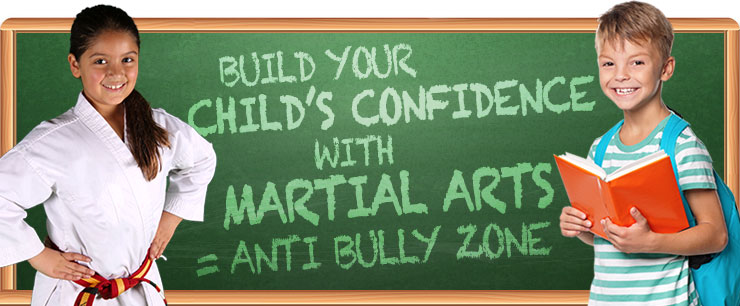
ANTI BULLY TIP #3: TEACH YOUR CHILD VERBAL SKILLS
The third skill we empower our martial arts students with is by teaching them Verbal Skills. This is a fundamental concept! Unfortunately, bullies have always existed and will continue to exist, however knowing how your child can communicate with someone picking on them without becoming a victim or escalating the situation into confrontation is very important. Bullies may initiate the relationship by picking on your child’s clothes, weight or anything they see as a vulnerability.
We teach our martial arts students these 3 sets of verbal skills among others:
• How to use humor to deflect the insult;
• How to change subject when being picked on;
• How to make friends with the person picking on you (Turn a bully into a friend).
ANTI BULLY TIP #4: IF ASSAULTED, COMMUNICATE VISUALLY THAT YOU ARE BEING ATTACKED
In the unfortunate situation a physical confrontation may arise, your child will need to know how to defend themselves. Taking martial classes will give them these self-defense skills, however, we also teach some blocking stances that communicate visually to any adults or teachers watching that they are not initiating the fight, but rather just trying to defend themselves. This will send a signal that your child is not looking for trouble, while also defending themselves from an assault.
Get Started Today with Find Your Perfect Trainer.
✨ Enroll your child today with Find Your Perfect Trainer and give them the tools they need to stand tall, stay confident, and face the world without fear.
5 Reasons You Should Enroll Your Child in Martial Arts
Martial Arts Are Something Every Parent Should Consider
In this article, we want to help you understand the benefits of martial arts for kids so that you can make an informed decision. Martial arts training is more than a helpful way to get kids away from electronic devices. Here are our 5 D’s to help you understand the benefits of martial arts for kids:
1. Discipline
A dojo is a place that commands respect, focus, and honor.
In many martial arts traditions, students of all ages must show honor (often bowing) to their instructor as well as other classmates. Such a simple gesture sets the tone for what’s in store. It serves as a reminder to everyone that martial arts demand focus, respect, and self-restraint – all things that qualify as excellent life skills.
In most martial arts schools or academies, an ethos of honor and prompt obedience to instructions permeates the atmosphere and students catch it quickly. Many parents note an increased level of compliance at home once their child begins practicing a martial art.
2. Determination
Like many individual sports, martial arts students often set measurable personal goals.
Many martial arts traditions use a colored belt system of ranking. Each belt represents a certain level of proficiency and often requires some test or qualifying examination to obtain. Seeing other students wearing higher-ranking belts often compels kids to strive for the next level.
Not only does ranking fuel determination, but the physical demands of martial arts also develop kids’ ability to sweat, strain, and push themselves beyond their limits. Whether engaging in group conditioning such as push-ups or grappling with a classmate for a three-minute practice round, kids quickly learn to force themselves to work harder than ever before.
3. Development
One of the benefits of martial arts for kids is the variety of disciplines from which they can choose.
Many parents enroll their child in 2 or 3 martial arts classes (many times at the same dojo). Each style challenges them in unique ways. Here is a short list of forms and the unique benefits that come with each:
- Brazilian Jiu-Jitsu – Like American wrestling, Brazilian Jiu-Jitsu is hands-on and fast-paced, things that many kids like. Not only is this style engaging, but it is also very efficient concerning self-defense for children of all sizes.
- Karate – A maxim in this style of martial art is never attack first. Karate is a great way to teach kids how to be respectful and to focus on defense rather than offense. Using defensive and counterattacking body movements, kids will learn to honor their opponents and develop their character at the same time.
- Taekwondo – The very name of this discipline refers to putting your fists under your feet, a fancy way of referring to maintaining control, seeking peace, and aiming to stop fights rather than start them. If your aim as a parent is to train your child to be a peace-keeper, Taekwondo might be an excellent style to explore.
- Judo – Unlike many other martial arts styles, Judo does not use kicks, punches, joint pressure, or weapons to subdue an opponent. Instead, students will learn to use strength, focus, and balance to overcome an opponent with a mixture of force and gentleness. This martial arts style also trains the student to be very physically fit and flexible.
- Kung Fu – This is one of the oldest and most complex styles of martial arts. Kids who enroll in a Kung Fu class will be challenged physically and mentally as it’s three main forms take time, focus, and determination to master.
Engaging in differing styles of martial arts will develop your little warrior in various ways. Ask an instructor if they offer kids’ classes in each one.
4. Defense
Disclaimer – your kid will learn to do things that might freak you out at first.
Unlike youth basketball or swimming lessons, your child will learn to punch, kick, grapple, block, and more. Even though it takes place in a controlled and monitored environment, the very nature of martial arts is, to various degrees, aggressive.
The benefits of martial arts for kids is that it redirects their natural impulses toward aggression and channels them in constructive, helpful, and beneficial ways. All the martial arts disciplines listed above primarily focus on self-defense rather than self-promotion, humility rather than bravado.
5. Dedication
Martial arts schools and academies challenge kids in useful ways.
In many martial arts schools, students receive a structured, well-rounded education in physical fitness, mental alertness, humility, and respectful social interaction. They will also gain confidence to face an increasingly scary world with a desire to avoid trouble – and with the ability to deal with it if the need arises.
Also, they will be challenged to dedicate themselves to press on in their pursuit of the next level of achievement in their respective discipline. Whether it is passing a hands-on test while the student’s instructor grades them or demonstrating proficiency to graduate to the next belt color, kids learn to stick it out even when it’s hard.
Encourage Your Kid to Be Involved In The Decision
As you can see, the benefits of martial arts for kids are many. Moreover, the choices of martial arts schools and academies are plentiful. Make your research a joint effort with your child and drum up some excitement. Help them choose a martial arts style that is right for them and encourage them to get in the ring – you will gain loads of cool parent points!
Get Started Today with Find Your Perfect Trainer.
✨ Enroll your child today with Find Your Perfect Trainer and give them the tools they need to stand tall, stay confident, and face the world without fear.
10 Tips Parents Can Use to Build Confidence & Leadership in Kids
— with the Support of Find Your Perfect Trainer
As a parent, helping your child develop self-confidence is one of the greatest gifts you can give them. Confidence shapes how children learn, interact, and face challenges throughout life. While much of this growth starts at home, the right guidance and environment can make a powerful difference.
Here are proven ways to build your child’s confidence — and how Find Your Perfect Trainer supports this journey every step of the way.
🧠 Make Them Think
Children love learning and challenges. Encouraging problem-solving helps them trust their own abilities.
*Offer riddles, puzzles, or board games that stimulate creativity and logic.
*Introduce books that ask questions and explore new adventures.
*Work together on tasks, but let your child lead — this makes them feel capable and valued.
At Find Your Perfect Trainer, children naturally develop focus and concentration through structured physical training. From simple movements to more advanced techniques, kids learn how to stay present, disciplined, and confident — skills that carry over into school and daily life.
👥 Engage Them Socially
Today, many children spend too much time on screens. Real social interaction is essential for confidence.
*Let children help during family gatherings: welcoming guests, serving food, or introducing people.
*Encourage them to host their own small events and take responsibility for planning.
*Enroll them in activities that promote teamwork and communication.
Programs at Find Your Perfect Trainer provide a safe, positive social environment where children learn to cooperate, respect others, and interact confidently with both peers and adults. Parents often notice that children become more open, polite, and socially comfortable after joining.
🤝 Let Them Help
Responsibility builds self-worth.
*Give children age-appropriate tasks at home.
*Allow them to participate in planning and decision-making.
*Encourage independence through guided responsibility.
Training at Find Your Perfect Trainer reinforces responsibility through structured routines, respect, and accountability — helping children feel proud of what they can achieve.
🎯 Let Them Pursue Their Interests
Children thrive when they feel emotionally connected to what they do.
Rather than forcing interests, allow your child to explore activities they enjoy. Many children are naturally drawn to movement, action, and learning “cool” skills. As they progress through structured training at Find Your Perfect Trainer, they learn goal-setting, perseverance, and self-belief — working toward milestones that build real confidence.
👏 Don’t Overpraise
Praise is important, but too much can reduce motivation.
*Praise effort and improvement, not just results.
*Encourage growth and resilience instead of perfection.
At Find Your Perfect Trainer, children are praised when they earn it — for discipline, respect, progress, and helping others — creating balanced confidence built on real achievement.
✅ Let Them Make Decisions
Making choices helps children feel empowered.
*Let them choose between options for meals, clothing, or activities.
*Encourage independent thinking within safe limits.
At Find Your Perfect Trainer, children learn how to make good decisions, handle peer pressure, and apply anti-bullying strategies — skills that empower them far beyond training sessions.
🚶 Stand Back Sometimes
Over-supervision can limit independence.
*Let children solve problems on their own.
*Allow safe exploration and independence.
When children step onto the training floor at Find Your Perfect Trainer, they learn to operate independently, interact confidently, and take responsibility — while parents observe their growth with pride.
😌 Be Calm & Confident
Children mirror their parents’ emotions.
*Stay calm during setbacks.
*Encourage rather than criticize.
A structured and respectful training environment like Find Your Perfect Trainer supports emotional balance not only for children, but for families as a whole.
🛑 Don’t Rescue Too Quickly
Struggles are part of growth.
*Allow children to work through challenges.
*Step in only when necessary.
At Find Your Perfect Trainer, children gain confidence by solving problems, practicing self-control, and learning resilience — all under professional guidance.
🌟 Help Them Dream About the Future
Children love imagining who they will become.
Through clear goals, progression, and achievement, Find Your Perfect Trainer helps children build a strong vision of their future — confident, disciplined, and motivated.
👉 Why Choose Find Your Perfect Trainer?
By enrolling your child with Find Your Perfect Trainer, you are giving them more than physical training — you are giving them:
*Confidence
*Discipline
*Focus
*Social skills
*Respect
*Goal-setting abilities
✨ Enroll your child today and help them finish the school year stronger, happier, and more confident — ready for a successful and active future
How Physical Activity Combats Mental Health Issues with Children
Everywhere you go today, you hear about how important physical activity is for children. It helps keep them fit, healthy, and can reduce the risk of conditions such as diabetes, heart disease, and high blood pressure. What is discussed less often — but is just as important — is the powerful connection between physical activity and children’s mental health.
This connection is not based on assumptions. A growing body of scientific research shows strong positive links between regular physical activity and improved mental health in children. Studies have found improvements in self-esteem, cognitive function, emotional regulation, and even positive effects on behavioral conditions such as ADHD. Physical activity has also been shown to help reduce anxiety and symptoms of depression in children.
At Find Your Perfect Trainer, we believe physical training plays a key role in shaping not only strong bodies, but strong minds.
How Physical Activity Supports Mental Health in Children
In honor of Mental Health Awareness Month, let’s explore how structured physical activity — like the programs offered at Find Your Perfect Trainer — supports children’s mental and cognitive development.
We can divide these benefits into two major areas:
*Academic and Social Well-Being
*Mental and Emotional Well-Being
Academic and Social Well-Being
Research consistently shows that physically active children perform better academically. Some studies even suggest that regular physical activity has a stronger link to improved test scores than spending additional hours studying.
Engaging in structured physical activity after school helps children better retain what they’ve learned during the day. Programs like those at Find Your Perfect Trainer provide the perfect balance between movement, discipline, and focus.
Academic benefits include:
*Improved memory
*Increased cognitive awareness
*Better attention and concentration
*Higher academic performance
*Long-term educational success
Beyond academics, training in a structured group environment also strengthens social development. Through shared activities, children learn to:
*Develop a sense of belonging
*Accept mistakes and failure positively
*Control emotions
*Build patience
*Work as a team
*Show respect and generosity toward others
These social skills are a core part of every program at Find Your Perfect Trainer.
Mental and Emotional Well-Being
While serious depression affects a relatively small percentage of children, many still experience stress, anxiety, frustration, or emotional ups and downs. Just as adults often feel better after physical activity, children benefit in the same way.
Studies show that regular physical activity:
*Increases endorphin levels
*Boosts self-confidence and self-esteem
*Reduces anxiety
*Helps manage everyday stress
*Improves overall mood
At Find Your Perfect Trainer, children learn how movement, discipline, and progress can positively influence how they feel emotionally.
Physical activity may also help prevent future mental health challenges. A long-term study in Norway followed children aged 8–10 and found that those who participated in moderate physical activity showed fewer depressive symptoms as they grew older. Researchers emphasized that physical activity should be viewed not only for immediate physical benefits, but for long-term mental health as well.
While exercise is not a cure for depression, it has been shown to significantly reduce symptoms and act as a powerful starting point for emotional improvement.
Physical Activity and Brain Development
In The Upward Spiral, neuroscientist Alex Korb explains how small changes — such as introducing regular physical activity — can trigger positive feedback loops in the brain that improve mood and mental health over time.
This concept is especially relevant for children. Even short, regular sessions of structured physical activity can improve focus, emotional regulation, and mental clarity.
Children with attention-related challenges, such as ADHD, often show noticeable improvements in awareness and behavior when physical activity is part of their daily routine. That’s why programs at Find Your Perfect Trainer emphasize consistency, structure, and age-appropriate engagement.
Physical Activities Your Child Can Explore
Not all children enjoy traditional team sports — and that’s perfectly okay. There are many alternative activities that provide excellent physical and mental benefits, including:
*Yoga
*Taekwondo
*Karate
*Brazilian Jiu-Jitsu
*Ballet
*Dance
At Find Your Perfect Trainer, we guide parents in choosing the activity that best suits their child’s personality, needs, and interests — helping them thrive both physically and mentally.
Conclusion: Invest in Your Child’s Mind and Body
There is strong and growing evidence that physical activity plays a vital role in children’s mental health. By encouraging regular movement, parents can help reduce stress, anxiety, sadness, and emotional challenges — while also supporting academic success and social development.
More and more parents are turning to structured training programs as an alternative to traditional sports. Activities such as martial arts, dance, and focused movement training offer children the same physical benefits while also building discipline, confidence, and emotional balance.
By enrolling your child at Find Your Perfect Trainer, you are giving them:
*A healthy physical routine
*Strong mental resilience
*Improved focus and confidence
*Lifelong habits that support emotional well-being
✨ Join Find Your Perfect Trainer today and help your child grow into a confident, focused, and mentally strong individual — ready for success now and in the future.
Anti-bully Strategies To Share With Your Kids
— Empowered by Find Your Perfect Trainer
In this article, we’ll explore effective anti-bullying coping strategies you can share with your child to help them avoid becoming a victim during the upcoming school year.
Bullying remains a serious and ongoing concern. While many parents understand that their child may face bullying at school or among peers, most also believe that if something were wrong, their child would tell them. Unfortunately, statistics show that children who are bullied often do not share their experiences with adults.
Bullying has existed for generations and is unlikely to disappear completely. The most effective solution is not fear — it is empowerment. At Find Your Perfect Trainer, we focus on giving children the skills, confidence, and mindset they need to stand strong and avoid becoming targets.
Skill #1: Don’t Be a Victim
One of the first lessons taught at Find Your Perfect Trainer is how not to appear like a victim. Bullies often choose children who appear unsure, withdrawn, or lacking confidence.
Children are trained to:
*Carry themselves confidently
*Maintain eye contact
*Control body language
*Stay calm and aware
Martial arts and structured physical training are often misunderstood as “fighting.” In reality, training is about confidence, discipline, and self-control. When a child knows how to protect themselves — verbally and physically — they naturally project confidence. This confidence alone often prevents bullying situations before they start.
👉 Confident kids are far less likely to become victims.
Skill #2: Verbal Defense — Turning Bullies Into Bystanders
At Find Your Perfect Trainer, children learn verbal strategies to defuse situations without aggression. Bullies often expect fear, silence, or emotional reactions. When that expectation is broken, the power dynamic changes.
Example:
Bully: “You’re fat! Don’t you know you’re fat?”
Child: “Hey, aren’t you the basketball player everyone talks about?”
or
“Hey, aren’t we in the same class? Which way is homeroom?”
We also teach children how to redirect insults into neutral or even positive interactions.
Another example:
Bully: “That shirt is ugly!”
Child: “Maybe — but you should’ve seen the one I got for my birthday 😄
By the way, I like your shirt. Where did you get it?”
These techniques disrupt the bully’s momentum and often end the situation peacefully.
Skill #3: Confidence
You can teach your child techniques, but without confidence, they may hesitate to use them. Bullies are extremely good at sensing fear or uncertainty.
Confidence is built through:
*Repetition
*Positive reinforcement
*Physical awareness
*Structured challenges
At Find Your Perfect Trainer, children build confidence step by step in a supportive environment. This confidence allows them to apply verbal strategies naturally and assertively — without panic or aggression.
Your child’s safety and emotional well-being are too important to leave to chance.
Skill #4: Self-Esteem & Changing behaviour
A child’s self-esteem plays a major role in whether they become a bullying target. Children who believe in themselves are less likely to internalize insults or emotional abuse.
Through structured training at Find Your Perfect Trainer, children develop:
*Strong self-esteem
*Emotional resilience
*Respect for themselves and others
*Mental strength
Statistics show that the most serious consequences of bullying are often psychological, not physical. Many victims suffer not because they were physically hurt, but because they were mentally broken down over time.
This is why self-esteem and character building are at the heart of everything we do.
A Strong Start to the School Year
We hope this article has helped you reflect on your child’s:
*Confidence
*Self-esteem
*Communication skills
*Emotional strength
If you feel your child could benefit from support in any of these areas, we invite you to explore Find Your Perfect Trainer. Our programs offer a positive, structured, and empowering environment where children build confidence, make friends, and learn essential life skills.
Get Started Today with Find Your Perfect Trainer
✨ Enroll your child today with Find Your Perfect Trainer and give them the tools they need to stand tall, stay confident, and face the world without fear.
Differences Between Cyberbullying and Bullying?
Bullying is an unpleasant and damaging experience no matter how it happens. Most of us can clearly remember an episode of bullying as it leaves a lasting impression. It’s frightening, shaming and destroys self-confidence.
Traditional bullying takes place face-to-face. It’s the taunting of mean comments, unpleasant name-calling or physical attacks. More recently bullying has taken on a new variation – cyberbullying. It can be unfamiliar territory and extremely difficult to understand. But it’s important that we get to grips with the new challenges that our children face, so we’re in the best possible position to support and care for them.
So what exactly is cyberbullying, and how does it differ from the traditional form of bullying?
What Is Cyberbullying?
Cyberbullying is the name given to the type of abuse that happens across digital technologies such as social media, messaging platforms, gaming platforms, mobile messaging and email.
Bullies target individuals repeatedly by shaming, belittling and scaring them across these new interfaces. This can look like:
- Posting pictures or videos of the target across social media or messaging platforms to ridicule and make fun of.
- Sending abusive direct messages or emails to induce fear.
- Name calling and exclusion across gaming platforms.
There are many other tactics besides these, and they’re all frightening and distressing. Of course, cyberbullying doesn’t have to happen exclusively, and often takes place alongside traditional face-to-face bullying.
However there are differences that make cyberbullying a particularly worrying development.
What Makes Cyberbullying Different?
Anonymous
One of the biggest differences between cyberbullying and traditional bullying, is that it can be carried out completely anonymously. Online, a bully can be whoever they decide to be. Their true identity can be easily hidden under a pretend name and a random picture. Under a false guise, the perpetrator is emboldened to act more viciously than they would in a face-to-face encounter. The victim has no idea who their bully is, which is particularly upsetting as it elevates a sense of mistrust in others. It also keeps them in a state of paranoia, as they wonder who might be responsible for attacking them.
Disconnected
Cyberbullying is a very disconnected behaviour. The bully can easily act unjustly with little to no repercussions. They cannot see the immediate effects of their behaviour on others; sitting behind a screen completely removes them from the seriousness of the situation. They’re less likely to consider their poor behaviour problematic, and therefore feel no guilt or remorse.
Face-to-face bullying on the other hand puts the bully in front of the target, the impact of their words and actions are immediately visible. There is no hiding or disconnect from the reality of their choices, making it more likely that they’ll reflect and reconsider their behaviour.
Unceasing
When bullying occurs in person, the bullies and the victim are in one another’s company. This limits the frequency and duration of the abuse. However, cyberbullying can happen anytime, anywhere. Bullying over the internet through direct messages or digital platforms, means the abuse can continue 24/7 without reprieve.
The victim cannot escape or ever feel safe. Mobile devices are constantly carried around and provide a ‘direct-line’ to an individual. Bullying is always terrible, but it is possible to escape face-to-face bullying. Cyberbullying is merciless in its approach to pester and abuse someone with the tap of a finger, day and night.
Accessible
There’s few places in the world without internet connection. It’s affordable and essential in modern-day life, and most young people have their own mobile device connected to the internet at all times. This makes cyberbullying quick and easy. Add to that the anonymity factor and cyberbullying can become a hobby for some.
Face-to-face bullying takes more commitment, and with the risk of getting caught, it can be enough to put off the most ardent bully.
Permanent
Bullying leaves a lasting impression on the target, no matter how it’s carried out. But there is a permanency to cyberbullying that isn’t experienced with traditional types of bullying. When bullies post abuse online, the information is forever remembered. Stored online, it’s available to see forever. It’s often linked to the victim’s name, and leaves a lasting mark online as well as on the person. This can be particularly damaging and difficult to move past since it’s a constant reminder of the offense.
For All To See
Many acts of cyberbullying happen across digital platforms with audiences reaching into the billions worldwide. When a bully attacks online using these techniques, there is added humiliation because so many people are able to see it.
Traditional bullying rarely has an audience, it usually happens fairly discreetly and the victim is not usually humiliated in front of others. If an embarrassing video or picture is posted online, the victim is traumatised by the fact that millions of people have seen them; it’s humiliation on an epic scale.
Difficult To Monitor
Online comments and messages, although anonymous, are available for all to see. This is an advantage if wanting to gather evidence against a bully or prove wrongdoing. But with the rapid nature and extensive use of cyberbullying, it can be extremely difficult to monitor. Online platforms have a responsibility to keep their users safe, and many of them work hard to crack down on hateful speech and behaviour.
However, it’s impossible to keep track and remove every abuse, let alone prevent it in the first place. Many types of cyberbullying also happen on private chats or through text messages and emails. These are not monitored and this form of cyberbullying can be very covert, with no-one else aware of the problem, let alone able to step in and protect the vulnerable and hold the bullies to account.
What You Can Do
It’s important to remember that face-to-face bullying still happens, it hasn’t gone away, and is often used in tandem with cyberbullying to intimidate the victim. Cyberbullying is especially challenging and problematic because of its easy, constant and covert nature. So what can you do to protect the young people in your life?
Spend Time Together
It’s so critical that you spend quality time together. This keeps the door open for honest communication and the opportunity to share difficulties. So much shame is attached to bullying, it’s important the young people in your life feel able to trust you with what’s happening. Quality time builds secure relationships, where even the most challenging topics feel possible to disclose. You’re also more likely to notice even small changes in behaviour if you foster a close relationship.
Set Guidelines
Just as you have guidelines about where your young person spends their time and how late they stay out – to protect them, make sure you do the same for their digital presence too. You may decide to have time restraints for mobile devices or around access to certain platforms. Remember, there are guidelines for social media and online gaming concerning age appropriateness. Learn what these guidelines are and consider the emotional intelligence of the child in your care, before deciding whether it’s safe to use. Where possible you can turn off chats for online gaming or select safe modes to protect against negative comments or language.
Cyberbullying is worrying and has detrimental effects on victims. Whilst any kind of bullying is harmful, this new era of bullying can be hidden and go unnoticed. Many adults are unaware of the risk facing young people across digital platforms and technologies. With knowledge about the issues, and by maintaining good connections with our young people, we can guide and protect them through the challenges they face.
Get Started Today with Find Your Perfect Trainer.
✨ Enroll your child today with Find Your Perfect Trainer and give them the tools they need to stand tall, stay confident, and face the world without fear.
What To Do When Your Child Is The Bully?
When Your Child Is the Bully: A Guide for Parents
As a parent, discovering that your child is bullying someone else can be a difficult and emotional experience. It is natural to feel shock, anger, guilt, and concern about the long-term effects of your child’s behaviour. However, it is important to remember that children who bully are often struggling with underlying issues and may not fully understand the impact of their actions on others.
As a parent, it is your responsibility to address the issue calmly and constructively, helping your child learn healthier, more respectful ways to interact with others.
The Impact of Bullying on Children
Bullying is a serious issue that can have long-term consequences for both the victim and the child who bullies. Children who engage in bullying are more likely to develop risky behaviours later in life, including substance abuse and involvement in criminal activity.
Victims of bullying may experience anxiety, depression, low self-esteem, and difficulties with academic performance. They may also struggle to form and maintain friendships. Addressing bullying early is essential to prevent these lasting negative effects.
Identifying the Root Cause
Before taking action, it is important to understand why your child is behaving this way. Bullying can stem from low self-esteem, a desire for attention, poor emotional regulation, peer pressure, or a lack of empathy.
Talk openly with your child and listen without judgment. Encourage them to share their feelings and perspective. In some cases, seeking guidance from a therapist or counsellor can help uncover deeper issues contributing to the behaviour.
Taking Responsibility
Once the underlying cause is identified, help your child take responsibility for their actions. This includes acknowledging the harm they have caused and understanding how their behaviour affects others.
An open and honest discussion about respect and accountability is essential. Depending on the situation, restorative actions—such as writing an apology letter or participating in a mediated conversation—can help your child develop empathy and learn from their mistakes.
Consequences and Discipline
While consequences are important, punishment alone will not resolve bullying behaviour. Discipline should focus on learning, accountability, and growth.
Consequences may include loss of privileges, community service, or other appropriate actions based on the severity of the behaviour. Clear, consistent boundaries help reinforce that bullying is unacceptable. However, consequences should always be balanced with guidance, emotional support, and opportunities to improve behaviour.
Teaching Empathy and Compassion
One of the most effective ways to prevent bullying is to actively teach empathy and compassion. Help your child understand how others feel and how their actions impact those around them.
Model kindness in your own behaviour and encourage activities that promote empathy, such as volunteering or participating in community service. These experiences can help children develop a stronger sense of responsibility and care for others.
Seeking Professional Help
If bullying behaviour continues despite your efforts, seeking professional support may be necessary. A therapist or counsellor can help your child develop healthier coping strategies, emotional awareness, and social skills.
Family therapy may also be beneficial if household dynamics are contributing to the issue. Seeking help is not a sign of failure—it is a proactive step toward supporting your child’s emotional growth and well-being.
Tips for Parents When Your Child Is the Bully
*Stay calm: Approach the situation thoughtfully rather than reacting with anger.
*Talk openly: Have honest conversations and listen to your child’s perspective.
*Set clear expectations: Make it clear that bullying is unacceptable and explain the consequences.
*Encourage positive behaviour: Reinforce kindness, respect, and empathy.
*Seek help when needed: Professional support can provide valuable tools and guidance.
Conclusion
Learning that your child is bullying others can be challenging, but it also presents an opportunity for growth and change. By identifying the root causes, encouraging responsibility, setting clear boundaries, teaching empathy, and seeking professional help when needed, parents can guide their children toward more positive and respectful behaviour.
With patience, support, and consistency, children can learn to treat others with kindness and develop healthier relationships.
Get Started Today with Find Your Perfect Trainer.
✨ Enroll your child today with Find Your Perfect Trainer and give them the tools they need to stand tall, stay confident, and face the world without fear
What Is Bullying?
What Is Bullying
Bullying is unwanted, aggressive behavior among school aged children that involves a real or perceived power imbalance. The behavior is repeated, or has the potential to be repeated, over time. Both kids who are bullied and who bully others may have serious, lasting problems.
In order to be considered bullying, the behavior must be aggressive and include:
- An Imbalance of Power: Kids who bully use their power—such as physical strength, access to embarrassing information, or popularity—to control or harm others. Power imbalances can change over time and in different situations, even if they involve the same people.
- Repetition: Bullying behaviors happen more than once or have the potential to happen more than once.
Bullying includes actions such as making threats, spreading rumors, attacking someone physically or verbally, and excluding someone from a group on purpose.
Types of Bullying
There are three types of bullying:
- Verbal bullying is saying or writing mean things. Verbal bullying includes:
- Teasing
- Name-calling
- Inappropriate sexual comments
- Taunting
- Threatening to cause harm
- Social bullying, sometimes referred to as relational bullying, involves hurting someone’s reputation or relationships. Social bullying includes:
- Leaving someone out on purpose
- Telling other children not to be friends with someone
- Spreading rumors about someone
- Embarrassing someone in public
- Physical bullying involves hurting a person’s body or possessions. Physical bullying includes:
- Hitting/kicking/pinching
- Spitting
- Tripping/pushing
- Taking or breaking someone’s things
- Making mean or rude hand gestures
Where and When Bullying Happens
Bullying can occur during or after school hours. While most reported bullying happens in the school building, a significant percentage also happens in places like on the playground or the bus. It can also happen travelling to or from school, in the youth’s neighborhood, or on the Internet.
Warning Signs for Bullying?
There are many warning signs that may indicate that someone is affected by bullying—either being bullied or bullying others. Recognizing the warning signs is an important first step in taking action against bullying. Not all children who are bullied or are bullying others ask for help.
It is important to talk with children who show signs of being bullied or bullying others. These warning signs can also point to other issues or problems, such as depression or substance abuse. Talking to the child can help identify the root of the problem.
Signs a Child Is Being Bullied
Look for changes in the child. However, be aware that not all children who are bullied exhibit warning signs.
Some signs that may point to a bullying problem are:
- Unexplainable injuries
- Lost or destroyed clothing, books, electronics, or jewelry
- Frequent headaches or stomach aches, feeling sick or faking illness
- Changes in eating habits, like suddenly skipping meals or binge eating. Kids may come home from school hungry because they did not eat lunch.
- Difficulty sleeping or frequent nightmares
- Declining grades, loss of interest in schoolwork, or not wanting to go to school
- Sudden loss of friends or avoidance of social situations
- Feelings of helplessness or decreased self esteem
- Self-destructive behaviors such as running away from home, harming themselves, or talking about suicide
If you know someone in serious distress or danger, don’t ignore the problem. Get help right away.
Signs a Child is Bullying Others
Kids may be bullying others if they:
- Get into physical or verbal fights
- Have friends who bully others
- Are increasingly aggressive
- Get sent to the principal’s office or to detention frequently
- Have unexplained extra money or new belongings
- Blame others for their problems
- Don’t accept responsibility for their actions
- Are competitive and worry about their reputation or popularity
The Roles Kids Play in Bullying
Kids involved in bullying can take on many roles. They might bully others, be bullied, or act as bystanders who can help or even encourage the behavior. Experts sometimes describe a “circle of bullying” to explain how kids can be involved in bullying in different ways, not just as those who bully or are bullied, but also as kids who support, witness, or try to stop it.
In most cases, kids also play more than one role in bullying over time—they may be both bullying others as well as being bullied themselves, or they may witness bullying and play assisting and defending roles. It is important to note the multiple roles kids play, because:
- All kids involved can be affected by it in different ways. For example, those who are both bullied and bully others are at a higher risk of negative outcomes, like depression and suicidal ideation.
- It highlights the need to engage all kids in prevention efforts, not just those known to be directly involved.
Every situation is different, but recognizing each role can help adults take the right steps to prevent and respond to bullying.
- Importance of Not Labeling Kids
- Kids Directly Involved in Bullying
- Kids Who Are Bystanders to Bullying
Importance of Not Labeling Kids
It’s common to hear kids in bullying situations described as “bullies” or “victims.” However, using these labels can cause more harm than may be intended. Labeling children this way may:
- Send the message that the child’s behavior can never change.
- Overlook the fact that kids can play different roles in different situations.
- Ignore the deeper issues that may influence their behavior, like mental health, school climate, or peer pressure.
A better approach is to focus on the behavior, not the identity. For example:
- Say “the child who bullied” instead of “bully.”
- Say “the child who was bullied” instead of “victim.”
- Say “the child who was both bullied and bullied others” instead of “bully-victim.”
This language helps prevent harmful stereotypes while recognizing that bullying is a behavior. All behaviors can change with awareness, education, and support.
Kids Directly Involved in Bullying
We most commonly talk about kids who are directly involved in bullying. These direct roles include:
- Kids who Bully: These children engage in bullying behavior toward their peers. Many risk factors may contribute to a child’s involvement in bullying. Often, these students require support to change their behavior and address challenges influencing their behavior.
- Kids who are Bullied: These children are the targets of bullying behavior. Some factors put children at more risk of being bullied, but not all children with these characteristics will be bullied. Sometimes, these children may need help learning how to respond to bullying.
Kids Who Are Bystanders to Bullying
Even if a child is not directly involved in bullying, they can still play a role. Research estimates that witnesses are present in about 85% of bullying scenarios. These kids may contribute to the behavior, whether they mean to or not. However, they also have the power to step in and help stop it, so all students need to know what to do if they see bullying happen. Roles kids play when they witness bullying include:
- Kids who Assist: These children may not start or lead the bullying behavior, but they do participate in and help the child who is bullying.
- Kids who Reinforce: These children contribute to bullying by giving it a supportive audience. They will often laugh or show other signs of approval for those engaging in bullying, which may encourage the bullying to continue.
- Onlookers: These children watch the bullying but don’t get involved. They may not mean to cause harm, but staying silent or passive can still give the behavior an audience and make it more likely to continue. These kids often want to help, but don’t know how. Learn how to be “more than a bystander.”
- Kids who Defend: These children actively comfort the child being bullied and may come to their defense when bullying happens. Studies show that when kids do step in to defend a peer, they can stop the bullying or prevent future instances. Kids can do this safely by questioning the behavior, using humor to redirect the conversation, or getting a trusted adult.
All those directly and indirectly involved in bullying, even those who are just onlookers, can be negatively impacted by it. Help is available. The 988 Lifeline is a free resource that provides judgment-free support for mental health struggles, emotional distress, or even if you just need someone to talk to. Support from parents, caregivers, and trusted adults can also help kids who are involved in bullied.
Long-Term Effects of Bullying
When bullying happens, everyone who is involved or witnesses it can have lasting impacts on their mental health and well-being. Bullying is linked to many negative outcomes, including increased risks of depression and anxiety, substance use, and suicide. Knowing the potential effects and how to support kids in bullying situations is important to making sure kids get the help and resources they need to heal.
- Kids Who Are Bullied
- Kids Who Bully Others
- Kids Who Are Bullied and Bully Others
- Kids Who Witness Bullying
- The Relationship Between Suicide and Bullying
Kids Who Are Bullied
Kids who are bullied can experience negative physical, social, emotional, academic, and mental health issues that can last into adulthood. Kids who are bullied are more likely to experience:
- Depression and anxiety disorders, symptoms of borderline personality disorder, changes in sleep and eating patterns, and loss of interest in activities they used to enjoy, like sports teams and clubs.
- Self-esteem issues with feelings of shame that can impact all aspects of kids’ lives.
- Health complaints, including higher rates of headaches, stomach aches, and colds.
- Behaviors, like increased rates of smoking, that increase the risk of future health concerns, like higher stress levels and sleeping problems.
- Decreased academic achievement, like lower GPA, standardized test scores, and school participation. They are more likely to miss, skip, or drop out of school.
- Struggles with friendships and maintaining relationships later in life.
Though the majority of kids who are bullied do not express violence toward others, a very small number of children who are bullied might retaliate through violent measures. In school shooting cases between 2013 and 2019, 60% of the shooters reported being bullied in person or online. For more resources on preventing targeted school violence, check out SchoolSafety.gov’s Threat Assessment Resource for K-12 Schools.
If you’re experiencing bullying, there are things you can do to keep yourself and other kids safe from bullying. Adults also play a key role in preventing and responding to bullying and there are tools for adults that can help ensure all children are safe. Working with children to build resilience can help kids who were bullied overcome these challenges and begin to thrive once again.
Kids Who Bully Others
Kids who bully others can also engage in violent and other risky behaviors into adulthood. Kids who bully are more likely to:
- Abuse alcohol, tobacco, and other drugs in adolescence and adulthood.
- Experience depression or self-harm.
- Have poor academic achievement, miss, or drop out of school.
- Experience aggressive and impulsive behavior, resulting in higher risks of vandalism, fights, traffic offenses, and criminal charges.
- Perpetuate dating violence as early as eighth grade and become abusive toward their romantic partners, spouses, or children as adults.
Kids Who Are Bullied and Bully Others
Kids who have been bullied themselves while also bullying others suffer the most serious consequences. These kids have the highest risk of mental health and behavioral problems, making it crucial for adults to connect these youth with support and resources like mental health counseling. Kids who are bullied and bully others are more likely to:
- Engage in early sexual activity and become a young parent.
- Struggle with making and keeping friendships.
- Have trouble keeping a job and honoring financial commitments in adulthood.
- Experience mental health issues like anxiety, depression, and antisocial personality disorder, as well as similar physical health concerns to kids who were only bullied.
Kids Who Witness Bullying
Bullying also impacts kids who are not directly involved but witness the bullying taking place. These kids may:
- Have increased feelings of helplessness or guilt for being unable to stop or prevent it.
- Feel unsafe at school, which can affect academic performance, mental health, and school climate.
- Use tobacco, alcohol, or other drugs at increased rates.
- Experience increased risk for mental health problems, such as depression and anxiety.
- Have poor school attendance due to missing or skipping school.
The Relationship Between Bullying and Suicide
Suicide is a serious concern for all kids who experience traumatic situations or mental health issues, including bullying. Although most kids who are bullied do not experience suicidal thoughts or self-harm, there is a strong connection between those who do present signs of suicide and a history of bullying.
In one study of youth visiting emergency departments with suicidal ideation, researchers found that kids who reported cyberbullying were 11.5 times more likely to present suicidal ideation, while individuals reporting verbal bullying were 8.4 times more likely.
It’s important to talk to all kids about what’s going on in their lives to determine if they’re involved in bullying or other concerning behaviors. Support from parents and caregivers, peers, and adults at school can help prevent and repair the consequences of bullying.
Why Some Youth Bully?
Children and teenagers who feel secure and supported by their family, school, and peers are less likely to bully. However, some youth do not have these types of support. Every individual is unique and there are many factors that can contribute to bullying behavior. A youth who bullies may experience one, several, or none of these contributing factors.
Peer factors
Some youth bully:
- to attain or maintain social power or to elevate their status in their peer group.
- to show their allegiance to and fit in with their peer group.
- to exclude others from their peer group, to show who is and is not part of the group.
- to control the behavior of their peers.
Family factors
Some youth who bully:
- come from families where there is bullying, aggression, or violence at home.
- may have parents and caregivers that do not provide emotional support or communication.
- may have parents or caregivers who respond in an authoritarian or reactive way.
- may come from families where the adults are overly lenient or where there is low parental involvement in their lives.
Emotional factors
Some youth who bully:
- may have been bullied in the past or currently.
- have feelings of insecurity and low self-esteem, so they bully to make themselves feel more powerful.
- do not understand other’s emotions.
- don’t know how to control their emotions, so they take out their feelings on other people.
- may not have skills for handling social situations in healthy, positive ways.
School factors
Some youth who bully:
- may be in schools where conduct problems and bullying are not properly addressed.
- may experience being excluded, not accepted, or stigmatized at school.
Every youth involved in bullying – as a target, a bystander, or as one who does the bullying – can benefit from adult, school, and community support. Youth who bully may also need support to help them address their behavior. Parents, school counselors, teachers, and mental health professionals can work with youth who bully to help them develop healthy school and peer connections and to learn new social and emotional skills. If you have bullied your peers, reach out to a trusted adult for help. Bullying is a behavior that can be changed.
Bullying and Trauma
Bullying can have lasting impacts on everyone involved: the person being bullied; bystanders who witness the bullying; and the person who bullies others. In fact, bullying is considered an Adverse Childhood Experience (ACE). ACEs are potentially traumatic events that can have negative, lasting effects on a person’s development, the way they interact with others, and how they perform in school. Research has shown that children reporting more ACEs may be more likely to exhibit bullying behavior.
Understanding Trauma
The Substance Abuse and Mental Health Services Administration (SAMHSA) defines trauma as a result of an event, series of events, or set of circumstances that an individual experiences as physically or emotionally harmful or life threatening. These experiences can have lasting adverse effects on a person’s mental, physical, social, emotional, or spiritual wellbeing.
Childhood traumatic stress occurs when traumatic events overwhelm a child’s or teenager’s ability to cope, such as:
- Neglect and psychological, physical, or sexual abuse
- Domestic violence or intimate partner violence
- Community and school violence (including bullying)
- Natural disasters
- Terrorism, war, and refugee experiences
- Serious accidents, life-threatening illness, or sudden or violent loss of a loved one
- Military family-related stressors, such as parental deployment, loss, or injury
While each child may react differently to trauma, parents, caretakers, and teachers may be able to recognize some signs of traumatic stress. For example, preschool children may have nightmares or fear of separation. Elementary school children may feel shame or anxiety, or have trouble concentrating. Kids in middle and high school may show signs of depression or engage in self-harm behaviors. Child trauma survivors are more likely to have academic problems and increased involvement with the child welfare and juvenile justice systems.
The Connection between Bullying and Traumatic Stress
Every individual is different and incidents that traumatize one person may not affect another. As stated by the National Child Traumatic Stress Network (NCTSN), children or teens who have been exposed to trauma and violence may be more likely to bully others and be bullied.
Some children who experience trauma and bullying may have strong feelings of distress, while other children may appear desensitized. As an example, a study on bullying and post-traumatic stress found that some children may repress their thoughts or feelings about what took place. This can lead to numbness or loss of interest in activities. This study also found that children may experience intrusive thoughts, such as sudden flashbacks of their bullying experience. It is important that caregivers understand how to respond to bullying and are sensitive to possible traumatic stress.
What Helps After Trauma from Bullying
Parents, teachers, and other trusted adults can help children or teens who experience traumatic stress from bullying. According to NCTSN’s Effective Treatments for Youth Trauma, some approaches that help children and teenagers who have experienced trauma, including bullying, are:
- Ensuring the child or teen is safe and seek ways to prevent future bullying experiences
- Talking through what happened and why, to help clear up misconceptions about their role in the traumatic event
- Teaching stress management and relaxation techniques, to help them cope
Some children and teenagers may also need professional help to treat stress related from bullying and/or other traumatic experiences. Healthcare providers can make referrals for treatment.
How Schools and Teachers Can Help
Schools can adopt a trauma-informed approach, by training teachers and staff skills to handle and recognize traumatic stress or other signs of trauma. These skills allow teachers to help or find other supports and services for students in need.
Resources like the Trauma-Sensitive Schools Training Package from The National Center on Safe Supportive Learning Environments (NCSSLE) may help schools adopt trauma-informed approaches to create safe and supportive learning environments. These include:
- Educating school staff about trauma and its effects
- Promoting physical and emotional safety in relationships and the environment
- Reducing trauma-related triggers in the school environment
- Considering trauma in all assessment and protocol behavior plans
- Ensuring students and families have voice, choice, and empowerment
By adopting trauma-informed approaches, schools can help prevent bullying and trauma at school, and provide a positive school culture for both students and staff.
Parents, caregivers, teachers, and schools all play an important role in preventing and addressing bullying and its harmful effects.
Who Is at Risk?
No single factor puts a child at risk of being bullied or bullying others. Bullying can happen anywhere—cities, suburbs, or rural towns. Depending on the environment, some groups—youth with disabilities and socially isolated youth—may be at an increased risk of being bullied. Stigma can also spread false and harmful information that can lead to increasing rates of bullying, harassment, and hate crimes against certain groups of people.
Children at Risk of Being Bullied
Generally, children who are bullied have one or more of the following risk factors:
- Are perceived as different from their peers, such as being overweight or underweight, wearing glasses or different clothing, being new to a school, or being unable to afford what kids consider “cool”
- Are perceived as weak or unable to defend themselves
- Are depressed, anxious, or have low self esteem
- Are less popular than others and have few friends
- Do not get along well with others, seen as annoying or provoking, or antagonize others for attention
However, even if a child has these risk factors, it doesn’t mean that they will be bullied.
Children More Likely to Bully Others
There are two types of kids who are more likely to bully others:
- Some are well-connected to their peers, have social power, are overly concerned about their popularity, and like to dominate or be in charge of others.
- Others are more isolated from their peers and may be depressed or anxious, have low self esteem, be less involved in school, be easily pressured by peers, or not identify with the emotions or feelings of others.
Children who have these factors are also more likely to bully others;
- Are aggressive or easily frustrated
- Have less parental involvement or having issues at home
- Think badly of others
- Have difficulty following rules
- View violence in a positive way
- Have friends who bully others
Remember, those who bully others do not need to be stronger or bigger than those they bully. The power imbalance can come from a number of sources—popularity, strength, cognitive ability—and children who bully may have more than one of these characteristics.
Race, Ethnicity, National Origin & Religion
Stopping Bullying Based on Race, Ethnicity, National Origin, and Religion.
Bullying rooted in race, ethnicity, national origin, or religion is one of the most damaging forms of harassment. Unlike general bullying, it attacks a person’s identity, culture, and beliefs—things that are deeply personal and often unchangeable. This type of bullying can occur in schools, workplaces, online spaces, and communities, leaving lasting emotional, psychological, and social scars.
Children and adults who experience identity-based bullying often suffer from anxiety, depression, low self-esteem, academic or professional decline, and social withdrawal. Addressing this issue requires awareness, empathy, education, and collective responsibility.
Understanding Identity-Based Bullying
Bullying related to race, ethnicity, national origin, or religion may include:
*Racial slurs, name-calling, or stereotypes
*Mocking accents, clothing, traditions, or religious practices
*Exclusion based on cultural background
*Online hate speech or discriminatory comments
*Physical intimidation or threats motivated by prejudice
Often, this behavior stems from ignorance, fear of differences, or learned prejudice from media, peers, or adults.
Solutions to Stop Bullying
1. Education and Awareness
Education is the strongest tool against prejudice. Schools and communities must teach:
*Cultural diversity and respect from an early age
*The value of different traditions, beliefs, and histories
*The harmful impact of stereotypes and discrimination
Open discussions help replace fear with understanding.
2. Encourage Open Communication
Victims of bullying must feel safe speaking up. Parents, teachers, and leaders should:
*Create judgment-free environments
*Listen actively and validate feelings
*Take all reports seriously
Silence allows bullying to continue; speaking up helps stop it.
3. Strong Anti-Bullying Policies
Institutions must enforce clear rules that explicitly prohibit discrimination based on:
*Race
*Ethnicity
*National origin
*Religion
Consequences should be consistent, fair, and focused on education—not just punishment.
4. Empower Bystanders
Many bullying incidents continue because witnesses stay silent. Teach students and community members to:
*Speak out safely
*Support the victim
*Report incidents
Standing together reduces the power of the bully.
5. Promote Inclusion and Belonging
Inclusion should be practiced, not just discussed. This includes:
*Celebrating cultural and religious diversity
*Inclusive events and activities
*Representation in leadership, curriculum, and media
When people feel valued, bullying loses its ground.
6. Support Victims Emotionally
Victims need reassurance and professional support when necessary:
*Counseling or peer support groups
*Positive role models
*Confidence-building activities
Healing is just as important as prevention.
7. Address the Behavior of the Bully
Those who bully often need guidance too. Interventions should:
*Address underlying biases
*Teach empathy and accountability
*Encourage positive behavior change
Rehabilitation helps prevent future harm.
Conclusion
Bullying based on race, ethnicity, national origin, or religion is not just a personal issue—it is a societal one. Stopping it requires unity, education, compassion, and firm action. By fostering respect and understanding, we can create environments where diversity is celebrated and every individual feels safe, valued, and accepted.
A world without bullying begins with awareness and continues with action.
Bullying and Youth with Disabilities and Special Health Needs
Bullying is a serious issue that affects many young people, but youth with disabilities and special health needs are at a significantly higher risk. Children and adolescents who have physical, intellectual, developmental, emotional, or medical conditions are often targeted because they may appear “different,” require accommodations, or have difficulty defending themselves. This form of bullying can have severe and long-lasting effects on their emotional well-being, education, and overall quality of life.
Young people with disabilities or special health needs may face bullying for several reasons, including:
*Visible physical differences or use of assistive devices
*Communication or social skill challenges
*Learning differences or academic support needs
*Chronic illnesses or medical treatments
*Dependence on adults or peers for assistance
Bullies may take advantage of these vulnerabilities, believing their behavior will go unnoticed or unchallenged.
Forms of Bullying They May Experience
Bullying against youth with disabilities can take many forms, such as:
*Verbal bullying, including teasing, name-calling, or mocking
*Physical bullying, such as pushing or damaging assistive equipment
*Social exclusion or intentional isolation
*Cyberbullying through messages, social media, or online games
*Manipulation or exploitation by peers pretending to be “friends”
These experiences can occur at school, during extracurricular activities, online, or even within healthcare or community settings.
Impact on Youth with Disabilities and Special Health Needs
The effects of bullying on these youth can be especially damaging and may include:
*Increased anxiety, depression, and low self-esteem
*Academic difficulties and school avoidance
*Regression in social or communication skills
*Worsening of health conditions due to stress
*Feelings of isolation, fear, and helplessness
Without intervention, these consequences can affect their long-term development and independence.
Solutions to Prevent and Address Bullying
1. Inclusive Education and Awareness
Schools and communities must promote understanding and acceptance of disabilities by:
*Teaching disability awareness and empathy
*Encouraging respectful language and behavior
*Highlighting abilities rather than limitations
Education reduces stigma and fosters inclusion.
2. Strong Anti-Bullying Policies
Anti-bullying policies should clearly protect youth with disabilities and special health needs. These policies must:
*Be actively enforced
*Include reporting and response procedures
*Provide appropriate consequences and restorative practices
Clear rules create safer environments.
3. Empower Youth with Disabilities
Youth should be supported in developing self-advocacy skills by:
*Teaching them how to recognize bullying
*Encouraging them to report incidents
*Building confidence through social skills training
Empowerment helps reduce vulnerability.
4. Adult Supervision and Early Intervention
Teachers, caregivers, and staff must be trained to:
*Recognize subtle signs of bullying
*Intervene immediately and consistently
*Monitor high-risk settings such as playgrounds and online spaces
Early action prevents escalation.
5. Support for Victims
Victims need emotional and psychological support, including:
*Access to counseling or mental health services
*Safe spaces to express their feelings
*Ongoing follow-up to ensure bullying has stopped
Support helps youth heal and regain confidence.
6. Address the Behavior of the Bully
Bullies should be guided toward positive change through:
*Education about disability and empathy
*Accountability for their actions
*Support to address underlying behavioral or emotional issues
Corrective action can prevent future harm.
Conclusion
Bullying of youth with disabilities and special health needs is a serious and preventable problem. Every child deserves to feel safe, respected, and included, regardless of their abilities or health conditions. By promoting awareness, inclusion, strong policies, and compassionate support, families, schools, and communities can work together to protect vulnerable youth and create environments where diversity is valued and bullying is not tolerated.
Stopping bullying is not only about discipline it is about dignity, understanding, and equal opportunity for all.
Other Types of Aggressive Behavior and Their Solutions
Aggressive behavior is not limited to bullying alone. Many harmful actions do not meet the formal definition of bullying, yet they can be equally damaging and require serious attention. Each type of aggressive behavior presents unique challenges and therefore demands specific prevention and intervention strategies. Recognizing these behaviors and responding appropriately is essential to creating safer and more respectful environments.
Early Childhood Aggression
Aggression in early childhood often appears as hitting, biting, yelling, or tantrums. These behaviors are usually linked to emotional immaturity, limited language skills, or difficulty managing frustration.
Solutions:
*Teach children emotional awareness and self-regulation skills.
*Use positive reinforcement and consistent boundaries.
*Encourage adults to model calm and respectful behavior.
*Intervene early with guidance counselors or child development specialists when behaviors persist.
Peer Conflict
Peer conflict occurs between individuals of equal power and typically involves disagreements or arguments rather than intimidation.
Solutions:
*Teach conflict resolution and communication skills.
*Encourage empathy and perspective-taking.
*Promote mediation programs in schools.
*Help children understand the difference between conflict and aggression.
Teen Dating Violence
Teen dating violence includes physical, emotional, digital, or sexual abuse within a romantic relationship. Many teens may not recognize controlling behavior as abuse.
Solutions:
*Educate teens about healthy relationships and consent.
*Encourage open discussions about boundaries and respect.
*Provide access to counseling and trusted reporting systems.
*Involve parents, schools, and community organizations in prevention programs.
Hazing
Hazing involves dangerous or humiliating activities required to join a group or organization.
Solutions:
*Enforce strict anti-hazing policies with clear consequences.
*Promote inclusive, non-harmful team-building activities.
*Train leaders and coaches to recognize and prevent hazing.
*Empower individuals to report hazing without fear of retaliation.
Gang Violence
Gang violence often arises from social exclusion, lack of opportunity, or community instability.
Solutions:
*Provide mentorship, education, and job training programs.
*Create safe recreational spaces for youth.
*Strengthen community-police partnerships.
*Address root causes such as poverty and school dropout rates.
Harassment
Harassment includes repeated unwanted behavior such as insults, threats, discrimination, or offensive remarks.
Solutions:
*Implement clear anti-harassment policies.
*Encourage bystander intervention.
*Provide confidential reporting systems.
*Promote diversity, inclusion, and respect through education.
Stalking
Stalking involves persistent unwanted contact that causes fear or emotional distress.
Solutions:
*Take all reports seriously and document incidents.
*Encourage victims to seek legal protection when necessary.
*Promote digital safety and privacy education.
*Provide access to support services and crisis resources.
Workplace Bullying
Workplace bullying includes verbal abuse, intimidation, or misuse of power in professional environments.
Solutions:
*Establish clear workplace conduct policies.
*Train managers to identify and address bullying behaviors.
*Encourage a culture of respect and accountability.
*Provide employee assistance and mental health resources.
Aggression Among Young Adults
Young adults may experience aggression in colleges, workplaces, or online spaces.
Solutions:
*Offer mental health support and stress management resources.
*Promote peer support and awareness campaigns.
*Educate about digital responsibility and online behavior.
*Create safe spaces for reporting and dialogue.
Hate Crimes
Hate crimes are acts of violence or intimidation motivated by prejudice against identity or background.
Solutions:
*Enforce strong legal consequences for hate-related offenses.
*Promote education on diversity and inclusion.
*Support affected individuals and communities.
*Encourage community dialogue to reduce fear and misinformation.
Conclusion
Aggressive behaviors take many forms and can affect individuals at all stages of life. Addressing these behaviors requires awareness, education, and targeted solutions that involve families, schools, workplaces, and communities. By acting early and collectively, society can reduce aggression and foster environments based on respect, safety, and empathy.
Cyberbullying and Online Gaming
Playing videogames is a popular activity, with 70 percent of youth under the age of 18 playing videogames. Some games are solitary or single-player games; others are multi-player. Multi-player games – whether they are played on a computer, game console, handheld system, smartphone, or tablet – allow users to play with people they know in person and others they meet online. In fact, 65% of video game players of all ages say they play with others. There are many types of videogames: role-playing games, action games, shooter games, sport games, and fighting games. There are also educational games like sandbox/build/construct games, puzzle games, and others.
Benefits of Online Gaming
Playing videogames can positively impact a players’ cognitive, emotional, and social skills. It can also help children and teens enhance their problem-solving and strategizing skills. Multi-player team games may help youth learn how to cooperate with others. Youth who play videogames may also improve their motor skills and creativity. Videogames also offer players a space to work out their emotions, and can boost a player’s mood and ease anxiety. Gaming can also be a place to make new friends and socialize.
Risks of Online Gaming
While gaming has the potential for positive benefits, it is also a place where cyberbullying can happen. If someone is not performing well in a game, other players may curse or make negative remarks that can turn into bullying, or even exclude the person from playing together.
Anonymity of players and the use of avatars allow users to create alter-egos or fictional versions of themselves, which is part of the fun of gaming. But it also allows users to harass, bully, and sometimes gang up on other players. When players are anonymous, it can be difficult to hold them accountable when they bully others and use the game as a tool of harassment. Some players may use the game as a means to harass others or to get their personal information, like usernames and passwords. They can even make others’ personal information available online through a tactic called “doxing.” Doxing can compromise not just a child’s information, but their parent’s information as well, and can make them targets of bullying and harassment.
Gamers often use online gaming communities and social media to connect with other players, learn tips and tricks, share strategies, create teams/guilds, and connect while they play or watch others play. These types of online communities are also a place where cybercriminals may seek to cause harm – for instance, by posting links that appear to be game-related but are truly computer viruses or malware (software designed to disrupt, damage or gain access to a computer) or where predators may seek access to children.
Prevent Cyberbullying for Gamers
Gaming can be a fun, safe and positive environment for all. Parents can help prevent cyberbullying of their children who play video games by:
- Playing the game with your child or observing the game to understand how it works and what a child is exposed to in the game.
- Checking in periodically with your child about who is online, playing the game with them.
- Knowing which gaming communities, social media, and apps your child uses while gaming and their security risks which you can research online.
- Helping your child set the privacy and security settings for their games and apps.
- Teaching children about safe digital behavior, including not clicking on links from strangers; not downloading bots (software for automated tasks) or clicking on links in gaming forums; not sharing personal information like emails, phone numbers, addresses, and passwords; not participating in bullying behavior of other players; and what to do if they observe or experience cyberbullying.
- Establishing rules about how much time a child can spend playing video games.
- Keeping an open line of communication about your child’s digital life.
There are things that gamers can do if they are experiencing cyberbullying or see it happen to others while gaming:
- Tell the player who is bullying to stop.
- Block the player who is bullying from the game and unfriend them on social media and in gaming communities.
- Report the player who is bullying to the game group, team, platform, community, or developers.
- Take a break from playing the game.
- Tell a parent or trusted adult and get some support.
Cyberbullying Tactics
Impact of Cyberbullying
*Anxiety, depression, and low self-esteem
*Academic or work performance decline
*Social withdrawal and isolation
*Sleep disturbances and emotional trauma
*In severe cases, self-harm or suicidal thoughts
Solutions and Prevention Strategies
For Individuals
*Do not respond to abusive messages; bullies often seek reactions
*Save evidence (screenshots, messages, URLs)
*Block and report offenders on the platform
*Strengthen privacy settings on social media accounts
*Talk to a trusted adult, counselor, or authority
For Parents and Guardians
*Encourage open communication without judgment
*Monitor online activity appropriately
*Teach digital citizenship and empathy
*Set clear rules for online behavior
For Schools and Institutions
*Establish clear anti-cyberbullying policies
*Provide anonymous reporting systems
*Educate students and staff about online safety
*Offer counseling and support services
For Online Platforms
*Improve reporting and moderation tools
*Enforce consequences for abusive behavior
*Promote respectful online communities
Conclusion
Cyberbullying tactics can be subtle or overt, but their effects are always serious. Awareness, education, and swift action are key to preventing harm and protecting mental well-being. Creating a safe digital environment requires shared responsibility from individuals, families, schools, and online platforms alike.
Prevent Cyberbullying
Be Aware of What Your Kids are Doing Online
A child may be involved in cyberbullying in several ways. A child can be bullied, bully others, or witness bullying. Parents, teachers, and other adults may not be aware of all the digital media and apps that a child is using. The more digital platforms that a child uses, the more opportunities there are for being exposed to potential cyberbullying.
Warning Signs a Child is Being Cyberbullied or is Cyberbullying Others
Many of the warning signs that cyberbullying is occurring happen around a child’s use of their device. Some of the warning signs that a child may be involved in cyberbullying are:
- Noticeable increases or decreases in device use, including texting.
- A child exhibits emotional responses (laughter, anger, upset) to what is happening on their device.
- A child hides their screen or device when others are near, and avoids discussion about what they are doing on their device.
- Social media accounts are shut down or new ones appear.
- A child starts to avoid social situations, even those that were enjoyed in the past.
- A child becomes withdrawn or depressed, or loses interest in people and activities.
What to Do When Cyberbullying Happens
If you notice warning signs that a child may be involved in cyberbullying, take steps to investigate that child’s digital behavior. Cyberbullying is a form of bullying, and adults should take the same approach to address it: support the child being bullied, address the bullying behavior of a participant, and show children that cyberbullying is taken seriously. Because cyberbullying happens online, responding to it requires different approaches. If you think that a child is involved in cyberbullying, there are several things you can do:
- Notice – Recognize if there has been a change in mood or behavior and explore what the cause might be. Try to determine if these changes happen around a child’s use of their digital devices.
- Talk – Ask questions to learn what is happening, how it started, and who is involved.
- Document – Keep a record of what is happening and where. Take screenshots of harmful posts or content if possible. Most laws and policies note that bullying is a repeated behavior, so records help to document it.
- Report – Most social media platforms and schools have clear policies and reporting processes. If a classmate is cyberbullying, report it the school. You can also contact app or social media platforms to report offensive content and have it removed. If a child has received physical threats, or if a potential crime or illegal behavior is occurring, report it to the police.
- Support – Peers, mentors, and trusted adults can sometimes intervene publicly to positively influence a situation where negative or hurtful content posts about a child. Public Intervention can include posting positive comments about the person targeted with bullying to try to shift the conversation in a positive direction. It can also help to reach out to the child who is bullying and the target of the bullying to express your concern. If possible, try to determine if more professional support is needed for those involved, such as speaking with a guidance counselor or mental health professional.
Establishing Rules
Tips for Parents: Talk to Your Child about Appropriate Digital Behavior and Content
Parents create trust with children by initiating open, honest discussions. These dialogues are an opportunity to communicate values and expectations about your family’s appropriate digital behavior, including viewing or sharing content, and apps they can and cannot use.
Check in frequently with your children about their digital experiences to address any potential risk of cyberbullying and harm. Be clear that your intention is to look out for their wellbeing, and that you want to have an open dialogue. Listen to their concerns and express your perspective.
To minimize the risk of cyberbullying or harm from digital behavior, parents can:
- Set clear expectations about digital behavior and online reputation.
- Educate about the harmful effects of cyberbullying, posting hateful speech or comments, sexting, and sharing naked photos of themselves or others (including potential legal issues).
- Be clear about what content can be viewed or shared.
- Identify which apps are appropriate for your child’s use and which are not.
- Establish rules about the amount of time that a child can spend online or on their devices.
- Model positive, respectful digital behavior on your own devices and accounts.
Talk to Your Child about Being a Bystander to Cyberbullying
Having conversations with children about cyberbullying and digital behavior is not a one-time event – it is an ongoing dialogue. Begin talking about these issues before children delve into the world of texting, social media, online gaming, and chat rooms. Help them reflect on real and potential cyberbullying situations, and provide ongoing opportunities to practice ways to respond. Doing so can support the transition from being passive bystanders to being allies who serve as powerful role models for others.
If you think your child is witnessing cyberbullying, there are things that you can encourage them to do – and not do. Such as:
Do not participate. Encourage children not to “like,” share, or comment on information that has been posted about someone, and do not forward a hurtful text to others. Not participating may limit the potential damage of the messages – to others and to themselves.
Do not retaliate or respond negatively. If a child feels that they must respond, encourage a calm, clear, and constructive response. Angry and aggressive reactions can make a bad situation worse. Encourage children (and adults!) to step away from the device so they do not resort to blaming, shaming, or retaliation. This provides time to get calm and centered so they can create a response that makes it clear that others’ digital behaviors are hurtful and unacceptable.
Respond privately to the person who created the hurtful message. If they feel safe doing so, it may be helpful to follow up with the person who created or shared the hurtful message privately, either online, in a phone call, or in person. Doing so can make it clear they do not support the negative actions. It also provides an opportunity to authentically share concerns about the behavior and what might be behind it.
Follow up with the person who was targeted. By reaching out, a child can send a powerful message that they care about the person and they do not support the negative behaviors. If needed, this connection can also provide an opportunity to assist the person in finding help related to the cyberbullying situation.
Social Media, Apps, and Sites Commonly Used by Children and Teens
Digital media and apps allow children to communicate and express their creativity, connect with peers, and share their feelings. However, they can be an avenue through which cyberbullying occurs. There are many types of apps and sites available for free that give users the ability to search for people and share or post information about them anonymously.
Parents may not be aware of the apps that their children use regularly or may not be aware of the risks involved in using them. There are many ways that cyberbullying can be hidden in apps and sites, such as texts, videos, and web calls that disappear or do not appear on the device’s call or text message logs.
Many apps also make it easy for users to access, view or participate in adult or harmful content. Privacy and location settings may make them more vulnerable to stalking, cyberbullying, exposure to adult content, or other dangers.
Popular Social Media Apps and Sites
Some current popular social media venues and apps include:
- Amino: An app that lets users join online communities, chats, forums, and groups on a variety of topics based on their interests.
- Askfm: A social networking site that allows users to ask other people questions, often anonymously.
- Calculator%: A “vault” or secret app that appears harmless, but hides photos, videos, files, and browser history.
- Chatroulette: There are over 20 different chat roulette sites that allow users to instantly connect via webcam and video chat. Sites typically pair the users randomly and instantly.
- Discord: A voice-over-IP (VOIP) app that allows users to video chat with others, private message, and join, create, or participate in public and private chat rooms. This app is often used by players to chat with each other while playing videogames.
- Facebook and Facebook Live: The most commonly used social media site that is accessible on many different media platforms.
- Facebook Messenger Kids: A messaging app and platform for children.
- Houseparty: A group video chat and social networking app that allows up to eight people to video chat at once in a “room.”
- Instagram: A photo and video sharing and networking site that connects users through other social networking sites (e.g., Facebook).
- Kik: Messaging app that allows users of all ages to contact others anonymously.
- Line: A messaging app that allows users to make free phone calls, leave voice messages, and text. Users can delete texts or chats from recipient’s phone using a timer.
- LiveMe: A tool to broadcast live-streaming videos and watch other users’ videos.
- MeetMe: A dating app that connects users to others based on geographic proximity.
- Omegle: An app that pairs users with strangers in anonymous one-on-one chat sessions.
- Reddit: A site that stores social news, rates and evaluates web content, and discussion threads.
- Roblox: An online game platform with free multiplayer games created by users. Roblox allows users to communicate with each other and join groups.
- Sarahah: An anonymous messaging app that allows users to send anonymous messages to people they may know.
- Snapchat: A photo messaging app that allows for sharing pictures and short videos that are intended to be erased shortly after delivery.
- Telegram: Messaging app that allows users to share photos, videos, and files; make calls, and delete texts or chats from recipient’s phone using a timer.
- TikTok: An app that allows users to create and share their own videos where they lip-synch, sing, dance, or just talk.
- Tumblr: A social networking site that allows posting of short blogs and media.
- Twitch: A live stream platform for gamers to watch live stream content, chat, and connect
- Twitter: A microblogging site that allows users to send, read, and reply to “tweets” or short messages.
- VSCO: A photography app to capture and edit photos.
- WeChat: An app that allows user to chat with friends, and to search for people nearby and around the globe.
- WhatsApp: A private messaging app that allows users to text, send photos, videos, and location information to their contacts.
- Whisper: An anonymous social media site that allows users to post and share photo and video messages.
- YouTube: A video sharing platform that allows users to post and share videos.
- YUBO (formerly YELLOW): An app referred to as the “Tinder for teens” that allows users to swipe right or left to accept or reject the profiles of other users.
- YouNow: Broadcast, Chat, and Watch Live Video: An app that lets teens broadcast themselves live. They can see and respond to live chat or view other broadcasters and chat with them.
Risks of Social Media Apps and Sites
Social media has many benefits that must be balanced with the risks it presents. Risks to be aware of include:
- Screening for harmful content on websites and apps varies widely.
- Content posted can be incorrect, harmful, or hurtful.
- Apps and platforms can be used to share harmful or adult content.
- Apps and platforms can include users of all ages and allow children to connect with adults.
- Apps and platforms can have no moderator for chats, groups, and forums that allow all types of content to be posted or shared.
- Apps and platforms can allow all types of content to be posted or shared.
- Privacy controls over who can view or access posted material vary across apps, and many users are not aware of how to use them effectively.
- Apps that allow for real-time user videos “live streaming” can been used to show bullying, violence, suicide, and harmful acts as they are happening.
- Some apps that include location information can be used to get personal information, such as someone’s age, current location, or where someone lives.
- Apps that support telephone calls do not show up on a call log, so parents may not know who their children are talking to.
Parents can search online for organizations that provide in-depth parental reviews of apps, platforms and games used by children to learn more about them. By learning about the risks, important security features, and other details about the apps, platforms, and games children want to use, parents can make an informed decision about how or if their child will use them.
Tips for Teachers
Warning Signs a Child Is Being Cyberbullied or Is Cyberbullying
A child may be involved in cyberbullying in several ways. A child can be bullied, bully others, or witness bullying. Parents, teachers, and other adults may not be aware of all the social media platforms and apps that a child is using. The more digital platforms that a child uses, the more opportunities there are for being exposed to potential cyberbullying.
Many of the warning signs that cyberbullying is occurring happen around a child’s use of their device. Since children spend a lot of time on their devices, increases or decreases in use may be less noticeable. It’s important to pay attention when a child exhibits sudden changes in digital and social behavior. Some of the warning signs that a child may be involved in cyberbullying are:
- Noticeable, rapid increases or decreases in device use, including texting.
- A child exhibits emotional responses (laughter, anger, upset) to what is happening on their device.
- A child hides their screen or device when others are near, and avoids discussion about what they are doing on their device.
- Social media accounts are shut down or new ones appear.
- A child starts to avoid social situations, even those that were enjoyed in the past.
- A child becomes withdrawn or depressed, or loses interest in people and activities.
Preventing and Addressing Cyberbullying
Teachers, school administrators, camp, community, and faith-based staff are in unique positions to use their skills and roles to create safe environments with positive social norms. They are also in positions where they may notice children’s behavior changes in group settings, like when a group or cluster of children focuses on another child, or other signs that cyberbullying may be occurring. There are things that you can do in the classroom or other group settings to address or prevent cyberbullying.
- If you think a child is being cyberbullied, speak to them privately to ask about it. They may also have proof on their digital devices.
- If you believe a child is being cyberbullied, speak to a parent about it. Serve as a facilitator between the child, parent, and the school if necessary.
- To understand children’ digital behavior and how it relates to cyberbullying, increase your digital awareness.
- Develop activities that encourage self-reflection, asking children to identify and express what they think and feel, and to consider the thoughts and feelings of others. Help children develop emotional intelligence so that they can learn self-awareness and self-regulation skills and learn how to have empathy for others.
- Role model,reinforce, and reward positive behavior towards others.
- Encourage peer involvement in prevention strategies.
Prevention at School
Bullying can threaten students’ physical and emotional safety at school and can negatively impact their ability to learn. The best way to address bullying is to stop it before it starts. There are a number of things school staff can do to make schools safer and prevent bullying.
Training school staff and students to prevent and address bullying can help sustain bullying prevention efforts over time. There are no federal mandates for bullying curricula or staff training. The following are some examples of options schools can consider.
Activities to Teach Students About Bullying
Schools don’t always need formal programs to help students learn about bullying prevention. Schools can incorporate the topic of bullying prevention in lessons and activities. Examples of activities to teach about bullying include:
- Internet or library research, such as looking up types of bullying, how to prevent it, and how kids should respond
- Presentations, such as a speech or role-play on stopping bullying
- Discussions about topics like reporting bullying
- Creative writing, such as a poem speaking out against bullying or a story or skit teaching bystanders how to help
- Artistic works, such as a collage about respect or the effects of bullying
- Classroom meetings to talk about peer relations
Evidence-Based Programs and Curricula
Schools may choose to implement formal evidence-based programs or curricula. Many evaluated programs that address bullying are designed for use in elementary and middle schools. Fewer programs exist for high schools and non-school settings. There are many considerations in selecting a program, including the school’s demographics, capacity, and resources. Also, be sure to avoid Misdirections in Bullying Prevention and Response – PDF.
Staff Training on Bullying Prevention
To ensure that bullying prevention efforts are successful, all school staff need to be trained on what bullying is, what the school’s policies and rules are, and how to enforce the rules. Training may take many forms: staff meetings, one-day training sessions, and teaching through modeling preferred behavior. Schools may choose any combination of these training options based on available funding, staff resources, and time.
Training can be successful when staff are engaged in developing messages and content, and when they feel that their voices are heard. Learning should be relevant to their roles and responsibilities to help build buy-in.
The Benefits of Engaging Parents and Youth in Martial Arts to Combat Bullying
Bullying remains a serious issue affecting children and adolescents worldwide, leaving lasting emotional, social, and physical impacts. One powerful and often overlooked solution is engaging both parents and youth in martial arts. When practiced within a supportive, values-based environment, martial arts become more than physical training—they serve as a holistic tool to prevent bullying, empower youth, and strengthen family involvement.
Building Confidence and Self-Esteem
One of the primary reasons children become targets of bullying is low self-confidence. Martial arts training helps youth develop a strong sense of self-worth through goal setting, skill progression, and personal achievement. As children gain confidence in their abilities, they carry themselves with greater assurance, making them less likely to be targeted by bullies. Parents who are engaged in the process can reinforce this confidence at home by recognizing effort and growth rather than just results.
Teaching Discipline, Respect, and Values
Traditional martial arts emphasize respect, self-control, humility, and responsibility. These values directly counter the mindset that fuels bullying behavior. Youth learn that strength is not about dominating others but about controlling oneself and protecting others when necessary. Parental involvement ensures that these values are consistently modeled and reinforced both in the training environment and at home.
Improving Emotional Regulation and Stress Management
Bullying often thrives where emotions are poorly managed—both in aggressors and victims. Martial arts teach breathing techniques, focus, and emotional discipline, helping youth manage anger, fear, and anxiety. Parents who understand these tools can help their children apply them in real-life situations, such as school conflicts or online interactions.
Enhancing Communication Between Parents and Youth
When parents actively engage in their child’s martial arts journey—by attending classes, participating in family sessions, or discussing lessons learned—communication improves. Youth feel more comfortable sharing their challenges, including experiences with bullying. This open dialogue allows parents to intervene early, provide guidance, and collaborate with schools or coaches when necessary.
Empowering Youth With Non-Violent Self-Defense Skills
Martial arts provide youth with practical self-defense skills while strongly emphasizing avoidance, de-escalation, and safety. Children learn how to recognize dangerous situations, set boundaries, and respond appropriately without resorting to unnecessary violence. Parents who are informed and involved understand when and how these skills should be used responsibly.
Reducing Bullying Behavior at Its Source
Engaging parents is not only beneficial for potential victims but also for preventing bullying behavior. Some youth who bully others struggle with insecurity, lack of structure, or poor role modeling. Martial arts offer clear rules, accountability, and positive mentorship. When parents are involved, they can better support behavioral changes and reinforce positive conduct outside the dojo or gym.
Creating a Supportive Community
Martial arts schools often foster a strong sense of belonging and community. Family engagement strengthens this environment, creating a network of support where children feel safe, respected, and protected. This sense of community can significantly reduce isolation—one of the key factors that makes youth vulnerable to bullying.
Encouraging Lifelong Healthy Habits
By engaging parents and youth together, martial arts promote a shared commitment to physical activity, mental resilience, and personal growth. These lifelong habits help youth navigate challenges confidently and respectfully, reducing the long-term impact of bullying and contributing to overall well-being.
Conclusion
Engaging parents and youth in martial arts is a proactive and effective strategy to combat bullying. Through confidence-building, value-based education, emotional regulation, and strong family involvement, martial arts empower young people to stand up to bullying without becoming bullies themselves. When parents and youth train, learn, and grow together, they create a united front—one that promotes safety, respect, and resilience both on and off the mat.
Set Policies & Rules
School staff can help prevent bullying by establishing and enforcing school rules and policies that clearly describe how students are expected to treat each other. Consequences for violations of the rules should be clearly defined as well.
- Types of Rules and Policies
- Integrating Rules and Policies into a School’s Culture
- Establish a Reporting System
Types of Rules and Policies
There are several types of policies and rules that work to prevent bullying. Each serves a different purpose. For example:
- A school mission statement establishes the vision for the school. Everyone should know how they personally help the school achieve this shared goal.
- Sample Mission Statement
[Name of School] is committed to each student’s success in learning within a caring, responsive, and safe environment that is free of discrimination, violence, and bullying. Our school works to ensure that all students have the opportunity and support to develop to their fullest potential and share a personal and meaningful bond with people in the school community.
- Sample Mission Statement
- A code of conduct describes the positive behaviors expected of the school community. The code of conduct applies to all, sets standards for behavior, and covers a focused set of expected positive behaviors. State laws sometimes specify what must be included in a school’s code of conduct.
- A student bill of rights includes positive things students can expect at school. Keep it short and easy to remember, so it is useful in day-to-day school life.
- Sample Student Bill of Rights
Each student at [school] has a right to:- Learn in a safe and friendly place
- Be treated with respect
- Receive the help and support of caring adults
- Sample Student Bill of Rights
Integrating Rules and Policies into a School’s Culture
As you develop or update school rules and policies, have a plan for keeping them relevant and meaningful for students and school staff.
- Make sure school rules and policies are consistent with state laws and the school district rules and policies.
- Include school staff, parents, and students when developing rules and policies. Giving students a role can help them set their own climate of respect and responsibility. Parental involvement can reinforce these messages at home.
- Train school staff on enforcing school rules and policies. Give them the tools to respond to bullying consistently and appropriately.
- Incorporate rules and policies in day-to-day school interactions. Teachers and students can discuss the rules in class. Students can hold each other accountable. The principal can give an annual “state of the school” speech that reports on the mission.
Establish a Reporting System
Schools can establish clear procedures for reporting rule violations so that reasonable consequences can be given to students when rules are broken. Reporting systems help track individual incidents and responses as well as trends over time.
Some tips for establishing a reporting system:
- Make it easy. People are more likely to report when it’s easy to do.
- Maintain reports in a way that shows emerging problems and patterns over time.
- Keep reports confidential and private. School staff and students should be encouraged to report violations without fear of retaliation.
Building a Safe Environment to Beat Bullying
Bullying is a widespread problem that affects children, youth, and even adults across schools, workplaces, and online spaces. It can cause long-lasting emotional, psychological, and social harm if left unaddressed. One of the most effective ways to prevent and stop bullying is to build a safe, inclusive, and supportive environment where respect, accountability, and empathy are actively promoted.
Understanding What a Safe Environment Means
A safe environment is not just a place free from physical harm—it is a space where individuals feel emotionally secure, respected, and valued. In such environments, people are confident that they can express themselves without fear of ridicule, harassment, or intimidation. Safety also means knowing that bullying behaviors will be taken seriously and addressed promptly.
Establishing Clear Rules and Expectations
Clear anti-bullying policies are essential to creating a safe environment. Schools, sports clubs, and organizations should clearly define what bullying is, including verbal, physical, social, and cyberbullying. Everyone must understand that bullying will not be tolerated and that there are consequences for harmful behavior. Consistent enforcement of these rules builds trust and discourages aggression.
Encouraging Open Communication
A safe environment encourages individuals to speak up. Children and youth should feel comfortable reporting bullying without fear of retaliation or being ignored. Open communication between students, parents, teachers, coaches, and administrators helps identify problems early. Listening without judgment and responding with care sends a powerful message that victims are not alone.
Promoting Respect, Empathy, and Inclusion
Teaching empathy and respect is key to preventing bullying. When people learn to understand others’ feelings, backgrounds, and differences, they are less likely to engage in harmful behavior. Inclusive practices—such as celebrating diversity, encouraging teamwork, and preventing social exclusion—help create a culture where everyone belongs.
Empowering Bystanders to Act
Bullying often continues because bystanders remain silent. In a safe environment, individuals are taught how to intervene safely, report incidents, or support victims. Empowering bystanders transforms them from passive witnesses into active protectors, reducing the power imbalance that bullying relies on.
Providing Adult Supervision and Positive Role Models
Active supervision in schools, playgrounds, training centers, and online spaces helps deter bullying. Adults must model respectful behavior, fairness, and emotional control. When children see adults handling conflicts calmly and justly, they learn how to resolve issues without aggression.
Supporting Social and Emotional Learning
Programs that develop emotional intelligence, conflict resolution skills, and self-confidence play a major role in building safety. Teaching children how to manage emotions, communicate assertively, and handle peer pressure equips them with tools to respond effectively to bullying situations.
Addressing Cyberbullying
A safe environment must extend beyond physical spaces. Digital safety education helps young people understand responsible online behavior, privacy protection, and how to respond to cyberbullying. Clear rules and parental involvement are essential in creating a respectful online culture.
Offering Support and Recovery for Victims
Stopping bullying is not enough; victims need ongoing support. Counseling, peer support groups, and trusted adults can help individuals heal and rebuild confidence. When victims feel supported, the long-term impact of bullying is significantly reduced.
Conclusion
Building a safe environment is a shared responsibility that requires commitment from individuals, families, schools, and communities. By promoting respect, encouraging open communication, enforcing clear rules, and supporting emotional well-being, we can create spaces where bullying has no place. A truly safe environment empowers everyone to learn, grow, and thrive without fear.
Working in the Community to Beat Bullying
Bullying is not just a school problem , it is a community issue that affects families, neighborhoods, sports clubs, and online spaces. To effectively prevent and reduce bullying, communities must work together to create a culture of respect, safety, and shared responsibility. When community members unite around common values, bullying loses the environment it needs to thrive.
Understanding the Community’s Role
Children and youth are shaped by the environments in which they live. Schools, families, religious centers, sports organizations, and local institutions all influence behavior. A community that actively promotes kindness, accountability, and inclusion sends a clear message that bullying is unacceptable and will be addressed collectively.
Building Strong Partnerships
Collaboration is key to combating bullying. Schools can partner with parents, local authorities, youth organizations, and mental health professionals to share resources and strategies. Sports clubs, martial arts centers, and after-school programs can reinforce positive behavior, teamwork, and discipline. When these institutions work together, prevention efforts become stronger and more consistent.
Educating and Raising Awareness
Community education helps people recognize bullying and understand its impact. Workshops, seminars, and awareness campaigns can teach children, parents, and adults how to identify bullying, respond appropriately, and support victims. Public discussions reduce stigma and encourage people to speak up rather than stay silent.
Empowering Parents and Families
Families play a crucial role in shaping children’s behavior. Community programs that support parents—through training sessions, discussion groups, or access to counseling—help them guide their children toward respectful behavior. Informed parents are better equipped to recognize warning signs and intervene early.
Creating Safe Spaces for Youth
Communities should provide safe spaces where young people can express themselves, build confidence, and form healthy relationships. Youth centers, sports programs, arts initiatives, and martial arts schools offer structured activities that reduce idle time and promote positive social interaction. These spaces help prevent bullying by fostering belonging and self-worth.
Encouraging Youth Leadership
When young people are involved in creating solutions, anti-bullying efforts become more effective. Peer mentoring programs, youth councils, and student-led initiatives empower youth to stand up for one another. Positive peer influence can discourage bullying and encourage respectful behavior.
Addressing Bullying Beyond School Walls
Bullying can occur in public spaces, online platforms, and community events. Community leaders and local authorities should work together to ensure clear guidelines, supervision, and reporting mechanisms are in place. Digital literacy programs can help youth and parents address cyberbullying responsibly.
Supporting Victims and Rehabilitation
Communities must provide support not only for victims but also for those who engage in bullying behavior. Access to counseling, mediation, and behavioral programs helps address underlying issues and promotes positive change. A supportive approach reduces repeat behavior and encourages long-term solutions.
Celebrating Positive Behavior
Recognizing acts of kindness, leadership, and inclusion reinforces positive norms. Community awards, public acknowledgments, and local campaigns that highlight good behavior help shift focus from punishment to growth and encouragement.
Conclusion
Working in the community to beat bullying requires unity, commitment, and shared values. When families, schools, organizations, and local leaders collaborate, they create a powerful support system that protects youth and promotes respect. Together, communities can build safer environments where everyone feels valued and bullying has no place.
Bullying Prevention in Extra-Curricular Activities
Extra-curricular activities are a great way to provide youth with opportunities. It lets children follow their interests and be involved in activities outside the classroom. Whether it’s sports, arts, cultural and faith-based groups or other programs, youth can learn new skills through hands-on practice, creative projects, and teamwork. They can also experience growth, friendship, mentorship, and character building.
As in school, bullying can occur during these activities. Coaches, instructors, and leaders in extra-curricular activities can have positive impacts on the children in their programs when they create safe, supportive programs that help prevent bullying. The children in their programs will receive even more enrichment and growth when they are free from bullying.
To prevent bullying, leaders can:
- Role model respect, inclusion, and cooperation.
- Talk about the program’s guiding principles and mission.
- Have clear processes for how to resolve conflicts and follow them. Review the processes with participants and families.
- Have a written bullying prevention ‘code of behavior’ that everyone signs. It should be posted in a public place with signatures. Review it regularly with everyone involved.
- When bullying happens, separate and support all involved; speak to each individual privately to find out what happened.
- Add activities into the program that help youth reflect on their experiences. This can help children learn how to think about things from different points of view.
- When issues come up, discuss them with the whole group (as appropriate). Relate them to the program’s guiding principles and codes of conduct.
Bullying Prevention Strategies Based on Type of Activity
Sports Programs
In sports programs, competition is part of the game. Coaches and leaders can focus on teamwork and skill-building to bring out the best in their students. These strategies can also help prevent bullying. You can:
- Foster development of individual skills. Rotate roles in practices and games so everyone gets a chance to learn and play new roles.
- Design tasks that are appropriate to the skills and physical levels of each student. That can help make sure everyone has a role to play.
- Support children who are struggling to improve their skills by having other, more skilled team members mentor them.
- Promote the idea that no one starts out as a pro. Everyone gets better with practice.
Faith-based Organizations
Faith-based organizations are an important component of communities. They help children develop their values and moral engagement. There are many ways that faith leaders can help prevent bullying in their programs and in the larger community. You can:
- Promote awareness and dispel stereotypes of other faiths. Help students understand the similarities and differences between their faith and others.
- Create educational opportunities with different community groups. Help students learn together and from each other.
- Have students work together on community service projects.
- Address bullying within the group or of others outside of the group.
- Cultivate empathy. Have open discussions about the bullying experiences of your students. Ask them what bullying might feel like for each person involved (as targets, bystanders, and those doing the bullying). Discuss the topic of being bullied because of one’s faith or beliefs.
Art
Art can help children and youth develop creative skills, ideas, and talents. Some art forms involve teamwork (theater, dance, performance, music). Some are individual (visual arts, literary arts, performance). Participating in the arts can involve personal self-expression that is shared within the group or publicly. Sometimes, this leads to some children and youth feeling particularly vulnerable. There are many ways to help prevent bullying in arts settings. You can:
- Teach students how to provide constructive feedback on the art or performance. This type of feedback should not be negative, poke fun, or be a comment on the person.
- Teach children how to receive feedback on their work without taking it personally. Stress that feedback is not an insult or a comment on them as a person.
- Promote the idea that everyone is in a process of learning and development. They are getting better with practice.
- Promote the idea that every individual contributes to the whole performance. Encourage ways they can improve with each other, such as mentoring.
Respond to Bullying
Stop Bullying on the Spot
When adults respond quickly and consistently to bullying behavior they send the message that it is not acceptable. Research shows this can stop bullying behavior over time. There are simple steps adults can take to stop bullying on the spot and keep kids safe.
Do:
- Intervene immediately. It is ok to get another adult to help.
- Separate the kids involved.
- Make sure everyone is safe.
- Meet any immediate medical or mental health needs.
- Stay calm. Reassure the kids involved, including bystanders.
- Model respectful behavior when you intervene.
Avoid these common mistakes:
- Don’t ignore it. Don’t think kids can work it out without adult help.
- Don’t immediately try to sort out the facts.
- Don’t force other kids to say publicly what they saw.
- Don’t question the children involved in front of other kids.
- Don’t talk to the kids involved together, only separately.
- Don’t make the kids involved apologize or patch up relations on the spot.
Get police help or medical attention immediately if:
- A weapon is involved.
- There are threats of serious physical injury.
- There are threats of hate-motivated violence, such as racism or homophobia.
- There is serious bodily harm.
- There is sexual abuse.
- Anyone is accused of an illegal act, such as robbery or extortion—using force to get money, property, or services.
Find Out What Happened
Whether you’ve just stopped bullying on the spot or a child has reached out to you for help, follow the steps below to determine the best way to proceed.
- Keep all the involved children separate.
- Get the story from several sources, both adults and kids.
- Listen without blaming.
- Don’t call the act “bullying” while you are trying to understand what happened.
It may be difficult to get the whole story, especially if multiple students are involved or the bullying involves social bullying or cyberbullying. Collect all available information.
Determine if it’s Bullying
There are many behaviors that look like bullying but require different approaches. It is important to determine whether the situation is bullying or something else.
Review the definition of bullying. To determine if this is bullying or something else, consider the following questions:
- What is the history between the kids involved? Have there been past conflicts?
- Is there a power imbalance? Remember that a power imbalance is not limited to physical strength. It is sometimes not easily recognized. If the targeted child feels like there is a power imbalance, there probably is.
- Has this happened before? Is the child worried it will happen again?
- Have the kids dated? There are special responses for teen dating violence.
- Are any of the kids involved with a gang? Gang violence has different interventions.
Remember that it may not matter “who started it.” Some kids who are bullied may be seen as annoying or provoking, but this does not excuse the bullying behavior.
State law and school policy may have additional guidelines for defining bullying behavior.
Once you have determined if the situation is bullying, support the kids involved.
Support the Kids Involved
All kids involved in bullying—whether they are bullied, bully others, or see bullying—can be affected. It is important to support all kids involved to make sure the bullying doesn’t continue and effects can be minimized.
Support Kids Who are Bullied
Listen and focus on the child. Learn what’s been going on and show you want to help.
Assure the child that bullying is not their fault.
Know that kids who are bullied may struggle with talking about it. Consider referring them to a school counselor, psychologist, or other mental health service.
Give advice about what to do. This may involve role-playing and thinking through how the child might react if the bullying occurs again.
Work together to resolve the situation and protect the bullied child. The child, parents, and school or organization may all have valuable input. It may help to:
- Ask the child being bullied what can be done to make him or her feel safe. Remember that changes to routine should be minimized. He or she is not at fault and should not be singled out. For example, consider rearranging classroom or bus seating plans for everyone. If bigger moves are necessary, such as switching classrooms or bus routes, the child who is bullied should not be forced to change.
- Develop a game plan. Maintain open communication between schools, organizations, and parents. Discuss the steps that are taken and the limitations around what can be done based on policies and laws. Remember, the law does not allow school personnel to discuss discipline, consequences, or services given to other children.
Be persistent. Bullying may not end overnight. Commit to making it stop and consistently support the bullied child.
Avoid these mistakes:
- Never tell the child to ignore the bullying.
- Do not blame the child for being bullied. Even if he or she provoked the bullying, no one deserves to be bullied.
- Do not tell the child to physically fight back against the kid who is bullying. It could get the child hurt, suspended, or expelled.
- Parents should resist the urge to contact the other parents involved. It may make matters worse. School or other officials can act as mediators between parents.
Follow-up. Show a commitment to making bullying stop. Because bullying is behavior that repeats or has the potential to be repeated, it takes consistent effort to ensure that it stops.
Address Bullying Behavior
Parents, school staff, and organizations all have a role to play.
Make sure the child knows what the problem behavior is. Young people who bully must learn their behavior is wrong and harms others.
Show kids that bullying is taken seriously. Calmly tell the child that bullying will not be tolerated. Model respectful behavior when addressing the problem.
Work with the child to understand some of the reasons he or she bullied. For example:
- Sometimes children bully to fit in. These kids can benefit from participating in positive activities. Involvement in sports and clubs can enable them to take leadership roles and make friends without feeling the need to bully.
- Other times kids act out because something else—issues at home, abuse, stress—is going on in their lives. They also may have been bullied. These kids may be in need of additional support, such as mental health services.
Use consequences to teach. Consequences that involve learning or building empathy can help prevent future bullying. School staff should remember to follow the guidelines in their student code of conduct and other policies in developing consequences and assigning discipline. For example, the child who bullied can:
- Lead a class discussion about how to be a good friend.
- Write a story about the effects of bullying or benefits of teamwork.
- Role-play a scenario or make a presentation about the importance of respecting others, the negative effects of gossip, or how to cooperate.
- Do a project about civil rights and bullying.
- Read a book about bullying.
- Make posters for the school about cyberbullying and being smart online.
Involve the kid who bullied in making amends or repairing the situation. The goal is to help them see how their actions affect others. For example, the child can:
- Write a letter apologizing to the student who was bullied.
- Do a good deed for the person who was bullied or for others in your community.
- Clean up, repair, or pay for any property they damaged.
Avoid strategies that don’t work or have negative consequences.
- Zero tolerance or “three strikes, you’re out” strategies don’t work. Suspending or expelling students who bully does not reduce bullying behavior. Students and teachers may be less likely to report and address bullying if suspension or expulsion is the consequence.
- Conflict resolution and peer mediation don’t work for bullying. Bullying is not a conflict between people of equal power who share equal blame. Facing those who have bullied may further upset kids who have been bullied.
- Group treatment for students who bully doesn’t work. Group members tend to reinforce bullying behavior in each other.
Follow-up. After the bullying issue is resolved, continue finding ways to help the child who bullied to understand how what they do affects other people. For example, praise acts of kindness or talk about what it means to be a good friend.
Support Bystanders Who Witness Bullying
Even if kids are not bullied or bullying others they can be affected by bullying. Many times, when they see bullying, they may not know what to do to stop it. They may not feel safe stepping in in the moment, but there are many other steps they can take.
Help Children Build Resilience
Resilience is the ability to cope with challenges, adapt to change, and recover from setbacks. For children, resilience is a critical life skill that supports emotional well-being, confidence, and long-term success. In today’s world—where children may face academic pressure, social difficulties, bullying, or unexpected life changes—helping them build resilience is more important than ever.
Why Resilience Is Important for Children
Resilient children are better prepared to face difficulties without feeling overwhelmed or defeated. Instead of giving up, they learn how to problem-solve, manage emotions, and seek help when needed. Resilience helps children:
*Handle stress and anxiety in healthy ways
*Develop self-confidence and independence
*Build positive relationships
*Improve academic and social performance
*Recover more quickly from failure, conflict, or bullying
Resilience does not mean avoiding challenges; it means learning how to grow stronger through them.
How Children Develop Resilience
Resilience develops over time through experiences, guidance, and support. Children learn resilience when they are allowed to face age-appropriate challenges while knowing they are not alone.
1. Supportive Adult Relationships
A strong connection with parents, teachers, coaches, or mentors gives children a sense of safety and belonging. When adults listen, validate feelings, and offer encouragement, children learn that they are supported even during difficult times.
2. Emotional Awareness and Regulation
Helping children identify and express their emotions teaches them that feelings are normal and manageable. Simple practices such as talking about emotions, naming feelings, and using calming techniques help children stay in control during stressful situations.
3. Problem-Solving Skills
Encouraging children to think through problems instead of immediately fixing things for them builds confidence. Asking questions like “What do you think you could try next?” helps children learn how to find solutions and trust their abilities.
4. Healthy Self-Esteem
Praising effort rather than perfection teaches children that mistakes are part of learning. When children believe in their ability to improve, they are more likely to try again after failure.
5. Physical Activity and Healthy Routines
Regular exercise, adequate sleep, and balanced nutrition play a major role in emotional resilience. Activities such as sports or martial arts can help children release stress, build discipline, and develop mental toughness.
How Parents and Educators Can Help
*Create a safe environment where children feel comfortable sharing concerns
*Model resilient behavior by handling stress calmly and positively
*Encourage independence while offering guidance when needed
*Teach coping strategies such as deep breathing, mindfulness, or positive self-talk
*Recognize and celebrate progress, not just outcomes
Conclusion
Helping children build resilience prepares them not only for childhood challenges but for life as a whole. Resilient children grow into confident, adaptable adults who can face adversity with courage and determination. By providing support, teaching coping skills, and encouraging healthy habits, parents, educators, and communities can empower children to overcome obstacles and thrive in an ever-changing world.
6 amazing recipes to detox your body and soul!
In today’s fast-paced world, our bodies and minds are constantly exposed to stress, processed foods, and environmental toxins. A gentle detox doesn’t mean extreme dieting or deprivation—it’s about nourishing your body with clean, natural ingredients while giving your soul a moment of calm. These six simple and delicious recipes are designed to help you feel lighter, more energized, and deeply refreshed from the inside out.
1. Lemon Ginger Morning Elixir
Best for: Digestion and immunity
Ingredients:
*1 cup warm water
*Juice of ½ fresh lemon
*1 teaspoon grated ginger
*1 teaspoon raw honey (optional)
Why it works:
Lemon supports liver detoxification, while ginger reduces inflammation and boosts digestion. Drinking this first thing in the morning helps wake up your digestive system and sets a healthy tone for the day.
2. Green Detox Smoothie
Best for: Energy and nutrient boost
Ingredients:
*1 cup spinach or kale
*½ green apple
*½ cucumber
*1 tablespoon chia seeds
*1 cup coconut water or plain water
Why it works:
Leafy greens are rich in chlorophyll, which helps cleanse the blood. This smoothie is hydrating, fiber-rich, and perfect for flushing out toxins while keeping you full and energized.
3. Turmeric Golden Detox Soup
Best for: Reducing inflammation and gut health
Ingredients:
*1 cup vegetable broth
*1 carrot, chopped
*½ teaspoon turmeric
*½ teaspoon cumin
*1 clove garlic, minced
Why it works:
Turmeric is a powerful anti-inflammatory spice that supports liver health. This warm, comforting soup is ideal for calming the digestive system and nourishing the body on cooler days.
4. Cucumber Mint Detox Water
Best for: Hydration and skin glow
Ingredients:
*1 liter water
*½ cucumber, sliced
*A few fresh mint leaves
Why it works:
Cucumber helps flush out toxins, while mint soothes the stomach and refreshes the mind. Sip this throughout the day to stay hydrated and support natural detox processes.
5. Beet & Apple Detox Salad
Best for: Liver cleansing and blood health
Ingredients:
*1 boiled beetroot, grated
*1 apple, thinly sliced
*Juice of ½ lemon
*1 tablespoon olive oil
Why it works:
Beets are known for supporting liver function and improving blood flow. Combined with apples and lemon, this salad is both cleansing and satisfying.
6. Chamomile & Lavender Soul-Calming Tea
Best for: Relaxation and mental detox
Ingredients:
*1 teaspoon dried chamomile
*½ teaspoon dried lavender
*1 cup hot water
Why it works:
Detoxing isn’t only physical. Chamomile and lavender help reduce stress, improve sleep, and calm the nervous system—allowing your mind and soul to reset.
Final Thoughts
True detoxification is about balance, not extremes. These recipes gently support your body’s natural cleansing systems while also nurturing your mental and emotional well-being. By incorporating these simple meals and drinks into your routine, you’ll feel refreshed, lighter, and more connected to yourself—body and soul.
✨ Start small, stay consistent, and let nature do the healing.
Hydration – why is it important?
Hydration: Why It’s Essential for Your Health, Performance, and Daily Energy
Hydration is one of the most powerful yet overlooked foundations of good health. Water makes up around 60% of the human body and plays a vital role in almost every bodily function—from regulating temperature to supporting brain performance and physical strength. Whether you are an athlete, a busy professional, or someone simply looking to feel better every day, proper hydration can dramatically improve your quality of life.
The Benefits of Proper Hydration
1. Boosts Physical Performance
Staying well hydrated helps your muscles work efficiently, reduces fatigue, and improves endurance. Even mild dehydration can lead to reduced strength, slower reaction times, and quicker exhaustion—especially during workouts or hot weather.
2. Enhances Mental Focus and Mood
Your brain depends heavily on water. Proper hydration improves concentration, memory, and alertness, while also helping reduce headaches, irritability, and mental fatigue.
3. Supports Digestion and Metabolism
Water aids digestion, helps nutrients circulate through the body, and supports a healthy metabolism. Drinking enough water can also help control appetite and support weight management.
4. Regulates Body Temperature
Hydration allows your body to cool itself through sweating, preventing overheating during physical activity or high temperatures.
5. Improves Joint and Muscle Health
Water lubricates joints and helps prevent muscle cramps and stiffness, allowing smoother movement and reducing the risk of injury.
6. Promotes Healthy Skin and Recovery
Proper hydration supports skin elasticity and helps the body recover faster after physical exertion by flushing out toxins and reducing inflammation.
The Disadvantages of Poor Hydration
When the body does not get enough water, the effects can be serious:
*Fatigue and low energy levels
*Reduced physical and athletic performance
*Difficulty concentrating and brain fog
*Headaches and dizziness
*Muscle cramps and joint pain
*Digestive issues and slower metabolism
*Increased risk of injury and heat exhaustion
Chronic dehydration can quietly hold you back from reaching your full potential—both physically and mentally.
Hydration Is Personal: Why Guidance Matters
Hydration needs are not the same for everyone. They depend on factors such as age, body composition, activity level, climate, and training intensity. Many people either drink too little or rely on guesswork rather than a structured approach.
This is where professional guidance makes all the difference.
Take Control of Your Health with the Right Trainer
A qualified trainer doesn’t just focus on workouts—they help you build smart habits, including proper hydration strategies tailored to your body and goals. With expert support, you’ll learn when, how much, and what to drink to maximize performance, recovery, and daily energy.
If you’re serious about improving your health, fitness, and lifestyle, now is the time to take action.
👉 Enroll today with “Find the Perfect Trainer” and get matched with a professional who understands your needs, designs a personalized plan, and helps you stay consistent—inside and outside the gym.
Hydration is the foundation. The right guidance is the key. Start your journey today. 💧💪
Ease up your Intermittent Fasting game with these simple recipes!
Intermittent fasting (IF) has become one of the most effective and popular approaches to improving health, managing weight, and boosting energy levels. But while the fasting window is important, what you eat when you break your fast can make or break your results. The right meals can stabilize blood sugar, support digestion, and keep you feeling full and energized—without undoing the benefits of fasting.
Let’s explore how simple, smart recipes can help you get the most out of your intermittent fasting journey.
Why Nutrition Matters in Intermittent Fasting
During fasting, your body shifts into fat-burning and cellular repair modes. When it’s time to eat, your body is especially responsive to nutrients. Poor food choices can cause energy crashes, bloating, and cravings, while balanced meals help you:
*Maintain steady energy levels
*Improve digestion after fasting
*Preserve muscle mass
*Control hunger and cravings
*Enhance fat loss and recovery
Simple, Fast-Breaking Recipe Ideas
1. Protein-Packed Egg Bowl
Scrambled or boiled eggs with avocado, olive oil, and a side of vegetables.
✔ Supports muscle recovery
✔ Keeps you full longer
2. Greek Yogurt Power Cup
Greek yogurt with berries, chia seeds, and a drizzle of honey.
✔ Easy on digestion
✔ Rich in protein and probiotics
3. Lean Protein & Veggie Plate
Grilled chicken or fish with steamed vegetables and quinoa or brown rice.
✔ Balanced macros
✔ Sustained energy release
4. Smooth Start Shake
Blend almond milk, protein powder, banana, spinach, and peanut butter.
✔ Quick and convenient
✔ Ideal for busy days
5. Soup First Strategy
A light vegetable or bone broth soup before your main meal.
✔ Prepares the digestive system
✔ Helps prevent overeating.
Common Mistakes to Avoid After Fasting
*Breaking your fast with sugary or processed foods
*Eating too quickly or overeating
*Ignoring hydration and electrolytes
*Skipping protein
These habits can lead to fatigue, digestive discomfort, and stalled progress.
Make Intermittent Fasting Work for You
Intermittent fasting isn’t one-size-fits-all. The best results come from aligning your fasting schedule, food choices, and lifestyle with your personal goals—whether that’s fat loss, muscle gain, or improved overall health.
That’s where expert support matters.
Level Up Your Results with the Right Trainer
A professional trainer can help you:
*Choose the best fasting method for your body
*Design simple, sustainable meal strategies
*Avoid common fasting mistakes
*Combine fasting with effective training plans
👉 Enroll today with “Find the Perfect Trainer” and get matched with a certified coach who will guide you step by step toward better energy, smarter nutrition, and long-term results.
Intermittent fasting becomes easier—and far more effective—when you do it the right way. Start strong. Stay consistent. Let the right trainer lead the way. 🥗🔥
Avocado – A Popular Fruit as Part of Your Nutrition
Avocado has earned its reputation as one of the most popular and nutritious fruits in the world—and for good reason. Creamy, versatile, and packed with essential nutrients, avocado fits perfectly into almost any healthy eating plan. Whether your goal is better energy, weight management, or improved performance, adding avocado to your daily nutrition can make a powerful difference.
Why Avocado Is a Nutritional Superstar
1. Rich in Healthy Fats
Avocados are high in monounsaturated fats, which support heart health, reduce bad cholesterol (LDL), and help your body absorb fat-soluble vitamins like A, D, E, and K.
2. Supports Long-Lasting Energy
Unlike sugary foods that cause energy spikes and crashes, the healthy fats and fiber in avocado provide steady, sustained energy—ideal for active lifestyles and training days.
3. Excellent Source of Fiber
One avocado contains a significant amount of fiber, supporting digestion, gut health, and appetite control. This makes it easier to feel full longer and manage cravings.
4. Packed with Vitamins and Minerals
Avocados are rich in potassium, magnesium, folate, and vitamin B6—nutrients essential for muscle function, hydration balance, and recovery.
5. Supports Muscle Recovery and Performance
Thanks to its potassium content, avocado helps prevent muscle cramps and supports proper muscle contractions, making it a smart choice for athletes and fitness enthusiasts.
How Avocado Fits into a Balanced Diet
Avocado is incredibly versatile and easy to include in meals:
*Added to salads for healthy fats
*Spread on whole-grain toast
*Blended into smoothies for creaminess
*Paired with eggs, chicken, or fish
*Used as a healthier alternative to sauces and spreads
It works well for weight loss, muscle building, intermittent fasting, and overall wellness when portion sizes are balanced.
Are There Any Disadvantages?
While avocado is healthy, moderation matters:
*It is calorie-dense, so overeating may slow weight-loss progress
*Some people may experience digestive discomfort if consumed in excess
*Balance is key—avocado should complement, not replace, other nutrient sources.
Make Nutrition Work Smarter, Not Harder
Knowing what to eat is important—but knowing how much, when, and how to combine foods is what brings real results. Nutrition is personal, and what works for one person may not work for another.
Get Expert Guidance with the Right Trainer
A qualified trainer can help you integrate foods like avocado into a personalized nutrition and training plan that matches your goals—whether it’s fat loss, strength, or peak performance.
👉 Enroll today with “Find the Perfect Trainer” and get matched with a professional who will guide your nutrition choices, optimize your training, and help you achieve sustainable results.
Avocado is more than a trend—it’s a smart nutrition choice. Take the next step and let the right expert guide your journey. 🥑💪
Intermittent Fasting for Beginners
A Simple, Sustainable Approach to Better Health
Intermittent Fasting (IF) has become one of the most popular nutrition strategies worldwide—and for good reason. It’s not a diet that tells you what to eat, but when to eat. For beginners, this flexibility makes IF easier to follow and more sustainable than restrictive meal plans.
This article will help you understand the basics of intermittent fasting, its benefits, beginner-friendly strategies, and how working with the right personal trainer can maximize your results safely and effectively.
What Is Intermittent Fasting?
Intermittent Fasting is an eating pattern that cycles between periods of eating and fasting. During the fasting window, you either consume no calories or very minimal calories (water, black coffee, or herbal tea).
Popular IF methods include:
*16:8 Method – Fast for 16 hours, eat within an 8-hour window
*14:10 Method – Ideal for beginners; fast 14 hours, eat 10 hours
*12:12 Method – A gentle starting point
*5:2 Method – Eat normally 5 days a week, restrict calories on 2 days
For beginners, starting slow is key.
Why Intermittent Fasting Works
Intermittent fasting supports your body’s natural rhythms and metabolic processes.
Key Benefits:
*Improves fat loss by lowering insulin levels
*Boosts metabolism and hormone balance
*Enhances mental clarity and focus
*Supports blood sugar regulation
*Encourages cellular repair (autophagy)
Simplifies eating habits (fewer meals, better choices)
Unlike extreme diets, IF can fit into busy lifestyles, work schedules, and training routines.
Beginner-Friendly Intermittent Fasting Strategy
1. Start Small
Begin with 12:12 or 14:10 instead of jumping straight into 16:8. Let your body adapt.
2. Hydration Is Essential
Drink plenty of water during fasting hours. Black coffee or unsweetened tea is allowed and can help suppress appetite.
3. Focus on Food Quality
When you eat, prioritize:
*Lean proteins
*Healthy fats
*Vegetables and fruits
*Whole grains
Intermittent fasting does not work if meals are highly processed.
4. Train Smart
Light to moderate training works well during fasting, but intensity and timing must be personalized.
5. Listen to Your Body
Fatigue, dizziness, or extreme hunger are signs you may need adjustments—not to quit, but to optimize.
Common Beginner Mistakes to Avoid
*Skipping hydration
*Overeating during the eating window
*Training too hard without proper recovery
*Copying someone else’s fasting schedule
*Ignoring sleep and stress management
This is where professional guidance makes all the difference.
Why You Need a Personal Trainer for Intermittent Fasting
Intermittent fasting is powerful—but not one-size-fits-all. Your age, goals, activity level, and health history matter.
A qualified personal trainer will:
*Customize your fasting window
*Align nutrition with your training
*Prevent muscle loss
*Improve energy and recovery
*Keep you motivated and accountable.
Our Program: Find Your Perfect Personal Trainer
With our “Find Your Perfect Personal Trainer” program, we connect you with certified professionals who understand:
*Intermittent fasting for beginners
*Fat loss and body recomposition
*Strength, fitness, and recovery
*Lifestyle-based nutrition strategies
Whether your goal is weight loss, improved performance, or better health, we match you with a trainer who fits your needs—not generic plans.
Take the First Step Today
Intermittent fasting can change your body and mindset—but only when done correctly.
Don’t guess. Don’t struggle alone.
Let us help you find the perfect personal trainer to guide you safely, efficiently, and confidently.
👉 Enroll today and start your intermittent fasting journey the smart way.
Your health deserves expert support.
————————————————————————————————————
References
Mattson, M. P., Longo, V. D., & Harvie, M. (2017). Impact of intermittent fasting on health and disease processes. New England Journal of Medicine.
Tinsley, G. M., & La Bounty, P. M. (2015). Effects of intermittent fasting on body composition and clinical health markers. Nutrition Reviews.
Anton, S. D., et al. (2018). Flipping the metabolic switch: Understanding and applying the health benefits of fasting. Obesity.
Patterson, R. E., & Sears, D. D. (2017). Metabolic effects of intermittent fasting. Annual Review of Nutrition.
What is portion control and how to do it
A Practical Guide to Eating Smarter, Not Less
Portion control is one of the most effective—yet often misunderstood—nutrition strategies for improving health, managing weight, and supporting long-term fitness goals. You don’t need extreme diets or food elimination. You simply need to understand how much your body truly needs.
In this article, we’ll explain what portion control is, how it works, simple strategies to apply it daily, and how working with the right personal trainer can help you achieve lasting results.
What Is Portion Control?
Portion control means managing the amount of food you eat at each meal, not starving yourself or skipping foods you enjoy. It helps balance calorie intake with your body’s energy needs.
It’s important to understand the difference:
*Portion size: the amount of food you choose to eat
*Serving size: a standardized measurement (often shown on food labels)
Modern lifestyles and oversized portions have made it easy to eat more than our bodies require—often without realizing it.
Why Portion Control Matters
Key Benefits:
*Supports healthy weight management
*Prevents overeating and mindless snacking
*Improves digestion and energy levels
*Helps regulate blood sugar
*Encourages balanced nutrition
*Works with any eating style or diet
Portion control is not a short-term fix—it’s a lifelong skill.
How to Practice Portion Control Effectively
1. Use the Hand Method (Simple & Practical)
Your hand is a great portion guide:
*Protein: Palm-sized portion
*Carbohydrates: Fist-sized portion
*Fats: Thumb-sized portion
*Vegetables: Two fist-sized portions
This method adapts naturally to body size and activity level.
2. Slow Down While Eating
Eating slowly allows your brain to recognize fullness. Aim to:
*Chew thoroughly
*Put your fork down between bites
*Avoid screens while eating
This alone can significantly reduce calorie intake.
3. Build Balanced Plates
A simple plate method:
*½ vegetables
*¼ lean protein
*¼ complex carbohydrates
Balance prevents overeating later in the day.
4. Read Food Labels
Check:
*Serving sizes
*Calories per serving
*Sugar and fat content
Many people eat 2–3 servings without realizing it.
5. Eat Mindfully, Not Emotionally
Stress and emotions often lead to oversized portions. Learning to recognize hunger cues is essential.
Common Portion Control Mistakes
*Skipping meals and overeating later
*Eating directly from the package
*Drinking calories unknowingly
*Ignoring protein and fiber intake
This is where professional guidance becomes invaluable.
Why a Personal Trainer Makes Portion Control Easier
Portion control is most effective when paired with personalized training and nutrition guidance.
A qualified personal trainer will:
*Adjust portions based on your goals
*Align nutrition with your workouts
*Prevent muscle loss while managing weight
*Keep you consistent and accountable
*Help you enjoy food without guilt
No guessing. No extremes. Just results.
Our Program: Find Your Perfect Personal Trainer
With our “Find Your Perfect Personal Trainer” program, we connect you with certified experts who understand:
*Portion control strategies
*Weight management and fat loss
*Performance-based nutrition
*Sustainable lifestyle habits
Whether you’re a beginner or an experienced athlete, we help you find a trainer who fits your body, schedule, and goals.
Start Today—Small Portions, Big Results
Portion control isn’t about restriction—it’s about control, awareness, and balance.
If you’re ready to stop dieting and start building healthy habits that last, let us help you take the first step.
👉 Enroll now in our “Find Your Perfect Personal Trainer” program
Train smarter. Eat better. Live stronger.
————————————————————————————————————
References
Rolls, B. J. (2014). What is the role of portion control in weight management? Nutrition Today.
Ello-Martin, J. A., et al. (2005). Portion size and energy intake. American Journal of Clinical Nutrition.
National Institutes of Health (NIH). Portion Distortion and Weight Control.
Harvard T.H. Chan School of Public Health. Healthy Eating Plate & Portion Control.
How Virtual Reality in Taekwondo Can Empower New Adherents, Promote Sports Participation, and Help Beat Bullying in Life
In recent years, Virtual Reality (VR) has transformed the way people learn, train, and interact with sports. When combined with a disciplined martial art like Taekwondo, VR becomes more than just a training tool—it becomes a powerful gateway for new adherents to participate in sports, build confidence, and develop the mental and physical strength needed to stand up to bullying in everyday life.
1. Breaking Barriers to Sports Participation
For many beginners, especially children and teens, joining a sport can feel intimidating. Fear of failure, social anxiety, or previous experiences with bullying often prevent them from stepping onto the mat. Virtual Reality in Taekwondo offers a safe and controlled environment where new adherents can begin their journey without pressure.
Through VR:
Beginners can learn basic stances, kicks, and movements privately.
Mistakes become part of the learning process, not a source of embarrassment.
Training can start at home or in a gym with guided virtual instructors.
This lowers the psychological barrier to entry and encourages individuals who might otherwise avoid sports to take the first step toward an active lifestyle.
2. Building Confidence Step by Step
Confidence is one of the strongest tools against bullying. VR-based Taekwondo training allows users to progress gradually, celebrating small achievements that lead to real self-belief.
With VR simulations:
New practitioners can visualize success in sparring and self-defense scenarios.
Progress is measurable, motivating users to continue training.
Repetition in a virtual space helps build muscle memory and mental readiness.
As confidence grows in the virtual environment, it naturally transfers to real-life situations—school, work, and social settings—where confidence can discourage bullies from targeting individuals.
3. Teaching Emotional Control and Discipline
Taekwondo is not only about physical techniques; it emphasizes respect, self-control, and perseverance. VR enhances this philosophy by placing users in realistic but safe scenarios where emotional regulation is key.
For example:
Virtual scenarios can simulate stressful or confrontational situations.
Practitioners learn to stay calm, focused, and assertive rather than reactive.
Users develop awareness of when to defend themselves and when to walk away.
This emotional intelligence is essential in dealing with bullying, where staying composed often prevents escalation and empowers the individual to seek positive solutions.
4. Safe Exposure to Anti-Bullying Scenarios
One of the most powerful advantages of VR is its ability to simulate real-life situations without real-life risks. In Taekwondo VR programs, new adherents can experience scenarios related to bullying and learn how to respond effectively.
These scenarios may include:
Verbal intimidation and how to respond assertively.
Body language training to project confidence.
Escape and self-protection strategies aligned with Taekwondo principles.
By practicing these responses repeatedly in VR, individuals are better prepared to handle similar situations in real life—calmly, confidently, and safely.
5. Encouraging Long-Term Engagement in Sports
Traditional training can sometimes feel overwhelming for beginners. VR adds an element of fun, gamification, and immersion, making Taekwondo more appealing to younger generations.
Benefits include:
Increased motivation through interactive challenges.
A sense of achievement that keeps new adherents engaged.
A smoother transition from virtual practice to real-world dojang training.
When individuals enjoy the process, they are more likely to stay committed to sports, improving their physical health, mental resilience, and social skills.
6. From Virtual Training to Real-Life Empowerment
Ultimately, the goal of VR in Taekwondo is not to replace real training but to prepare and empower new adherents. By the time they step into a real class, they are no longer beginners filled with fear—they are informed, confident, and motivated individuals.
This empowerment extends beyond the sport:
Stronger self-esteem reduces vulnerability to bullying.
Physical competence enhances personal safety.
Mental resilience helps individuals face life’s challenges with courage.
Conclusion
Virtual Reality in Taekwondo represents a modern and inclusive approach to martial arts training. It opens the door to sports participation for those who may feel excluded or intimidated, while also serving as a powerful tool in building confidence, discipline, and anti-bullying skills. By blending tradition with technology, VR-based Taekwondo helps new adherents not only learn a martial art but also develop the strength to stand tall, stay active, and beat bullying—both on the mat and in life. 🥋✨
Take the First Step Today with “Find Your Perfect Trainer”
Every journey toward confidence, strength, and personal growth begins with one decision: choosing the right guidance. Whether you are new to Taekwondo, exploring virtual reality training, or looking for a safe and empowering way to beat bullying and stay active, having the right trainer makes all the difference.
That’s exactly why we created “Find Your Perfect Trainer.”
How Virtual Reality (VR) Can Help Clients Lose Weight in a Smart and Motivating Way
Losing weight is not just about willpower—it’s about consistency, motivation, and enjoying the process. For many people, traditional workouts feel boring, intimidating, or difficult to maintain over time. This is where Virtual Reality (VR) is changing the game. By combining technology, movement, and immersive experiences, VR offers a powerful and modern solution to help clients lose weight, stay active, and build healthier habits.
1. Turning Exercise into an Enjoyable Experience
One of the biggest obstacles to weight loss is lack of motivation. Repeating the same workouts can quickly lead to boredom and dropout. VR transforms exercise into an interactive and engaging experience.
With VR fitness:
*Clients can train in virtual worlds, games, and challenges.
*Workouts feel more like play than hard exercise.
*Time passes faster, encouraging longer and more frequent sessions.
When people enjoy their workouts, they are far more likely to stay consistent—one of the key factors in successful weight loss.
2. Increasing Calorie Burn Without Feeling Overwhelmed
Many VR fitness programs involve full-body movement, including squats, punches, steps, and core engagement. Activities such as virtual boxing, martial arts, dance, and adventure games can elevate heart rate and burn significant calories.
Benefits include:
*Moderate to high-intensity cardio without gym pressure
*Improved endurance and stamina
*Higher calorie expenditure compared to sedentary activities
Because users are focused on the experience rather than the effort, they often push themselves harder without realizing it.
3. Reducing Exercise Anxiety and Self-Consciousness
A common barrier to weight loss is gym anxiety—fear of being judged or not knowing what to do. VR allows clients to train in a private, safe environment, especially at the beginning of their journey.
This helps clients:
*Feel more confident exercising at their own pace
*Practice movements without fear of embarrassment
*Build readiness before joining group classes or gyms
Confidence grows over time, making it easier to transition to real-world training and maintain an active lifestyle.
4. Personalized Training for Better Results
VR systems can be combined with professional coaching to offer personalized workouts based on fitness level, weight-loss goals, and physical limitations.
Through guided VR training:
*Workouts can be adjusted in intensity and duration
*Progress can be tracked visually and numerically
*Clients receive feedback that keeps them motivated
When personalization is added, weight loss becomes safer, more efficient, and more sustainable.
5. Building Consistency Through Gamification
Weight loss is a long-term process, and consistency is everything. VR uses gamification—points, levels, rewards, and challenges—to keep clients engaged.
This approach:
*Encourages regular training sessions
*Creates short-term goals that feel achievable
*Builds discipline without mental burnout
Small wins add up, helping clients stay committed long enough to see real physical changes.
6. Supporting Mental Health and Emotional Eating Control
Weight loss is closely connected to mental and emotional well-being. VR experiences can reduce stress, improve mood, and increase focus—factors that strongly influence eating behaviors.
Positive effects include:
*Lower stress levels, reducing emotional eating
*Increased self-esteem and body awareness
*A more positive relationship with physical activity
When the mind is balanced, the body responds better to healthy habits.
7. From Virtual Movement to Real-Life Transformation
VR is not a replacement for real-world fitness—it is a gateway. It helps clients move more, gain confidence, and rediscover the joy of being active. Over time, this leads to improved fitness levels, healthier food choices, and sustainable weight loss.
With the right guidance, VR becomes a powerful tool that supports:
*Fat loss
*Muscle engagement
*Long-term lifestyle change
Conclusion
Virtual Reality is redefining the weight-loss journey by making exercise fun, accessible, and motivating. By reducing boredom, anxiety, and inconsistency, VR helps clients move more, burn calories, and stay committed to their goals. When combined with professional coaching and personalized programs, VR can turn weight loss from a struggle into an exciting and empowering experience.
The future of fitness is immersive—and your transformation can start today. 💪🎮
How Virtual Reality (VR) Can Help Clients Gain Weight Safely and Effectively
How Virtual Reality (VR) Can Help Clients Gain Weight Safely and Effectively
— and Why “Find Your Perfect Trainer” Is the Smartest Way to Start
When people talk about fitness goals, weight loss often takes the spotlight—but healthy weight gain is just as important and often more challenging. Many clients struggle to gain weight due to low appetite, fast metabolism, stress, lack of motivation, or confusion about proper training and nutrition. Virtual Reality (VR), combined with expert coaching, offers an innovative and supportive solution to help clients gain weight the right way—through muscle, strength, and confidence.
1. Making Strength Training Less Intimidating
For individuals trying to gain weight, especially beginners, traditional gyms can feel overwhelming. Fear of doing exercises incorrectly or feeling judged often leads to inconsistency. VR creates a safe, immersive training environment where clients can learn strength movements without pressure.
With VR training:
Clients practice resistance and bodyweight exercises confidently
Movements are visually guided and easy to follow
Beginners build readiness before transitioning to real gym equipment
This comfort is essential for consistency—the foundation of healthy weight gain.
2. Encouraging Muscle Growth Through Active Engagement
Healthy weight gain focuses on building lean muscle mass, not just increasing calories. VR-based fitness programs often involve full-body engagement, functional strength, and controlled intensity.
Benefits include:
Improved muscle activation through guided movements
Increased training volume without mental fatigue
Better mind–muscle connection using visual immersion
When clients enjoy their workouts, they train more regularly—creating the stimulus the body needs to grow.
3. Boosting Appetite and Metabolic Balance
Regular physical activity naturally improves appetite regulation, sleep quality, and hormonal balance. VR workouts encourage consistent movement, which can stimulate hunger in clients who struggle to eat enough.
Over time, clients may experience:
Increased appetite after training sessions
Better digestion and recovery
Improved sleep, supporting muscle growth
This makes it easier to follow a structured nutrition plan designed for healthy weight gain.
4. Reducing Stress That Blocks Weight Gain
Stress and anxiety are common but overlooked barriers to gaining weight. VR experiences can include calming environments, guided focus, and engaging challenges that help reduce mental tension.
Lower stress levels mean:
Reduced cortisol, which can interfere with muscle gain
Better recovery between workouts
Improved relationship with food and body image
A relaxed mind creates the ideal conditions for a stronger body.
5. Building Consistency Through Motivation and Gamification
Weight gain is a gradual process that requires patience. VR uses gamification—levels, progress tracking, and rewards—to keep clients motivated even when results take time.
This approach:
Encourages regular training sessions
Makes progress visible and measurable
Keeps clients mentally engaged and committed
Consistency turns effort into results.
6. Personalized Guidance Makes All the Difference
While VR is a powerful tool, real results come from proper guidance. Training incorrectly or eating the wrong way can slow progress or cause injury. That’s where professional coaching becomes essential.
Why You Should Sign Up with “Find Your Perfect Trainer”
✨ Because weight gain is personal
Your body, metabolism, and goals are unique. Find Your Perfect Trainer connects you with a coach who understands your needs and designs a plan just for you—training, nutrition, and recovery included.
✨ Because technology works best with human expertise
VR makes training fun and immersive, but your trainer ensures every session moves you closer to healthy weight gain, not frustration.
✨ Because confidence matters as much as calories
Your trainer supports you mentally and physically, helping you build strength, discipline, and self-belief—on and off the mat.
✨ Because doing it alone is harder
With the right trainer, you stay accountable, motivated, and focused—even on days when progress feels slow.
Start Building the Stronger Version of You—Today
Don’t let confusion, stress, or lack of motivation hold you back.
Whether you want to gain muscle, improve appetite, or feel stronger in your body, VR training combined with the right coach can change everything.
👉 Sign up now with “Find Your Perfect Trainer” and take the first confident step toward healthy weight gain, strength, and long-term success. 💪🚀
Positive Sibling Relationships: Practical Tips for Parents
Sibling relationships are often the longest-lasting relationships in a person’s life. While moments of rivalry and conflict are natural, strong and positive sibling bonds can become a powerful source of emotional support, resilience, and lifelong friendship. Parents play a crucial role in shaping how siblings interact, resolve conflict, and grow together.
Why Positive Sibling Relationships Matter
Healthy sibling relationships help children:
Develop empathy, communication, and cooperation skills
Learn how to manage conflict in a safe environment
Build emotional resilience and self-confidence
Feel supported and understood at home
When siblings learn to respect and encourage one another, the home becomes a place of emotional safety and growth.
Tips for Parents to Encourage Positive Sibling Bonds
1. Avoid Comparisons
Comparing siblings can create resentment and competition. Each child has unique strengths, abilities, and personalities. Celebrate their individuality rather than ranking them against one another.
Tip: Praise effort, not outcomes, and acknowledge each child’s progress separately.
2. Teach Healthy Conflict Resolution
Disagreements are inevitable, but how children handle them matters. Guide your children to express their feelings calmly, listen to each other, and find fair solutions together.
Tip: Act as a coach rather than a judge—help them problem-solve instead of assigning blame.
3. Encourage Teamwork and Shared Goals
Activities that require cooperation help siblings see each other as teammates rather than rivals. Shared challenges build trust and mutual respect.
Tip: Sports, fitness routines, and family challenges are great ways to promote collaboration.
4. Spend One-on-One Time With Each Child
Individual attention reassures children that they are valued and loved equally. This reduces jealousy and competition for attention.
Tip: Even short, consistent moments of one-on-one time can make a big difference.
5. Model Respectful Behavior
Children learn by watching adults. When parents communicate respectfully, manage stress positively, and resolve disagreements calmly, children are more likely to imitate those behaviors with their siblings.
6. Promote Physical Activity Together
Physical activity helps children release stress, manage emotions, and build confidence. When siblings train or move together, they develop encouragement, discipline, and shared achievements.
Tip: Fitness can become a bonding experience rather than a competition.
How “Find Your Perfect Trainer” Can Help Your Family
At Find Your Perfect Trainer, we believe that physical activity is not just about fitness—it’s about building character, confidence, and connection. Our professional trainers design family-friendly and youth-focused programs that encourage teamwork, discipline, and mutual respect.
By enrolling your children with Find Your Perfect Trainer, you give them:
Structured physical activities that reduce tension and rivalry
Guidance from professionals who promote positive behavior and cooperation
A supportive environment where siblings can grow stronger—together
Strong bodies build strong minds, and strong minds build healthy relationships.
Final Thoughts
Positive sibling relationships don’t happen by accident—they are built through guidance, patience, and intentional support. By teaching respect, encouraging teamwork, and providing the right environment for growth, parents can help their children form bonds that last a lifetime.
💪 Take the next step toward a healthier, happier family.
Sign up today with Find Your Perfect Trainer and help your children grow stronger—together.
Anxiety attack
Who hasn’t experienced moments of anxiety? But when these reactions become repeated, they can turn into a real problem. Why does panic become chronic? How can you overcome it? What illnesses might be hiding behind these moments of anxiety? Find your perfect trainer is here to help you understand anxiety attacks and guide you toward regaining your peace of mind—both mentally and physically.
Panic Attack: Symptoms and Solutions
Definition: What Is an Anxiety Attack?
An anxiety attack is characterized by a feeling of unease, fear, anxiety, intense apprehension, a sense of impending catastrophe, a racing heart, intense stress, and difficulty breathing.
When this emotion becomes pathological—sudden, intense, and accompanied by specific physical symptoms—it is referred to as an acute anxiety attack or a panic attack, although the term “panic attack” is often commonly used.
Duration: How Long Does a Panic Attack Last?
The duration of a panic attack can range from a few minutes to an hour, with an average of 20 to 30 minutes. During this phase, the individual often feels a loss of control and intense fear.
When the episode is isolated, it is considered an acute anxiety attack. When attacks are recurring, it is known as panic disorder.
What Are the Symptoms?
The physical symptoms of an anxiety attack are numerous and may include:
*Chest or abdominal discomfort
*Fear of losing control or “going crazy”
*Depersonalization
*Chills or hot flashes
*Weakness in the legs
*Palpitations
*Nausea or vomiting
*Dizziness
*Sensation of suffocation or strangulation
*Paleness
*Tremors or muscle spasms
*Tachycardia (accelerated heart rate)
*Headaches
*Difficulty breathing
*Irrational fear
An anxiety attack is extremely distressing, and individuals often feel exhausted for hours afterward.
What Is the Behavior of an Anxious Person?
These symptoms can intensify anxiety and lead to various reactions, such as:
*Agitation
*Fleeing the environment
*Seeking immediate help
*Inhibition or even complete immobilization
Some individuals develop anticipatory anxiety, fearing the next attack, which further fuels excessive worry.
Causes of Panic Attacks: What Can Trigger Them?
Anxiety and Depression
Most panic attacks occur against a background of chronic anxiety or depression, especially in individuals who are highly sensitive to stress.
Anxiety Attacks Without an Obvious Reason
Anxiety attacks may occur spontaneously or be triggered by:
*Sudden stress
*Fatigue or emotional shock
*Stimulants or toxic substances
*Certain medications
*Exposure to solvents
*Withdrawal from alcohol, caffeine, benzodiazepines, or opiates
A Difficult Diagnosis
Panic attacks can mimic serious medical emergencies such as heart attacks, leading many individuals to seek emergency care. While medical tests often rule out physical illness, panic disorder may go undiagnosed for years, worsening anxiety and depression.
Severe Anxiety: A Vicious Cycle
Delayed diagnosis often leads to chronic panic disorder. Repeated attacks generate more anxiety, reinforcing fear and avoidance behaviors. Over time, phobias such as agoraphobia or claustrophobia may develop, significantly limiting daily life.
Understanding this cycle is crucial—early intervention can break it.
Understanding Anxiety to Heal
Education and reassurance are essential. Understanding how anxiety manifests physically helps individuals regain control. Effective care often combines psychotherapy, lifestyle changes, and sometimes medication.
At Find your perfect trainer, we strongly believe that structured physical activity, guided training, and mental resilience coaching play a vital role in anxiety management.
What to Do During an Anxiety Attack
If someone is experiencing a panic attack:
*Remove anxiety-triggering factors
*Encourage relaxation
*Practice slow, deep abdominal breathing
How to Calm an Anxiety Attack
Individuals can learn to manage attacks independently through simple techniques:
*Move to a calm environment
*Seek reassurance—panic attacks are not life-threatening
*Focus on anxiety rather than symptoms
*Control breathing to avoid hyperventilation
*Remind yourself that the attack will pass
*Visualize calming images
Daily strategies to reduce anxiety include:
*Breathing exercises
*Relaxation methods (yoga, meditation)
*Regular physical activity
*Healthy lifestyle habits
*Supportive surroundings
Treatments and Therapies for Anxiety
Medication
In severe cases, antidepressants or anxiolytics may be prescribed under medical supervision.
Cognitive Behavioral Therapy (CBT)
CBT helps individuals identify triggers, correct catastrophic thinking, and gradually confront feared situations. When properly conducted, it can eliminate 70–90% of panic attacks.
Take Control of Your Anxiety Today
Anxiety does not have to control your life. With the right guidance, education, physical activity, and professional support, recovery is possible.
👉 Join “Find your perfect trainer” today to access personalized coaching programs that combine physical training, stress management strategies, and mental resilience techniques—designed to help you regain confidence, balance, and long-term well-being.
Your journey toward calm, strength, and control starts now
10 tips to calm an anxiety attack
Racing heart, difficulty breathing, overwhelming stress… If you frequently suffer from panic attacks, here are 10 practical tips to help calm them quickly.
Often terrifying for those who experience them, panic attacks are episodes during which anxiety reaches its peak. The good news? It is entirely possible to learn how to manage and calm them without immediately resorting to medication.
At Find your perfect trainer, we believe that understanding your body, mind, and reactions is the first step toward regaining control and confidence.
What Happens During an Anxiety Attack?
An anxiety attack is an extremely unpleasant and frightening experience, especially when it occurs for the first time. It is the most intense manifestation of anxiety disorders.
An anxiety attack can last from a few minutes to an hour, with an average duration of 20 to 30 minutes. During this time, individuals often feel as though they are losing control.
When the episode is isolated, it is called an acute anxiety attack. When it becomes recurring, it is referred to as panic disorder.
It is important to put things into perspective:
➡️ You cannot die from an anxiety attack.
➡️ It always has a beginning and an end.
➡️ It will pass.
What Are the Signs of an Anxiety Attack?
Anxiety symptoms generally fall into four categories:
psychological, physical, behavioral, and emotional.
Common Psychological Symptoms
*Fear of losing control or dying
*Feeling unreal or disconnected
*Sense of depersonalization
Physical Symptoms
*Chest tightness or pain
*Trembling hands
*Rapid breathing
*Sweating
*Dizziness or vertigo
Recognizing these early warning signs is crucial—it is much easier to stop a panic attack at its onset.
Behavioral Signs
*Agitation or restlessness
*Avoidance behaviors
*Need for reassurance
*Freezing or inability to move
Early Warning Signs That Should Alert You
*Chest or abdominal discomfort
*Fear of losing control
*Mental agitation
*Chills or hot flashes
*Weakness in the legs
*Palpitations
*Nausea or vomiting
*Sensation of suffocation
*Tremors
*Tachycardia
*Headaches
*Labored breathing
*Intense, irrational fear
Panic attacks are exhausting, and individuals often feel extremely tired afterward.
Causes: Why Do Panic Attacks Happen “For No Reason”?
Panic attacks are more common in people with an anxious temperament, but causes are often multifactorial:
*Stressful life situations
*Emotional or psychological shocks
*Phobias
*Excessive caffeine consumption
*Alcohol, drugs, or certain medications
This is why a holistic approach—including mental, emotional, and physical balance—is essential.
When Should You Seek Help?
Frequent panic attacks can severely affect quality of life and create a vicious cycle, where fear of another attack increases daily anxiety.
Medical consultation is important, but so is personalized support. Working with professionals who understand anxiety management, emotional regulation, and physical well-being can make a real difference.
👉 At Find your perfect trainer, we connect you with qualified coaches and wellness professionals who help you build resilience, manage stress, and regain control of your daily life.
How to Manage an Anxiety Attack on Your Own
An anxiety attack does not last forever. Instead of fighting the symptoms, learning to work with them can significantly reduce their intensity.
Breathing Exercises
Breathing is one of the most effective tools:
*Sit or lie down comfortably
*Inhale slowly while counting to 6
*Hold for 6 seconds (except during pregnancy)
*Exhale slowly for 6 seconds
Diaphragmatic breathing helps calm the nervous system and reduce hyperventilation.
Mental Projection
Mental imagery can be powerful. Visualize a calm, safe place—real or imaginary—such as the beach, a forest, or a peaceful room. Engage all your senses to redirect your focus away from anxiety.
Gentle Therapies
Techniques such as:
*Sophrology
*Mindfulness meditation
*Aromatherapy
Regular physical activity
Physical movement, in particular, is a proven tool for reducing anxiety and restoring mental balance.
Combating Anxiety: Treatments and Lifestyle Adjustments
Medication
Medication may be prescribed in severe cases, but long-term reliance on anxiolytics is not recommended due to dependency risks.
Cognitive Behavioral Therapy (CBT)
CBT helps individuals identify anxiety triggers and change catastrophic thinking patterns. With proper guidance, it can significantly reduce panic attacks over time.
Diet and Lifestyle
A healthy lifestyle plays a major role:
*Reduce caffeine, alcohol, and energy drinks
*Prioritize quality sleep
*Maintain regular physical activity
Take Back Control with Find Your Perfect Trainer
Anxiety and panic attacks do not define you. With the right tools, guidance, and support, you can regain confidence, stability, and peace of mind.
💪 Join “Find your perfect trainer” today to access personalized programs that combine physical training, stress management techniques, and mental resilience strategies, designed to help you feel stronger—inside and out.
Your journey toward calm, balance, and self-mastery starts here.
Hypertension: Combining These Two Drinks May Reduce the Effectiveness of Your Treatment
Taking medication for high blood pressure is a daily step toward better health. However, what you drink can sometimes undermine these efforts. Caffeine and sugar, a seemingly harmless combination for many, may reduce the effectiveness of hypertension treatment.
At Find your perfect trainer, we believe that managing high blood pressure goes beyond medication—it’s about understanding daily habits and making smarter lifestyle choices to protect your heart.
When Coffee Meets Sugar: A Duo That Puts Blood Pressure to the Test
The 2025 recommendations on hypertension are clear: caffeine intake should not exceed 300 mg per day, and for patients with severe or uncontrolled hypertension, consumption should be limited to one caffeinated drink per day.
But caffeine isn’t the only concern—sugar plays a major role.
“When a caffeinated beverage (such as coffee or an energy drink) is combined with a sugary drink (like soda or fruit juice), the impact on blood pressure can be significantly amplified,” explains Dr. Gérald Kierzek, emergency physician and medical expert collaborating with Find your perfect trainer.
Although this combination may seem harmless, repeated daily use can have cumulative effects and reduce the efficiency of blood pressure medications.
How Caffeine and Sugar Counteract Blood Pressure Medication
The mechanism behind this interaction is precise and concerning.
For antihypertensive medications to work effectively, beverages containing caffeine must be consumed with caution, as caffeine counteracts their blood-pressure-lowering effect. At the same time, high sugar intake—commonly found in sodas and certain fruit juices—promotes insulin resistance and sodium retention, both of which worsen hypertension.
Caffeine stimulates the sympathetic nervous system, increasing adrenaline release and causing temporary vasoconstriction. This can raise blood pressure by 5 to 15 mmHg, directly opposing the action of antihypertensive drugs.
Sugar, meanwhile, triggers blood sugar spikes, vascular inflammation, and activation of the renin-angiotensin system (RAS), which contributes to chronically elevated blood pressure. When consumed together and repeatedly throughout the day, these effects accumulate.
The Importance of Daily Habits in Blood Pressure Control
Paying attention to what you eat and drink—including hidden caffeine and sugar—is essential to maximizing the effectiveness of your treatment. Medication works best when supported by healthy habits, informed choices, and a balanced lifestyle.
This is where Find your perfect trainer makes the difference.
Take Control of Your Blood Pressure with Find Your Perfect Trainer
Managing hypertension is not just about pills—it’s about nutrition, movement, stress control, and consistency.
❤️ Join “Find your perfect trainer” today and get access to personalized coaching programs that combine physical activity, lifestyle guidance, and heart-healthy habits, all designed to support your treatment and protect your cardiovascular health.
Small daily choices create big results.
Start making the right ones—with the right support.
Losing Weight Through Martial Arts: A Powerful Path to Fitness and Confidence
When people think about losing weight, they often imagine endless hours on a treadmill or strict diet plans that are hard to maintain. But there’s another highly effective, enjoyable, and empowering way to burn fat and transform your body: martial arts training.
Martial arts such as Taekwondo, Kickboxing, Muay Thai, Karate, and Boxing combine intense physical activity with discipline, focus, and mental strength—making them one of the most complete weight-loss solutions available today
Why Martial Arts Are Excellent for Weight Loss
1. High-Calorie Burn
Martial arts training is intense. A single session can burn 600 to 1,000 calories, depending on the style and intensity. Fast footwork, powerful strikes, kicks, and combinations keep your heart rate elevated throughout the session, accelerating fat loss.
2. Full-Body Workout
Unlike isolated gym exercises, martial arts engage your entire body:
*Core muscles for balance and power
*Legs and glutes through kicks and footwork
*Arms and shoulders through punches, blocks, and strikes
This full-body engagement helps tone muscles while shedding excess fat.
3. Boosts Metabolism
Martial arts combine cardio and strength training, which increases lean muscle mass. More muscle means a higher resting metabolism—so your body continues burning calories even after training ends.
4. Stress Reduction & Emotional Balance
Stress is a major barrier to weight loss. Martial arts help release tension, improve mood, and reduce stress hormones like cortisol. A calmer mind often leads to better eating habits and healthier lifestyle choices.
5. Builds Discipline and Consistency
Weight loss is not just physical—it’s mental. Martial arts teach self-control, focus, and perseverance, helping you stay committed to your fitness journey long-term.
Suitable for All Fitness Levels
One of the greatest advantages of martial arts is adaptability. Whether you’re a beginner, returning to fitness, or already active, training can be customized to your level. You progress at your own pace while constantly challenging yourself.
Faster Results with the Right Trainer
While martial arts are powerful on their own, working with the right coach can dramatically accelerate your results. A professional trainer will:
*Tailor sessions to your weight-loss goals
*Ensure correct technique to avoid injuries
*Combine training with nutrition and recovery guidance
*Keep you motivated and accountable
Start Your Transformation Today
If you’re ready to lose weight, gain strength, and build confidence in a fun and motivating way, martial arts could be the perfect solution for you.
💪 Don’t do it alone.
Join Find Your Perfect Trainer and get matched with certified martial arts and fitness professionals who understand your goals and guide you every step of the way.
👉 Sign up today with Find Your Perfect Trainer and turn your weight-loss journey into a powerful life transformation.
Dubai chocolate: potentially deadly versions may end up on store shelves. Doctors are warning!
Just weeks before the holidays, ” Dubai-style ” chocolate, a social media sensation and a favorite among gourmet gifts, is under scrutiny from British health authorities. The Food Standards Agency (FSA) has just issued a warning: some versions of this trendy product could pose a serious, even fatal, risk to consumers, especially those with food allergies. The problem stems from undeclared ingredients and insufficient traceability.
A viral chocolate… and now under surveillance
Popularized in late 2019 on TikTok and Instagram, the so-called “Dubai chocolate” combines milk chocolate, pistachio paste, tahini and thin crispy strips of filo pastry nicknamed “angel hair”
A delicacy originally created by British-Egyptian chocolatier Sarah Hamouda, which has established itself as a global object of desire, particularly prized at Christmas.
But faced with demand, numerous low-cost copies have flooded the international market. And that’s precisely where the danger begins.
Hidden allergens: an immediate risk for allergy sufferers
In its alert, the FSA reveals that several Dubai-style chocolates sold in the UK contain allergens not mentioned on the label, including peanuts and sesame.
This is an extremely serious breach since these substances can cause a severe allergic reaction , even anaphylaxis : swelling of the airways, breathing difficulties, drop in blood pressure, cardiac arrest.
The FSA is categorical: people with allergies should not consume these chocolates, nor receive them as gifts. The risk concerns not only peanut or sesame allergies, but all food allergies .
Children are particularly vulnerable to this risk. In them, very small amounts of allergens can trigger severe reactions.
Additives, contaminants, illegal colorings: versions of dubious origin
Beyond allergens, the FSA has identified other concerning problems in some imported chocolate bars:
- Food colorings are prohibited;
- Toxins produced by molds (mycotoxins) ;
- Chemical substances suspected of being carcinogenic.
Recent recalls illustrate these problems. In Switzerland, at the end of 2024, an “Orient Delight Dubai” product was withdrawn from sale due to mycotoxin levels exceeding the legal limit. In other words, not all “Dubai-style” chocolates are created equal.
Too processed, and bad for your health: Dr. Arnaud Cocaul’s warning
Dubai chocolate doesn’t appeal to everyone. Recently, Dr. Arnaud Cocaul, a nutritionist and member of our expert committee, warned about the nutritional risks of these products .
- Beyond the very high sugar content (sometimes over 46%), the doctor revealed the frequent presence of inverted sugar syrup, which is absorbed very quickly and is risky for children and people living with diabetes, A pre-diabetesor high cholesterol;
- Another drawback: the list of ingredients (corn starch, demineralized whey, colorings and texturizing additives) which makes it a food ultra-processed, far from the artisanal delicacy touted by its high price;
- Finally, pistachios, a key ingredient in Dubai chocolate, could also pose a problem due to their varying origins and storage conditions. Some pistachios may contain aflatoxins, natural toxins produced by fungi, known for their high toxicity when ingested over the long term.
How to consume safely (or avoid the trap)
The FSA recommends that consumers who might want to give in to temptation exercise the utmost vigilance.
- Buy only from reputable brands and distributors;
- Check that the label is complete and legible;
- Check the list of ingredients and allergens;
- Check the origin, expiry date and the name of the importer;
- Avoid consumption if in doubt.
Or do like Billie Eilish: create your own at home!
Ultimately, Dubai-style chocolate isn’t inherently dangerous. It’s the poorly controlled, mislabeled, and ultra-processed imitations that pose a problem. With the holidays approaching, a time when gourmet gifts are widely exchanged, this warning serves as a reminder of a simple but crucial rule: what you don’t read on the label can sometimes have serious health consequences.
These 10 common mistakes are blocking your belly fat loss; discover how to correct them quickly.
Can’t seem to get rid of that little belly despite your efforts? An unbalanced diet, stress, or lack of exercise can all contribute to the problem. Discover the mistakes to avoid and the best practices to help you reach your goals.
The stomach is often one of the most difficult areas to slim down. Despite the strongest willpower, certain obstacles, sometimes unexpected, can hinder your progress. Poor lifestyle habits, unsuitable eating habits, or factors like stress or genetics play a crucial role in abdominal fat loss . Here are the main reasons that can prevent you from reaching your goals, and discover concrete solutions to help you get rid of those extra pounds.
Poor diet
This is the main reason why you’re not losing belly fat. Too many starchy foods, unhealthy fats, and carbohydrates… all these things cause bloating. Focus on vegetables, fish, nuts, or avocados, which contain healthier fats.
Avoid eating too much red meat, which is naturally fatty, and reduce carbohydrates such as white bread, sugar, or processed cereals.
Portions that are too large
To stay healthy, your body needs all the essential nutrients, but in balanced amounts. Consuming excessive portions leads to the storage of excess fat, which accumulates particularly under the abdominal muscles and around vital organs. This type of fat, called visceral fat , is especially harmful: it increases the risk of diabetes and cardiovascular disease. It accumulates wherever the body can, also contributing to abdominal bloating.
To remedy this, gradually reduce your portions while being careful not to deprive yourself excessively.
Alcohol
Alcohol, which is high in calories, can be a major contributor to bloating when consumed regularly . If you don’t exercise and your diet is already high in carbohydrates, it won’t help.
You can replace alcoholic drinks with ginger beer or kombucha, which do not contain alcohol.
Sodas and energy drinks
Highly sugary, sodas and energy drinks are real enemies for the stomach since the sugar is stored directly in this area.
Kombucha can also be a good alternative for limiting the consumption of sodas and energy drinks.
You are not drinking enough water
Water, being calorie-free and highly hydrating, is your essential ally for losing belly fat. Numerous studies show that drinking plenty of water promotes weight loss.
Proper hydration benefits your entire body. To stay motivated, set a daily water intake goal that suits your needs.
The absence of sport
Losing belly fat can be a real challenge. To succeed, adopting a regular exercise routine is almost essential. The key is to move and burn calories, regardless of the method chosen. Combined with a healthy lifestyle, exercise and good habits allow you to achieve visible results quickly.
Opt for an activity that combines cardio and strength training, such as running , walking, boxing, or swimming. Gradually increase the intensity of your workouts, taking care to respect your own pace to avoid any risk of injury.
Poor sleep quality
Poor sleep quality promotes the production of cortisol, the stress hormone, which is closely linked to weight gain or a plateau in your progress. Getting enough sleep is essential for better managing daily stress and maintaining your balance. Your body will thank you.
To optimize your sleep, adopt a few simple habits: turn off screens before going to bed, try to maintain a regular bedtime, and avoid consuming alcohol before sleep.
Are you a smoker?
In addition to its well-known dangers, tobacco has an impact on abdominal and visceral fat. It therefore hinders weight loss… Another (good) reason to quit smoking…
You are stressed
Cortisol, often called the stress hormone, can complicate your weight loss efforts. Produced in large quantities during periods of stress, it promotes the accumulation of fat in the abdominal area.
To limit this effect, several options are available: practicing meditation , yoga, or any activity that brings you calm and well-being. If stress becomes difficult to manage, don’t hesitate to consult a healthcare professional for appropriate support.
Genetics
If there is a history of obesity in your family, you may be more predisposed to weight gain. Genetics can also influence the areas of your body where fat tends to accumulate.
If you are prone to gaining weight easily, it is essential to monitor your diet and adopt a regular exercise routine. Make sure you maintain a balance between calories consumed and calories burned to better control your weight.
Alzheimer's: Cheese could protect our brain. An analysis of a surprising study with our expert
Long criticized for their high saturated fat content, cheese and whole cream may actually offer increased protection against cognitive decline. But should we change our eating habits? Professor Boris Hansel, a nutritionist, explains.
Is eating cheese the solution to fighting dementia? While the idea may seem tempting, in reality, nothing is less certain. To answer this question, researchers at Lund University in Sweden followed nearly 28,000 participants for 25 years.
Towards a rehabilitation of “fatty” cheeses? A 13% reduction in the risk of dementia.
The results of this study challenge conventional wisdom. Those who enjoy high-fat cheeses – containing more than 20% lipids , such as cheddar, brie, or gouda – have a reduced risk of dementia compared to those who consume little of these cheeses.
Specifically, participants who consumed 50 grams or more of high-fat cheese daily had a 13% lower risk of dementia compared to those who consumed less than 15 grams per day. They also observed a lower risk of Alzheimer’s disease in these same individuals, but only in those without the APOE e4 genetic variant, a known genetic risk factor for Alzheimer’s disease.
But that’s not all. Those who consumed at least 20 grams of high-fat cream per day also had a reduced risk of dementia—approximately 16% lower than those who did not consume cream.
” For decades, the debate between high- and low-fat diets has influenced health recommendations, sometimes even classifying cheese among the foods to limit ,” explains Emily Sonestedt of Lund University, lead author of the study. ” Our study revealed that some high-fat dairy products may actually reduce the risk of dementia, challenging some long-held beliefs about fat and brain health . “
Why are some dairy products affected and not others?
Intriguingly, this protective correlation does not apply to all dairy products. The study found no similar benefit for milk, butter, yogurt, or “low-fat” versions.
According to Emily Sonestedt, the study’s director, this suggests that ” not all dairy products are created equal when it comes to brain health.”
Several hypotheses have been put forward, including the complex structure of fats in cheese and cream. Or the consumption patterns (often raw in Sweden), which could influence the brain’s absorption of nutrients.
Further research is needed to validate the findings of this study and assess whether consuming certain high-fat dairy products truly offers cognitive protection. One limitation of the study is that all participants were Swedish, which restricts the generalizability of the results to other populations. Furthermore, the data on cheese consumption were collected from a food diary and an interview conducted 25 years prior to the dementia diagnosis. It is likely that diet and other lifestyle factors changed during this period.
Professor Boris Hansel’s analysis: ” Beware of hasty conclusions! “
Asked about the implications of these results, Professor Boris Hansel, a nutritionist at Bichat Hospital, calls for a nuanced and cautious reading of this work.
” This study should not be interpreted as a definitive validation of cheese consumption for preventive purposes against dementia. While it is certainly legitimate to question the correlations between our eating habits and our health, we are dealing here with a simple statistical association,” the expert first reminds us.
According to him, it would be entirely possible to consider the hypothesis of “reverse causality”.
“It is possible that the emerging alteration of cognitive functions or the evolution of tastes or meal structure, linked to age, induce a gradual abandonment of cheese, rather than the other way around.”
Furthermore, the decreased appetite , common in the early stages of dementia, constitutes a significant bias. Therefore, while it has been shown that moderate cheese consumption is not harmful, we should avoid any excessive extrapolation regarding dementia.
In practice: what should you put on your plate?
Despite these encouraging results for those with a sweet tooth, experts – including Professor Hansel – agree that it’s important not to overindulge. Nutritional recommendations remain the best safeguard for preserving your overall health.
Maintain a consumption of two portions of dairy products per day,” he recommends. ” With a daily portion of 30 to 40 grams of cheese .” Which ones exactly? On this point, Professor Hansel advises indulging yourself. ” Choose the cheese that gives you the most gustatory pleasure, while remaining within the bounds of moderation, ” he concludes.
What are the symptoms of depression? 10 telltale signs
Sadness and disappointment are part of life. While it’s normal to feel down after a serious event like a bereavement, sometimes a real sense of unease sets in. This can be a sign of depression (also called clinical depression), which requires appropriate treatment to overcome. So, is it depression or just a passing sadness? Here are the telltale signs.
What is depression?
Depression is a mood disorder encompassing several symptoms. When depression becomes a true mental health condition, it manifests in the patient as a major depressive episode. It is no longer a passing low mood when symptoms are present daily or almost daily for at least two weeks . The symptoms then begin to impact the patient’s social and family life.
The symptoms of clinical depression should not be confused with those of depression. Moreover, the depressive state of patients is often underestimated by their loved ones and by themselves.
Depression results from a complex interaction of social, psychological, and biological factors. It can develop following a stressful event, the loss of a loved one, or an illness (Parkinson’s disease, AIDS, stroke, multiple sclerosis, etc.). Heredity is also a risk factor.
- There seasonal depression;
- Chronic depression;
- There postpartum depression;
- Hidden depression;
- There severe depression, etc.
Depression can affect the elderly, children, teenagers, and new mothers. In practice, this disorder can affect anyone at any age.
This mood disorder causes abnormal fatigue and persistent sadness in the patient , which are the most suggestive symptoms of depression. However, many other signs can also indicate depressive disorders. Here’s an overview of the most common ones.
How to recognize depression?
Intense sadness, a sign of depression
The first sign of depression is of course a profound sadness; it is particularly painful, incomprehensible, and pervasive.
It can be accompanied by unexplained crying and a feeling of despair, the impression that everything is going wrong, that everything is dark, and that nothing positive can happen to us.
Of course, we all experience sadness regularly : life isn’t all joy. But bad moods always pass eventually… except for someone suffering from depression. They are trapped in their sadness, which is almost constant (from the moment they wake up).
Note: Depression, and the sadness that stems from it, cannot be resolved by the consolation and affection of loved ones. “Normal” sadness will be responsive to the comfort of others. Depression is so severe that only appropriate treatment (medication and psychotherapy) allows the person to recover, and only then will they be able to reach out for help.
A loss of interest and pleasure
In normal times, for example, we might feel sad or unhappy at work and think, “I can’t wait for my next vacation,” or “I can’t wait for my next job.” We always have a desire within our troubles, a longing for a change of scenery. Conversely, a depressed person won’t even desire anything else.
This loss of interest in normally enjoyable activities is characteristic of depression . It affects all areas of life. Thus, the small pleasures of daily life, such as listening to music, seeing friends, reading… disappear.
Everything seems the same, dull, and uninteresting. Life has lost all meaning and flavor. This symptom can lead some to have suicidal thoughts.
Extreme fatigue
Another telltale sign is intense fatigue, present even without any particular exertion. A person suffering from depression constantly experiences a feeling of lack of energy, which neither sleep nor rest can alleviate.
A life slowed down by depression
Depression causes a general slowing down. It therefore takes longer to complete usual tasks. The depressed person is overwhelmed by fatigue, doesn’t speak , and lacks the energy to do the activities they used to enjoy or to engage in their work or social relationships (with friends or family). The depressed person experiences psychomotor slowing in their daily life.
The person feels like they are no longer able to react. They have the impression of being out of sync with others : as if everyone is moving at a different pace than them, not on the same frequency.
Concentration problems and depressive state
A person suffering from depression also experiences mental fatigue, which manifests as:
- A lack of concentration,
- A decrease in attention,
- A slowing of the flow of thought,
- Of the memory difficultiesand memory loss, etc.
It feels like thoughts are slowed down, like it’s hard to think or express oneself. So much so that some people sometimes wonder if they might be suffering from Alzheimer’s: but behind these “false memory lapses” lie real depressive problems.
Insomnia and other sleep disorders
In cases of depression, sleep is disturbed.
- Sleep is often of poor quality, less deep, very short and not very restorative.
- It is not uncommon to suffer from insomnia in cases of depression.
- Mornings are often marked by very early awakenings, with an impossibility of falling back asleep.
- In other cases, on the contrary, the sick person has an excessive need for sleep(constant desire to sleep). But this “excess” of sleep is unsatisfactory and rather dulling.
Decreased libido
Sexual life is affected by depression. Sexual desire and pleasure may decrease or even disappear. Sexual intercourse then becomes difficult. As a result, the partner sometimes feels neglected, which increases tension in the relationship.
Self-esteem, guilt and depression
Another sign of depression is low self-esteem. The person believes they are worthless and has no self-worth. The feeling of failure is constant. This can even extend beyond the professional sphere to affect family life: the depressed person believes they don’t deserve their family life, that the love others show them is unjustified.
This feeling can be compounded by a sense of abandonment, uselessness, loneliness, excessive guilt, and coexists with the feeling of not being loved by others, of having nothing to say that might interest them, of being worthless…
A person suffering from depression analyzes life events and the opinions of others from a systematically negative, pessimistic perspective
A loss of appetite
Depression is often accompanied by physical symptoms. The most common is loss of appetite. As a result, preparing meals becomes a chore, meals are eaten at irregular times, and their composition is unbalanced. Weight loss is often an important sign in diagnosing depression .
On the contrary, some depressed people experience an increased appetite with a tendency towards cravings (especially for sweets) and a change in weight that can lead to weight gain.
Somatic manifestations and chronic depression
Depression isn’t just in your head. It also has physical symptoms. While fatigue, loss of appetite, and sleep disturbances are common, other somatic manifestations can appear, such as pain like:
- Headaches,
- Pain in the joints,
- Weight gain,
- Digestive problems…
Depression, headaches, dizziness, mood swings, emotional emptiness…How can you tell if you’re depressed?
It is very difficult to assess your own psychological state. That’s why a medical visit to your general practitioner is essential if you suspect a depressive disorder. Furthermore, to diagnose a depressive state, at least four to five symptoms must persist for at least two weeks:
Worried your child might be too individualistic? A psychologist offers advice on how to avoid this pitfall from a young age.
Are you worried your child is becoming too self-centered? Rest assured, generosity is a quality that can be cultivated from a very young age. According to American psychologist Pamela D. Brown, it’s even been proven that children between 15 and 18 months old are naturally inclined to share. However, this behavior needs to be encouraged daily. Here are four simple and effective strategies to teach them to give and think of others.
Learning to recognize the emotions of others
To be generous, you must first understand what others are feeling. Your child needs to be able to read emotions on faces and associate them with appropriate behaviors.
How can we help him?
- Ask him questions:“Look at that child, he looks sad. Why do you think that is?”
- Play role-playing games where he has to imagine what someone else is feeling in different situations.
To value one’s good deeds
A simple compliment can encourage your child to be even more generous. It’s important to highlight the positive effects of their actions.
Concrete examples:
- “You shared your cookies with your boyfriend, that’s great!”
- “Look how happy your friend is that you helped him!”
The emotional reward will encourage him to repeat these positive behaviors.
Setting an example every day
Children imitate their parents. If you want them to be generous, you must embody that value yourself.
Set an example by:
- Showing mutual support to your loved ones
- Participating in solidarity actions (donations, volunteering)
- Involve your children: ask them to choose toys or clothes to donate
The idea is that they see generosity as a natural way of life.
Use the game to encourage sharing
Games are an excellent tool for teaching generosity. Some games promote cooperation rather than competition.
Which to choose?
- Collaborative board games (where you win together)
- Group games with shared toys
- Group activities that promote inclusion and respect for others
The child thus understands that sharing and playing with everyone are essential rules of living together.
Sibling rivalry: what to do?
Most of us have brothers and sisters. Hugues, the youngest, comes after three sisters, Caroline is eight years younger than her little brother… what could be more ordinary, one might think! Yet, sibling relationships aren’t always a walk in the park. Rivalry or affection, the dynamics are inevitably fraught. A reality that parents must take into account.
Six years: the ideal age gap?
A greater or lesser age gap is of course an important factor in the sibling relationship: if it is small, your children will be closer and will not hesitate to have common games, a certain complicity.
However, you won’t avoid rivalry and jealousy . If only one or two years separate them, the crisis is normal but temporary. On the other hand, at age 3, the age of starting preschool , the arrival of a brother or sister can turn into a disaster. Some pediatricians, like Marcel Rufo, recommend a 5- to 6-year age gap . By then , aggressive impulses have given way to tenderness. The older child has had time to enjoy being an only child and has established a network of friends; they will more easily accept that their mother is less available.
A structuring jealousy
So don’t worry about your children’s outbursts ; ” jealousy is part of their development, it’s the loss of omnipotence, and it’s a structuring element ,” confirms psychiatrist Sylvie Angel. It can be expressed in different ways, depending on whether it’s a girl or a boy. However, if you realize that arguing has become the only form of communication , and that there’s no truce, perhaps you should seek professional help .
Finding one’s place in the sibling group
While the crisis is inevitable, it shapes children. Having siblings is already a lesson in social life . One’s place within the sibling group is therefore crucial . Here’s why. ” Being the eldest can be experienced as a handicap: they carry the weight of the family’s destiny ,” explains Sylvie Angel. “They’re the one who bears the brunt of the difficulties , expected to succeed where the parents themselves would have liked to achieve. The middle child, on the other hand, has experienced parents , less anxious about their arrival. Closer to their parents emotionally, they seem to be the most cherished .” This inevitably leads to jealousy from the eldest, who will also try to establish their own boundaries. To avoid being dominated by the second child, one must be resourceful…
Finding time for everyone
Don’t panic when your children are jealous. Marcel Rufo advises parents to say, “We understand you’re jealous,” and to dedicate individual attention to each child . The child psychiatrist emphasizes the futility of adopting an egalitarian approach like, “I love you both the same ,” which is supposed to resolve children’s arguments . It’s understandable, but contrary to reality.
Take care of your children independently , differentiate between them, personalize your approach. Loving differently isn’t about loving more or less. When you have several children, it’s to have children who are different ; the only requirement is to respect each one.
The beginning of the discipline
” At nine months , and more generally before the age of two or three , a child understands ‘No’ but their need to experiment dominates ,” explains Laurence Rameau, a childcare worker and former nursery director. ” They may repeat the same action twenty times to observe its effects , including the repetition of the prohibition .”
Discipline for babies: setting limits
According to Laurence Rameau, while it is unrealistic to expect very young children to respect rules, this should not prevent parents from setting limits : ” Whatever the child’s age, and even if they don’t understand, they must be stopped systematically if they intentionally hurt themselves , if they hurt another living being, or if they are destructive . For the rest, everything depends on the patience and time that parents can devote to their child’s upbringing .
Enforcing rules is essential both for safety and for adapting to family life and society. Some behaviors that can cause problems include:
- Therediscovery of the stairswhich presents a real danger but which you can accompany;
- THEcomic book shreddingnot always repairable;
- THEmashed potato throwing;
- THEscreamsat the supermarket checkout…
Rules for babies: how to enforce them?
If you really don’t want your baby to grab an object or attempt a dangerous activity, the safest solution is to prevent this behavior by avoiding any temptation . Hide or put fragile objects out of their reach (in a cupboard, up high, etc.) and prevent access to areas that present a danger when you’re not with them (closed door, gate, etc.).
If you decide to say “No,” make sure everyone caring for the child does the same, and be prepared to be patient . Laurence Rameau advises: ” Say ‘No’ in a calm but firm tone, maintaining the same attitude each time the baby repeats the action. You must neither give in nor get angry, or you risk undermining everything. ” To remain consistent, it’s best to first focus on a few essential rules (no playing with food, no climbing on the table, etc.), remembering to praise the child when they are followed . Encouragement, in addition to motivating good behavior, will boost their self-confidence.
To achieve your goals, persuasion is better than force. You can explain the reasons for your prohibitions so your child understands. Make it clear that these rules apply to everyone , young and old. Both parents must also agree on the prohibitions and their respective roles in enforcing them.
If necessary, use cunning!
In certain situations, particularly at friends’ houses or in public places, it may be necessary to stop disruptive behavior without taking the time to issue a formal prohibition. To remain calm and avoid an embarrassing outburst of tears, Laurence Rameau suggests using a diversion : ” Sometimes, simply offering the child an alternative that meets their current need is enough. ” A bag full of objects to empty, old catalogs to tear up… Be imaginative and remember that anything a child has already tried, they’ll be less likely to want to do later!
10 ideas for "positive punishments"
Every parent, no matter how well-intentioned, sometimes finds themselves forced to resort to discipline when faced with inappropriate behavior. But how do you find a “positive punishment” that is understood, internalized by the child, and effective in the long term? Charline Tremblay, a hypnotherapist and practitioner of positive psychology specializing in children, provides us with tools to make our voices heard.
When we resort to punishment, it’s often because we don’t know how to react to behavior that’s beyond our control , but also because we want to ensure that such behavior won’t be repeated in the future. The problem is that these punishments are too often disproportionate to the child’s offense. They are applied arbitrarily and impulsively, and ultimately prove counterproductive: hurt, even humiliated, by a sanction they find unjustified, the child doesn’t reflect on their actions and their consequences, especially for others, and repeats the behavior—unintentionally—at the next opportunity. “ A positive punishment is one that makes sense and aims to convey a message ,” emphasizes Charline Tremblay, a hypnotherapist and positive psychology practitioner specializing in children. “ It should be a source of learning, not ‘training.’ If the child feels rejected or humiliated, if the punishment has no connection to the mistake made, there’s no chance they’ll understand your reaction. ” To hear what you’re saying, your child needs consistency. If they throw a tantrum, break a plate, and you isolate them in bed while yelling at them or take away their favorite toy, chances are they won’t make any connection between their behavior and the punishment. To avoid repeating the behavior, your child needs to hear that everyone makes mistakes (we all make them!), but that we can always try again and improve. Here are 10 appropriate ways to get the right
The dialogue
Direct and material repair
Positive reinforcement
Compensatory or symbolic reparation
Calm weather
The hug
Teach him to ask for help
Participate in the tasks
Deprivation when done right
The negotiation
Education: Our psychologist's advice on how to get your children to listen without yelling
Tired of yelling at your children to get their attention? While you may doubt the beneficial effects of this outburst, it’s sometimes difficult to stop yourself. Child psychologist Héloïse Junier explains how to break free from this habit and adopt a more zen and effective approach.
You’ve probably experienced it yourself: faced with a child who won’t listen, who’s misbehaved, or in a situation that’s stalling, it’s sometimes hard to hold back. You find yourself raising your voice, eventually resorting to simply yelling at the child, all while seeing red. This technique isn’t exactly known for being effective. So, how can you do things differently? Héloïse Junier, a child psychologist and doctor of psychology, author of the graphic novel “My Childhood,” offers some suggestions.
Why do we often shout to make ourselves understood?
There are several reasons for our parental shouting. Often, shouting is a way to assert our authority (or so we believe) ” but this depends on several factors, starting with the parent’s educational style,” begins Héloise Junier.
- A parent with an authoritarian styleA parent who seeks to establish a form of domination over their child might resort to yelling deliberately and methodically. This is because they establish their authority through ordinary violence (yelling, humiliation, threats, punishments, even slaps and spankings). The emphasis is placed on structure and discipline, not on the child’s needs.Often, if these parents resort to this parenting style, it’s because they themselves were raised this way as children. They reproduce this fear-based parenting pattern on their own children, without necessarily realizing that this violence caused them suffering when they were children themselves.
- Conversely, it also happens that parentsresort to shouting despite themselves, when they are failing.Most often, these parents were themselves raised amidst ordinary (non-)educational violence.However, unlike previous parents, having become aware of the suffering this violence caused them, they seek to avoid at all costs repeating it with their children. Unfortunately, it can be very difficult not to fall into the same parenting patterns one experienced as a child. Despite themselves, these parents then begin to shout when their stress or anger becomes too intense, when they have no more resources, when they feel trapped.
Finally, there are more biological reasons for shouting, such as the fact that our mood, our empathy for others, and our frustration tolerance are lower when our blood sugar level is low, i.e., when we are hungry or tired.
Is there any point in shouting? (To go faster? To be heard?)
While yelling at a child might provide a momentary sense of release and relief for the parent, it is not only ineffective but also counterproductive. Why? Because an adult’s yelling tends to increase the child’s level of frustration, stress, and feelings of injustice. It also tends to damage the quality of the bond between the adult and the child. “The more stressed a child is, the more they feel they are a victim of injustice, and the more fragile their bond with their parent, the more likely they are to be impulsive and uncooperative, and thus the more likely they are to exhibit inappropriate behaviors (transgression, aggression, anger, etc.),” explains the psychologist.
6 strategies to avoid yelling at your child
Now that we know this, how can we work on ourselves and avoid shouting in our authority relationship with our child? Héloïse Junier offers us 6 suggestions.
Try, but be kind to yourself.
First of all, parents shouldn’t be under any illusions or set the bar too high: all parents lose their temper with their child’s behavior at times. ” I don’t know a single parent who hasn’t yelled at their child! While there’s no way to stop yelling altogether—by now, everyone would know about it—there are ways to reduce how often you yell at your child. Implementing these strategies is already a big step forward.”
Learning to identify the symptoms of stress within ourselves
To improve one’s behavior, it’s essential to be able to identify the symptoms of stress and anger that arise in our body and mind at any given moment, such as an increased heart rate, rapid breathing, a lump in the throat, body tension, a clenched jaw, and so on. ” Most often, parents start yelling without even realizing their anger level has increased.” Identifying these signs can already help us avoid stressful situations.
Step aside when you feel anger rising
Any parent experiencing intense anger towards their child risks resorting to violence and shouting. If the child is not in any immediate danger, it is far better to take a moment or two to yourself to calm down than to isolate the child in their room, with all the associated violence that this practice can generate (pulling arms, threats if the child does not cooperate, etc.).
Take a deep breath to calm down.
Abdominal breathing promotes a return to calm and thus allows one to adopt a more rational point of view on the situation.
Remember that your child is immature.
It’s sometimes important to remember that your child is “only” 5 years old, “only” 6 years old, etc., that they aren’t acting this way to hurt us, that they aren’t acting against us. This allows you to take a step back. ” Some parents display a photo of their baby child—a few months old—on their refrigerator to recapture that feeling of tenderness they felt when their child was very young. These parents say that it sometimes helps them to look at their child more tenderly during a difficult situation. It’s an idea!”
Consult a professional if these cries occur too frequently.
Are you struggling to avoid tantrums and shouting? Perhaps this is something to explore further. Some parents need outside help to avoid excessive shouting. Repeated shouting can indeed be a warning sign of distress in the parent. In this case, it can be beneficial to seek help from a professional specializing in listening or child development. ” In this situation, be sure to consult a professional with expertise in child psychology, that is, a professional who doesn’t see the child as an ‘evil’ being but as an immature, developing individual; otherwise, they might be tempted to recommend punishment,” advises Héloïse Junier.
I yelled at my child, what should I do?
First and foremost, stop feeling guilty. ” Yelling at our children happens to all of us and will continue to happen,” confirms our expert. But when it does happen, it’s essential not to leave the child alone in a state of distress afterward. ” Ideally, you should go to them, talk about what happened, ask them how they’re feeling, and hold them if they accept it. In short: show empathy, step down from that ‘high’ adult position, and get down to their level.”
Similarly, don’t hesitate to tell them that you were angry yourself, that you didn’t mean to hurt them. These moments of reconnection with the child have many benefits: they improve the quality of the relationship between the child and their parent, tend to develop their emotional intelligence, and help to lessen the impact of this everyday violence on the child.
5 things your 5-year-old needs to know for their safety
How can you ensure the safety of your youngest child in everyday life? A psychologist reveals her advice and tips.
“Don’t be a stranger,” “don’t cross the road when the light is red”… Many of us tirelessly repeat these phrases to ensure (or rather, try to ensure) our children’s safety. However, these recommendations have their limits. Caitlin Slavens, a child psychologist specializing in child education and co-founder of Mama Psychologists, explained to Newsweek what children should (really) know to be safe.
A 5-year-old child should know
1. His name, address, and parents’ telephone number
From the age of 5, your child should know by heart their full name (and yours), their first name, their address and the number of at least one of their parents, says Caitlin Slavens.
If he gets lost, near your home, at the supermarket or even on holiday abroad, this information is crucial: it is the first thing that the people who take care of him will ask him.
2. When and how to call for help
According to the expert, from the age of 3-4 years, it is possible to explain to your child what an emergency is and how to call 15 or 18.
” This can involve role-playing scenarios to help children practice and understand. They need to know what to do when someone is injured or in danger. Parents should also regularly revisit the topic to help children remember it ,” she explains.
Another important point: teaching him how to get to safety in case of danger (fire, flood, etc.).
3. Identify potentially “dangerous” individuals
Psychologist Caitlin Slavens also advises parents to explain the concept of “stranger danger” to children as young as 5. They must also learn and understand that the people they interact with (a neighbor, a cousin, an older sibling’s friend, etc.) can sometimes be cunning and/or take advantage of their naivety.
“The goal is to teach children to identify behaviors that may indicate someone is trying to manipulate, deceive, or exploit them. Anyone can pose a threat to a child’s safety, and research shows that children are more likely to be hurt by someone they know. We want children to know that certain behaviors are unacceptable, such as not respecting their personal space and boundaries or asking them to keep secrets from their parents,” reveals the psychologist.
Without scaring the children, it is essential here to teach them to trust their intuitions .
“We don’t want to use alarmist tactics, but it’s important that they know what an instinctive feeling is and that we empower them to act on it by telling them that we know they are capable of trusting it,” she concluded.
4. Know the rules of water safety and road traffic
Another important point to remember is the need for vigilance around bodies of water (swimming pools, rivers, or streams, for example). The idea here is to teach children, from the age of five, never to approach them without being accompanied by an adult.
” They also need to practice crossing streets, learn to look both ways and wait for traffic lights before proceeding,” warns Caitlin Slavens.
5. Name your emotions
Finally, she adds that children should be encouraged to name their emotions (such as joy, sadness, or anger) and express them appropriately before the age of 5, ” as this skill helps develop empathy and communication skills .”
Naughty child: how to explain aggression in young children?
Can a child who bites, hits, and mistreats others be labeled “bad”? According to psychologist Vincent Joly, a child cannot be simply described as “nice” or “bad”; it’s far more complex than that. Certain forms of aggression are part of a child’s development up to a certain age. Here’s why.
A child, whether a girl or a boy, may exhibit aggressive behavior at home, at daycare, with a babysitter, or at school. Indeed, it’s not uncommon to catch a young child hitting, biting, or pushing another child. We’ll explain how to interpret this childhood aggression and how to react if you witness it.
What is a child trying to express by being aggressive?
Who hasn’t seen a young child hit or bite their friends ? That doesn’t mean we should call them naughty and paint a negative picture of them. For psychologists, we don’t use terms like “kind” or “naughty” to describe a child. ” That would be entering the realm of moral judgment. And all psychologists must be neutral and compassionate. To explain a child’s behavior, we focus on their emotions and desires ,” explains Vincent Joly. Furthermore, labeling a child carries the risk that they will internalize it. If you tell a child they are naughty, there’s a chance they will become so. ” We’re talking about self-fulfilling prophecies ,” the psychologist emphasizes.
Freud spoke of “drives” to explain certain negative behaviors in young children, such as aggression, sadism, or violence. According to him, children are not born pure and kind; they are driven by needs and desires that they seek to satisfy and do not know how to express except through aggressive impulses. In other words, we all have an animalistic side that expresses itself through various behaviors and that we learn to control as we grow up. “ From a very young age, children learn psychosocial behaviors, particularly with their parents, that allow them to modulate their aggression ,” the psychologist explains.
How does aggression develop in young children?
It is not uncommon to observe aggressive behaviors (hitting, biting, breaking things, pulling hair, scratching) in children under the age of 3. Before the age of 2, a child is not yet able to use language to express their desires and emotions. They may therefore express them through hitting. Around the age of 2, children enter the “no” phase, also known as the ” terrible twos .” During this time, children assert their independence and frequently use “no” to oppose adults when they are angry or frustrated. This period, so dreaded by parents, can be accompanied by tantrums, crying, and aggressive behavior. After the age of 3, children resort less to physical aggression because they now use speech to express their disagreement, desires, and needs. However, they are capable of developing more verbal aggression. “ Language allows the child to express their negative emotions; they no longer need to show them through aggressive gestures. Also, over time, empathy takes up more and more space in the child. They gradually understand that their gestures and words can hurt others, ” emphasizes Vincent Joly.
Aggressive behavior in children: how to react?
If you witness a child behaving aggressively, intervene quickly by saying “stop” and firmly (but calmly) and clearly explaining that their behavior is wrong. Then explain that there are rules that apply to everyone, including adults. For example: “ Don’t hit the child in front of you to get on the slide faster. Everyone has to wait their turn; that’s the rule .” Parents should avoid making moral judgments with comments like “that wasn’t nice” or “you were mean to Jules.” “ We tend to substitute moral judgment for rules. However, rules help to control aggressive behavior ,” the psychologist points out.
To respond effectively to a child who is behaving aggressively, it’s also important to understand what’s going on in their mind at the moment they act. As adults, we too experience hatred, anger, and violence in certain situations, but we usually manage to control them. If your child is violent, ask them how they feel to help them express their emotions in ways other than aggression.
Finally, set a good example for your child. Don’t lose your temper if you disagree with them or anyone else. This will show them that aggression isn’t the best way to resolve a conflict.
When should we be worried?
In the vast majority of cases, there’s no need to worry about a child hitting, biting, pushing, or scratching. As we’ve seen, before the age of three or four, children aren’t able to regulate their emotions. These aggressive behaviors are generally isolated incidents. “ What we should be concerned about is the stigmatization these children can face. Singled out and/or ostracized for being ‘naughty,’ they can feel rejected. To get attention, they resort to violence. It’s a vicious cycle ,” warns Vincent Joly. It’s therefore essential not to overreact to this type of behavior but rather to remind them of the rules for managing violence.
In some cases, a child’s aggression, or even violence, towards others can be a sign of an underlying problem:
- If the aggression is inconsistent: the child hits or bites for no reason, at any time.
- If the child continues to be aggressive after age 3.
- If the aggressive behaviors are disproportionate (biting until blood is drawn, strangling, pulling out hair…) and almost constant.
Many reasons can explain aggressive behavior in a child. ” For example, they might be imitating things they’ve seen at home, images and situations they’ve watched on television, or slapping and spanking because they themselves are being slapped ,” explains Vincent Joly. Identifying the cause of their distress will allow for the best possible response and help them overcome it. Psychological support can be helpful when aggressive behavior causes suffering for the child and their family.
At what age can you leave your child home alone?
Does your child want to stay home alone or go to school on their own? At what age can you let them do this and how can you protect them? Here are some tips to guide them on their path to independence.
It is not always easy for a parent to find the right balance between giving their child autonomy and protecting them from dangers, especially when it comes to letting them go to school or activities alone or staying home alone.
In reality, autonomy is acquired little by little.
One of the keys is to lead by example and start by doing it with the children. So, even when they’re very young, you can teach them to put their toys away in bins after sticking pictures of the toys on them to make sorting easier. In fact, they often start doing this as early as preschool. ” Ideally, it should be done with lots of enthusiasm and in a fun way so they don’t see it as a chore. They can put away their Legos by closing their eyes and throwing them into the bins, for example. You can hide a little surprise in the middle of their mess. They’ll discover it when they tidy their room. You can even have a speed contest with a brother or sister…” suggests Laurence Einfalt*, psychologist, founder of Jara, a personal organization consulting and training agency, and author of ” I Help My Child Get Organized ” published by Eyrolles.
A long-term project
Autonomy grows with experience. Children can gradually learn to set the table, clean it, put their clothes in the laundry basket, feed the pets… At first, do these activities together; they will then naturally become part of family routines. One recipe that remains valid every time, according to Laurence Einfalt: ” Start by demonstrating, then do it together. Finally, the child does it all by themselves. Be moderate in your expectations and accept that it won’t be perfect. Praise them a lot, really, and all the time .
This helps the child gain confidence, feel valued, and want to try again. Conversely, if you focus on what they did wrong, the child may become discouraged and reluctant to try again. Since these habits are easier to establish from a very young age, don’t wait until adolescence to introduce them, and be sure to instill these fundamentals in both girls and boys, as this will enable each child to take full responsibility for themselves later in life.
leaving him home alone
Once a child has acquired some skills, you can give them more independence. But according to Laurence Einfalt, it’s best to wait until they’re 10 years old before leaving them home alone. Before that age, their imagination still takes over, and children aren’t always able to identify dangers… ” Before that age, they haven’t yet acquired the right reflexes. When you feel they’re ready, you remind them of the safety rules: you don’t open the door to a stranger, you don’t give the intercom code, you don’t open the gate for the dog… You write down the phone numbers of the fire department and the neighbors ,” explains the specialist.
These well-established rules should help them know what to do and who to call if needed. But for Laurence Einfalt, the real challenge often lies in limiting their screen time when their parents aren’t around. However, there are solutions: apps (Appdetox, Moment, Ourpact, etc.) can, for example, help you limit children’s internet time.
Start by leaving your child alone for a few minutes, and if all goes well, you can gradually increase these periods of absence.
Going to activities alone
Regarding letting your child go to school or extracurricular activities alone, the expert also recommends waiting until they are 10 years old. They will have matured, will better understand instructions, and will be more visible to drivers. Several factors will then come into play: how far is the school from home? Do they have to take public transportation? If they only have to cross the street and go to school accompanied by another friend, this step will be easier. And in all cases, we follow the same recipe: ” The first time, we do the route together. The child observes us and remembers the instructions. We remind him to look carefully before crossing the road, to use the pedestrian crossings… We show him the way and we verbalize what he needs to pay attention to. Another day, we do the route again but he is the one who guides and describes what he has to do. Finally, we start again another time but keeping more distance from the child ,” suggests Laurence Einfalt.
After several successful short trips back and forth between school and home, you can suggest that he learn to make another journey: from home to the gym or music school, to his grandparents’ house… Your child will see that you trust him and will be proud to know how to get around safely on his own.
My child is manipulating me, what should I do?
Tantrums, lies, blackmail… It’s always difficult for a parent to realize they’ve been manipulated by their child. But why does a young child lie? And how should a parent react to stop this behavior? Christophe Carré, a specialist in preventing and resolving conflicts and relationship problems, gives us the steps to take to rebuild a relationship based on trust and respect.
“ My 15-year-old daughter deliberately lied to me to spend the night at her boyfriend’s house, making me believe she was going to her best friend’s ,” laments Jean, 50. “ My 4-year-old son throws a tantrum in the supermarket if I don’t buy him a toy every time. I threaten to leave him alone, and he tells me he hates me ,” sighs Anita, 32. These situations have been experienced by many distraught parents. This is all the more true “ as they are now asking themselves many questions about their parenting responsibilities, which are often accompanied by doubt and guilt on their part ,” states Christophe Carré, PhD in Information and Communication Sciences, specialist in conflicts and relationship dysfunctions, certified professional mediator, trainer, coach, and relationship auditor.
How does manipulation manifest itself in children?
Before attempting to curb this behavior, it is important to define manipulation in children . According to our expert, it can take two forms.
- The information register: ‘‘he’s biased, he you are lyingHe doesn’t tell you everything; he confronts you with your own contradictions.” ;
- The emotional register: ‘‘he plays on your emotions, on theguilt, he triggers your angeror your feeling of satisfactionto get something from you”.
In all cases, the manipulation always aims for a result.
Is a child who lies acting with bad intentions?
Manipulation has a very bad reputation these days, as evidenced by the widespread use of the term ” narcissistic pervert .” “We have an excessive tendency to dramatize things and see perversion everywhere ,” laments Christophe Carré. And children are not immune to this phenomenon.
According to the expert, lying and manipulation have always existed, and it’s not certain that children today are more manipulative than their elders. Moreover, this type of behavior is also part of a child’s development ; they ” invent things, transform reality, play, take on roles, invent stories, and experiment with their power over adults. It’s a sign of intelligence. In any case, it’s always the best response a child has found at the moment they engage in lying and manipulation .” In reality, children who lie do so primarily through imitation, clumsiness, or ignorance , and not because they are inherently malicious.
Why is the child lying?
To better respond to this behavior, it is essential that parents understand why their child is acting this way. Behind every manipulation lies a hidden message. Immediately becoming angry does not address the underlying problem . As a result, the lies and tantrums become entrenched. In reality, fear is often the driving force behind these behaviors. ” Fear of the parent ‘s reaction , but not only that: fear of losing their love, fear of facing reality, low self-esteem , emotional insecurity…” explains Christophe Carré.
Lying becomes problematic when it becomes the only mode of communication within the family . Some children lie because blackmail, guilt-tripping, lies, unspoken truths, silence, judgments, assumptions, double-edged messages, and emotional manipulation are commonplace in the family. ” In such a context, we shouldn’t expect children to be the ones to foster healthier and more authentic relationships ,” the expert adds.
Manipulative children: how to stop this behavior?
Stop manipulating your children
If parents want to permanently change their relationship with their children, they must first eliminate blackmail from their communication. Threatening to leave a child alone in a store, or promising them three rides on the carousel the next day, is in itself a form of manipulation. ” You can’t ask a child to respect a value you don’t hold yourself. So yes, the first step to getting children to stop manipulating us is to have authentic relationships based on trust and to stop manipulating them ourselves ,” argues Christophe Carré. But simply wanting to make this change isn’t enough for it to happen magically. It requires time, courage, and personal commitment.
Practice nonviolent communication
One way to improve the parent-child relationship can be found in non-violent communication . That is to say, the parent should use ” I” to assert without attacking, “you” to support, and finally “because” to explain ,” says the specialist.
Using “I” allows you to express your own emotions and expectations. However, a parent should not use “you” to judge their child, such as saying, ” You’re really mean, you want Mom to be late for work .”
This type of method is effective because manipulation is often a defense mechanism : the child struggles to clearly articulate things , to honestly say what really happened and how they felt. If they fear rejection or being challenged, they prefer to lie.
Let your child become independent
If children lie, it’s also because they sometimes lack sufficient freedom . We must therefore accept that they will detach themselves from us. ” If I consider the child my property, I make them an object dependent on me and I hinder their development. They will manipulate me to escape my control and achieve autonomy. If I consider them as a subject in their own right, if I recognize their right to think , decide, act, and express their wishes voluntarily and independently, without judging, influencing, or coercing them; if I truly listen to them and value what they say, what reason would they have to manipulate me? ” asserts Christophe Carré.
Support him in expressing his needs
Practicing active listening means inviting children to express their emotions without forcing them. To help them verbalize what they feel, you can provide them with the necessary vocabulary. ” Emotions are directly connected to needs. If a child experiences an unpleasant emotion, it means that some of their needs are not being met. If they experience pleasant emotions, then their needs are being met. I’m talking about needs, not desires,” the specialist emphasizes. For example, getting the latest tablet is certainly not a need, but a desire! ” Many parents think they’re listening to their children, but they’re listening to words. Active listening also involves feelings, and that’s where the heart listens ,” he adds.
This type of relationship, based on trust and listening, allows for the practice of benevolent authority. This is primarily expressed through actions and genuine care for others. As a result, manipulation, whether by parents or children, becomes unnecessary
What to tell your child so they don't become addicted to screens
Do you struggle to stay calm when you see your youngest child (still) sitting in front of the television? Know that certain phrases can help them develop a healthy relationship with digital devices. Here’s how.
At a restaurant, in the car, or simply at home: keeping children still is difficult. The easy solution is often to pull out the tablet to (hopefully) get a few minutes of peace. This is a rather short-term strategy, especially considering that excessive screen time leads to serious behavioral problems.
To limit screen time… all you have to do is talk to your children
According to Richard Culatta, CEO of ISTE (International Society for Technology in Education), ” the way we talk to our children about the use of technology can have a considerable impact on their ability to become intelligent and well-rounded adults ,” he told CNBC .
After years of searching for the best way to moderate children’s screen time, the specialist discovered that certain specific phrases, whispered to children, allowed toddlers to occupy themselves in other ways.
Instead of saying ” you’re addicted to your phone” to your child, Richard Culatta advises phrasing things differently, targeting the problem: ” it looks like you haven’t done any exercise today” or “I’ve noticed you haven’t spent any time with your family since you got home from school; let’s do some of that to balance out how you spend your day .”
The concept of time should not be prioritized.
Another criticism, not very constructive and which needs to be reformulated: the famous phrase ” you’ve been playing this game for too long” .
Not only is the concept of time not concrete for toddlers ( it is only from the age of 4 that the concepts of time begin to be acquired, editor’s note ), but in addition it is not necessarily valid in terms of screen time (no to video games, but yes to three-hour movies?).
Richard Culatta therefore recommends using this speech instead:
” It seems that this game receives more attention than it deserves, given that it is primarily based on repetition and luck .”
Finally, instead of saying, ” stop sitting in front of the computer all day ” ( Stop sitting makes no sense to a child who is offered an alternative activity that involves sitting just as much , he explains) the expert again recommends diverting the child’s attention by focusing on the real problem.
For example, by saying: ” Why don’t we go for a walk together?”
Of course, listening to the child and letting him talk, before lecturing him, allows him to feel taken into account and to accept the frustration (here, the fact of keeping him away from screens).
5 little-known truths that could change your view of parenting
Being a parent is a rewarding adventure, but one fraught with challenges. With advice pouring in from all sides, it’s difficult to separate fact from fiction. Here are five essential truths about parenting, revealed by experts, to guide you on this unique journey.
Positive instructions are not always more effective
It’s often advised to avoid negative instructions and favor positive phrasing, such as replacing “don’t touch that” with “take this instead.” However, this approach can complicate matters. According to expert Marie Chetrit, negative instructions are easier for children to understand because they require less cognitive effort. In short, there’s no need to overanalyze your words: simply state what you want to forbid, without making them feel guilty.
Your influence is not all-powerful.
Many parents believe their role is to mold their children in every way, but science offers a more nuanced perspective. Research by behavioral genetics professor Robert Plomin reveals that parental influence is limited. Your primary role? To offer your children unconditional love and a secure environment. Cultivating their self-confidence and natural abilities will be far more beneficial than trying to control everything.
Overprotecting your child can be harmful to them
Cuddling and protecting them is natural, but being overprotective could hinder your children’s development. Letting them experience independence , like going to summer camp or sleeping over at a friend’s house, allows them to learn and grow. These moments of freedom provide them with essential skills, while giving you a little respite. A win-win situation, according to Marie Chetrit!
Punishment is not (always) the enemy of education.
Marie Chetrit argues that, when used judiciously, punishment is an important educational tool. It helps to set clear boundaries and promotes a child’s self-regulation. To be constructive, punishment must be explained calmly, without humiliating or hurting the child. It is not synonymous with mistreatment, but rather a way to learn respect for rules.
Frustration is a learning experience.
Trying to satisfy all your children’s desires may seem like an act of love, but saying yes to everything has negative consequences. Frustration , while uncomfortable, plays a key role in their development. By learning to tolerate refusal or to manage their unmet desires, children develop patience, the ability to cope with challenges, and balanced social behaviors.
Your mobile phone could harm your children's development
A seemingly harmless habit, like checking a screen, can profoundly affect a child’s emotional and cognitive development. An analysis of a crucial issue for modern parents.
” Dad, look at me! ” What if that heartfelt cry gets lost on your smartphone screen? Checking your phone in front of your children might seem harmless, yet this habit has a much greater impact than you realize. On average, we spend 32 hours a week on our screens, precious time that is cut out for family interaction. According to experts like psychiatrist Serge Tisseron, this diverted attention acts as an invisible barrier, hindering children’s emotional and social development. So, why and how can you break this bad habit? Here’s what you need to know.
Screens: an obstacle in the parent-child relationship
Psychiatrist Serge Tisseron, an expert in this field, warns: ” Screens interfere with the relationship between parents and children .” When a parent is absorbed by their smartphone, interactions become impoverished. Gone are the knowing glances, warm smiles, and lively exchanges. In their place are mechanical responses, short sentences, and an impassive face.
According to Tisseron, these stripped-down interactions deprive the child of an essential component: learning about emotions. Indeed, a child deprived of rich exchanges may have difficulty identifying emotions in others and developing a sense of emotional connection with their parent.
A screen model: the vicious circle
Parents play a central role in shaping their children’s habits. How can you limit screen time for your children if you don’t limit it yourself? By seeing their parents glued to their phones, children not only imitate this behavior but also feel a lack of emotional connection. This deficiency can lead to learning delays or difficulties expressing themselves.
Simple solutions to rebuild family ties
Putting down your phone is the key solution. By limiting screen time around children, you encourage moments of interaction and play, essential for their development. Establishing “screen-free” periods then becomes a beneficial habit for the whole family.
As Serge Tisseron points out, these shared moments help to build a healthy parent-child relationship and encourage children to also turn away from screens, in favor of enriching activities.
At what age can you let your child sleep over at a friend's house?
Allowing a child to spend the night at a friend’s house can be a decision that raises concerns for parents. Between the fear that it might be premature and the difficulty of letting them go, some hesitate. Is there an age at which this experience becomes easier and more reasonable? A psychologist sheds some light on the matter.
” Mom, can I sleep over at Mila’s, please? ” This little phrase, often uttered with a mixture of hope and excitement, marks an important milestone in childhood. The desire for a sleepover sometimes arises earlier than parents expect—sometimes even too early. And opinions differ on this request: some parents see it as a perfectly acceptable opportunity, provided they know the hosts, while others prefer to systematically decline, out of caution or fear that things might go wrong. So, is there an ideal age to experience that first night at a friend’s house?
A question of maturity in children
From the child’s perspective, some will indeed be very motivated by the idea, but will want to go home and resume their routines at nightfall. However, this has nothing to do with a specific age, according to psychologist Amélie Boukhobza.
“I would say that there isn’t really an ideal age to let your child sleep over at a friend’s house. It’s not so much a question of age as of maturity and context. Some children, from the age of 4 or 5, feel ready. For others, it will be necessary to wait until 8 or 10 years old, or even more, and that’s just as normal. And for some, it may never happen, and that’s also okay.”
In this case, don’t hesitate to reassure the child, but don’t force them. There are other ways to spend time with friends!
And letting go among parents
But let’s face it, often the problem lies most with the parents. Like that psychiatrist who made headlines two years ago for saying he would never let one of his children sleep over. ” Sleepovers often provide children with the perfect opportunity to do things that are completely beyond their comprehension, whether they intend to or not,” he worried. Like watching a horror movie or staying up way too late.
“A first night away from home can awaken anxieties,” confirms our psychologist, ” fear of the unknown, fear that the child will not feel comfortable, that he will be afraid at night… Letting your child sleep elsewhere also means accepting to let go, not to control everything, to trust him, and above all to accept that he is growing up.”
Knowing the context is essential.
What matters most, however, is knowing the family he’ll be staying with well. ” Is the environment clear and reassuring? Is there a safe and secure setting for everyone? That’s where everything hinges,” says Amélie Boukhobza. So, just as you would inform your family if your child has a fear or a food allergy, it’s perfectly legitimate to mention your rules, the movies your child doesn’t watch, or similar details.
Finally, let’s be wary of our own projections: our childhood experiences, or our difficulties coping with separation, can influence our decisions. Sometimes, this resistance comes more from us than from the child. But if the setting is reassuring, why not allow your child to experience their first sleepover?
Are you a strict parent, uncompromising on your child's education and success?
The “tiger” parenting style, characterized by rigid discipline and a relentless pursuit of success, is often adopted by parents who want the best for their children. However, this approach can have detrimental effects on the well-being of young children.
Dolphin, helicopter , tiger… There are different parenting styles. Tiger parents are inspired by a Chinese educational model that sets success as the norm in all areas. This pursuit of excellence has significant consequences for the children.
Tiger parents prioritize success above all else.
Tiger parents are easily recognizable: they are authoritarian, very rigid, and have unreasonable expectations of their children. This is particularly noticeable in school, but also in extracurricular activities. The children generally have a meticulously planned schedule, with various activities in addition to attending school.
A stressful educational model for children
Children who fall victim to this parental model are often easily recognizable. They fear their parents, display a profound lack of self-confidence, and also experience guilt and even anxiety . They are essentially molded to meet the success criteria set by their parents. ” They are there to feed their narcissism ,” observes psychologist Caroline Goldman, interviewed by Ouest-France. And according to her, ” even in a catastrophic emotional state, their primary concern remains announcing their child’s academic success to those around them .”
How can this obsession be explained?
Several mechanisms explain the adoption of a “tiger parenting” model. This can begin at a very young age, with the baby’s first achievements. In addition to ” the obsession with seeing one’s child as a gratifying reflection of oneself ,” there is also ” the anxiety of seeing the damaged image one has of oneself again, ” asserts Caroline Goldman.
Finally, according to Gérard Neyrand, professor of family sociology, there is also the fear of professional integration. ” I think that parents are aware that, in today’s society, you need a diploma to hope for a professional future.”
How can we break out of this spiral?
According to both experts, it is often highly educated parents who choose this educational approach. But in their good intentions, they cause problems for their children. So what can be done? First, ” give the child a break, ” advises Gérard Neyrand, because ” boredom isn’t necessarily a bad thing .” Caroline Goldman recommends that these parents ” open their arms wide and focus on showing their children love .” Before reflecting on their own approach and getting to work, they should acquire for themselves (whether it’s a foreign language or a sport, for example) what they are passing on to their children.
Parenting: 10 toxic parenting behaviors for children
Without even realizing it, some parents, through overprotectiveness or because they know their child’s own weaknesses, adopt behaviors that can hinder their child’s healthy development. Discover which attitudes can be problematic and why correcting them is essential.
10 forms of toxic parenting for the child
From simple imbalance to abuse
Being toxic can be detrimental to a developing child. “ These parents are not necessarily guilty of violence or abuse in the strict sense of the term, but the lack of consideration and awareness of others, the failure to protect, neglect, or extreme demands, among other things, are already forms of mistreatment that can severely hinder a child’s development, the formation of their identity, the establishment of self-confidence, their relationships with others, and their emotional and psychological well-being.”Parental toxicity is linked to several factors, namely: the repetition and recurrence of toxic behaviors, the lack of consideration for the child as a separate individual, the certainty of possessing knowledge that cannot be questioned, the inability to change, and the impossibility of apologizing to their child.
All parents can, at times, be toxic… and correct themselves!
It is essential to distinguish between a parent who may exhibit toxic behaviors for a time and a truly toxic parent. While the former can listen to criticism, work through it, and modify their patterns and attitudes, the latter, too entrenched in their beliefs or convictions, or suffering from a disorder (addictions, behavioral problems, neurological and/or psychiatric conditions, deviance, etc.) that makes the relationship pathological, will reject all advice, contradiction, and criticism.Furthermore, every parent may have exhibited one or more “toxic” behaviors, as the relationship with the child evolves over the years. However, a child who sees their parent modify their way of being and acting and seek a calming and constructive balance will be better able to accept their parent’s possible mistakes or shortcomings, whereas a child who is subjected to constant toxicity will be a victim, falling into a pattern of submission, rebellion, or repetition.
Anne-Laure Buffet outlines 10 problematic behaviors.
Neglecting the child’s needs
leaves a feeling of absence that can lead to an existential void, because the child who doesn’t matter is not nourished, and therefore cannot take or create their place.
Denying the child’s place, as a person
Giving the child an adult role before their time
To exploit one’s child
To see one’s child as one’s heir
Being too close to your child
Admire your child without limits
Overprotecting your child
Asking him a lot, without encouraging him
Sharing one’s private life in front of one’s child
How can you find the right words to comfort someone?
When a friend or family member is struggling, our instinct is to comfort them. But finding the right words isn’t always easy: how can we be sure our words will have a soothing effect? What does the other person want to hear during these difficult times? Anelor Dabo, a certified positive psychology coach*, shows us that it’s possible to develop our ability to comfort.
The words that come to us sound like platitudes.
Bereavement , job loss, serious illness, separation … Even if we are deeply affected by the ordeal a loved one is going through, we don’t immediately have the right words to offer our support. Emotion paralyzes us. We struggle to process what’s happening and, consequently, to find the appropriate words. ” Some people even block out and reject the other person’s emotion entirely , experiencing it as a mirror of their own story ,” notes Anelor Dabo, a certified coach in positive psychology , expert in personal development and couples therapy. “The other person’s distress is so frightening and stirs up so many emotions within us that it’s impossible to create enough distance to cope with their grief.” While we would like to take their pain and be able to ease their suffering, the only words that come to us sound like platitudes . Empty words, devoid of meaning, which we sometimes prefer to keep silent, certain that the other person doesn’t need that to feel better. ” But silence is even more hurtful ,” the coach points out. ” In these moments, the person needs to know they’re not alone and that they can count on their loved ones. Remaining silent or not being present during such an important time risks creating a rift in the relationship .” Comforting the other person is also a good way to show them how much you care. It’s a sign of genuine friendship that requires little effort and helps strengthen the bond.
Recognizing the suffering of the other
Comforting someone is an art, but fortunately, it can be learned! Mastering it involves developing your listening and empathy skills. ” To find the right words, you must first find the right attitude: listen to what the other person has to say and don’t let yourself be overwhelmed by emotions,” continues Anelor Dabo. Absorbing the other person’s emotion, crying with them as if to relieve their grief, is not the solution to helping them: focused on ourselves, we risk missing their pain. ” More than compassion, which ‘steals’ the other person’s emotion, we must aim for empathy ,” adds the coach. “Empathy is the ability to detect emotion and understand what the other person is going through, while maintaining a certain distance that allows us to keep a positive attitude and find the words that soothe. In short, we are touched but not overwhelmed by the emotion. We retain our ability to support and help. This story is theirs, not ours.”
To recognize someone’s suffering and understand what they need to feel better, the first step is to ask questions about their situation and try to learn more. Then, offer clear support : “What can I do for you? What would make you happy? Are there things I could help you with that would relieve some of your anxiety and help you feel better?” Encourage the person to talk , to open up, and also observe their attitude, what they don’t say. Perhaps there are things they’re hesitant to discuss? A little encouragement from you can help them open up.
Forget phrases like “it’s not a big deal, it’ll be alright”!
Although it may be difficult to grasp, accept the emotion that confession evokes. “Often, when faced with a strong emotion like tears, we’re tempted to energize the other person. We want to shake them up to encourage them to move forward. However, they need to confide everything they’re feeling in order to then be able to pick themselves up,” explains Anelor Dabo. So forget rationalizing or directive phrases: “Come on, it’s not a big deal, it’ll be alright!”, “Don’t worry, it’ll all work out!”, “Time will do its work, in a few months you won’t even think about it anymore!”, “Don’t let yourself get down: there are plenty more fish in the sea! “
Don’t make the situation about yourself , using yourself as an example. Don’t rush him (it’s impossible for him to move on immediately!) and don’t judge him : his suffering isn’t yours. Minimizing it would only make things worse. Welcome him, listen, and if possible, smile. Give him some time, and if the emotion is still there, ask him what he needs to move forward. “Most often, the person just needs to get things off their chest and be understood. The more we help him put things in perspective, the more he’ll be able to take a step back ,” explains the coach.
Your mission, as a loved one, is to help her find her own solutions to feel better. Put yourself in her shoes, think about how you can offer her concrete support, which she may not even recognize because she’s so overwhelmed by grief. Looking after her children during a funeral or while she’s away, bringing her meals so she can continue to eat, offering logistical help with hospitalization , going for walks together, calling regularly to check on her, taking her mind off things—these are all good ways, beyond words, to be there for her and provide lasting comfort. And if the situation is truly overwhelming you, try to find your own “emotional switch”: exercise, meditation , housework, music, a TV series—determine which activity allows you to clear your head and regain positivity that you can then share with your loved one.
Becoming vegan: a how-to guide
Excluded foods
Goodbye veal, beef, pork, chicken… When you become vegan, you adopt a plant-based diet, in other words, one devoid of products derived from animals and their exploitation. Meat, processed meats, fish, shellfish, and seafood are therefore no longer part of the menu, nor are milk and dairy products (yogurt, butter, cheese…), eggs, gelatin, and honey.
Products to prioritize
Fortunately, the list of permitted food products is still long and allows for a diversification of intake and menus. In addition to fruits and vegetables, there are cereals (oats, wheat, spelt, corn, millet, barley, rice, buckwheat…), legumes (lentils, chickpeas, beans, broad beans, peas, soy…), oilseeds (walnuts, almonds, hazelnuts, cashews…), vegetable oils, plant-based drinks, seeds, chocolate and pastries (without eggs or milk).
Daily nutrition
Most vitamins , except B12 and D , all minerals and trace elements , as well as macronutrients ( fats , carbohydrates , and proteins ) can be obtained through a vegan diet. However, some adjustments are necessary…
First, let’s talk about protein . While grains and legumes are a source of this essential macronutrient for building and repairing muscles, bones, hair, and nails, they generally contain less than eggs, cheese, fish, and meat. Furthermore, they don’t provide the body with all eight essential amino acids: grains lack lysine, and legumes lack methionine. “To meet your needs and compensate for these deficiencies, you need to ‘mix’ your sources: combine a grain and a legume in the same meal, such as a portion of bulgur and a portion of lentils, buckwheat and split peas, barley and kidney beans, or cook yourself couscous with chickpeas. This way, the richness of grains and legumes complements each other, and your meal provides you with good-quality protein, equivalent to that found in animal products ,” explains Florence Foucaut. In addition, oilseeds, seaweed and tofu provide a good amount of protein.
By avoiding meat, vegans can also become iron deficient , an immune-boosting and anti-anemic mineral. “Seaweed, cocoa, sesame paste, lentils… contain iron, but plant-based iron is less readily absorbed by the body than iron from animal sources. To maximize absorption, here’s a tip: consuming it with a food rich in vitamin C (citrus fruits, bell peppers, broccoli…) doubles the absorption rate!” advises our expert. At the same time, be sure to reduce your consumption of tea and coffee, which bind to this mineral.
Calcium is essential for strong bones. While dairy products are the main source, they are not the only one: green vegetables, legumes, almonds, tofu, and mineral water also contain it. “However, it is less well absorbed than calcium from animal sources ,” explains Florence Foucaut.
Iodine is present in significant quantities in seaweed and iodized table salt. As for the need for essential omega-3 fatty acids, it will be met by consuming rapeseed and flaxseed oils, as well as chia seeds .
Health benefits
This diet is beneficial for cardiovascular health because by avoiding the consumption of animal fats and emphasizing unsaturated fats, it reduces the risk of high cholesterol , high triglycerides , and high blood pressure . It also limits the risk of developing type 2 diabetes, being overweight, and obesity . Finally, it may play a role in the prevention of certain cancers (particularly colon , prostate , and breast cancer ).
Beware of deficiencies
Eliminating animal products also means missing out on vitamin B12 , as it is found primarily in meat, offal, fish, dairy products, and eggs, although tempeh and certain mushrooms (such as black trumpets and chanterelles) also contain it. Vitamin B12 contributes to the formation of red blood cells and the proper functioning of the immune system. A deficiency can lead to symptoms such as fatigue, general weakness, shortness of breath, dizziness, palpitations, constipation, memory loss, and irritability. Supplementation is therefore essential to ensure the body functions correctly.
“Supplementation may also be necessary, mainly in winter, to cover vitamin D needs because, apart from solar radiation, only oily fish, eggs, meat and fortified dairy products are sources of it ,” says Florence Foucaut.
Being vegan therefore requires a good understanding of nutrition and adjustments to create balanced menus and avoid deficiencies. Nevertheless, doctors advise against this diet for pregnant and breastfeeding women, children, and adolescents because their growth needs are specific and difficult to meet with this type of diet.
How can anyone put up with them? They're pretentious.
We’ve all encountered people in our lives or careers who are always quick to promote themselves for qualities they don’t possess or who wrongly believe themselves superior to others. While this attitude tends to irritate us, according to psychoanalyst Jean-Charles Bouchoux, pretentious people are more to be pitied than hated.
Pretentiousness: a sign of a lack of self-confidence
” The pretentious person has a low self-esteem . When you have accepted the idea that you have qualities and defects, you don’t need to overvalue yourself all the time. The pretentious person tries to convince and reassure themselves ,” explains the psychoanalyst.
According to him, to achieve narcissistic balance, an individual must accept that they have flaws and that some people dislike them. However, due to a lack of self-confidence, the pretentious person is unable to accept these facts.
Furthermore, according to the expert, pretentiousness could be an indicator of a perverse personality : narcissism and pretentiousness “go hand in hand.” The narcissistic pervert needs to overvalue themselves in order to devalue others . But, as with narcissism, there is a paradox in being pretentious: ” narcissistic personalities harbor a feeling of omnipotence and a feeling of powerlessness .” And the expert reminds us that if the narcissist ” tries to charm us, it’s not to be the center of the world, it’s because they seek their image reflected in our eyes .”
Are all pretentious people dormant perverse individuals? Jean-Charles Bouchoux is keen to qualify this: ” Being pretentious is only a symptom, a character trait .” A pretentious person will not necessarily seek to manipulate others and will not necessarily fall into narcissistic perversion.
Why do pretentious people annoy us?
So there’s no need to run away from pretentious people. But sometimes, their behavior can annoy us. ” It’s a question of degree , of course; one can be pleasantly pretentious. What’s truly unbearable about pretentious people is that they leave no room for others. They have this egocentric side that can be overwhelming. Everything always revolves around them, and no exchange is possible; there’s no communication .”
Beyond this tendency to overvalue themselves or constantly remind people of their successes, it’s primarily this inability to make room for others that is so irritating about pretentious people . As Jean-Charles Bouchoux reminds us, ” success is pleasant, and saying you’re successful is also pleasant and important for self-esteem. But it shouldn’t all revolve around us .” And the psychoanalyst prompts us to examine our own irritation: if the fact that a successful person puts themselves forward bothers us, ” we’re probably experiencing jealousy .”
Jean-Charles Bouchoux warns that ” we can all be pretentious at one time or another. And pretentiousness in small doses can be positive for self-esteem . Provided that it leaves room for the other .”
The best strategy when dealing with pretentious people: ignore them
Faced with pretentious people who constantly overvalue themselves, Jean-Charles Bouchoux advises ignoring them . ” You have to ignore them. You can’t change people. Psychoanalysis helps when there’s a request, but pretentious people aren’t looking for that kind of help. And in everyday life, we’re not there to change a colleague or our partner. So it’s best to ignore them .” To accept that they’re playing a role solely to be liked.
Curing selfishness
Selfishness is what we commonly call a “flaw,” in other words, a problem with one’s behavior. Most often, selfishness is attributed to an exaggerated love for oneself, a love so intense that there is no room for anyone else. While a selfish person may indeed seem interested only in themselves, can we therefore say that they love themselves too much?
For the egoist, according to Edgar Allan Poe , “The great misfortune is not being able to be alone.” The egoist is essentially preoccupied with himself; his choices, his activities, his relationships all converge toward a single goal: to bring everything back to himself, to appropriate what he finds pleasing; he takes no account of the world or of external interests, does not care about others, and organizes his life so as not to be disturbed. If he enters into relationships with certain people, it is because he thinks he can gain something from them: prestige, advantages, pleasure…
The small world of the egoist
The egoist lives in a closed circuit; he is as if prevented from seeing and hearing what does not concern him personally; the world is him, the rest is ignored!
He is dissatisfied with his life and often solitary (selfishness and “hardened bachelorhood” go hand in hand), whether by choice or by necessity. To say the least, he tends to bore those around him!
However, sometimes he meets an “alter ego”, someone like himself, with whom he will form a couple withdrawn into himself: bringing together their common interests to protect themselves from the outside world, they will then live a “selfishness for two”; nothing really new, except that they are now two in the same “cell”.
The most common criticism leveled at selfish people is that they love themselves too much to be able to love others. But before saying they love themselves too much, let’s first ask ourselves if they even love themselves. And if not, where does their self-absorption come from?
The roots of selfishness and self – love
In the very first stage of its development, a human being is exclusively focused on its own needs: being fed, cared for, comforted, and stimulated—these are the conditions for its survival. Only after acquiring a minimum of independence will it gradually open itself to an increasingly wider environment (from the mother to the family, from the family to daycare, etc.). But for this gradual opening to others to occur smoothly, the child must have received enough love to believe in themselves, to love themselves; only then can they begin to give love in return. Otherwise, they may remain stuck at this stage where the whole world seemed to revolve around them.
In other words, the selfish person who hoards everything for their own benefit, finds no pleasure in sharing or giving, and is not suffering from an “excess” of self-love; they are, in fact, suffering from its opposite. Their greed, their need to wrest from life what they could obtain otherwise, is not a sign of excessive self-love but rather of a difficulty in believing in themselves.
It is not self-love that produces selfishness, but the more or less pathological attachment to an outdated image of oneself, that of the “wonderful child”, who must never lack anything.
Can one “be cured of selfishness?”
The starting point is to become aware of this weakness and the damaging effects it has on oneself; from there, it becomes possible to gradually break free from the vicious circle in which it traps us: “we can’t expect anything from others… let’s take what we can get… I always get taken advantage of… we can’t expect anything from others… etc.”
Some tips may prove useful:
- Start giving, little things, and preferably to someone who is capable of gratitude and generosity…
- Practicing team sports or a martial art, such as judo, which combines self-awareness, contact, openness and respect for others;
- Seeking psychotherapeutic support will help restore a sense of self-worth and the value of the surrounding world.
By trying these few tricks, you should be able to break free from this selfishness and finally turn towards others…
Superiority complex
A pretentious, mocking attitude, a display of self-importance… These are the main traits of someone with a superiority complex. Why do some people develop such a complex? How is a superiority complex treated? Dr. Frédéric Fanget, psychiatrist and psychotherapist, provides some answers.
A superiority complex is a personality disorder. It actually masks a very deep lack of self-confidence.
Superiority complex: how does it manifest itself?
” A superiority complex is a personality disorder—we’re talking about narcissistic personality—that can be more or less pathological, ” explains Dr. Frédéric Fanget, psychiatrist and psychotherapist. Those who suffer from it love and admire themselves and despise others, whom they consider inferior.
How can you recognize someone with a superiority complex? They have a pretentious attitude, are easily mocked, display strong self-confidence , don’t listen to others, frequently use the expression ” Me, me, me ,” can’t stand being contradicted, need to be admired, and to get it, don’t hesitate to exaggerate, even lying to embellish reality, and criticize and belittle the success of others. ” It’s mostly men who have a superiority complex ,” explains Dr. Fanget.
Superiority complex: why?
In 9 out of 10 cases, a superiority complex reveals an underlying inferiority complex. ” We’re talking about a counter-attack of the cognitive schema, ” the psychiatrist emphasizes. It’s a psychological reaction opposed to what terrifies us, what makes us feel inferior to others. Thus, people who can’t overcome a complex “overcompensate” for it and try to fill the void with contempt. ” Their superiority is a display, a defense, ” explains Dr. Fanget. Much more rarely, a superiority complex is linked to upbringing, when a child is raised by their parents with the idea that they are the best. This is then referred to as a ” I’m entitled to everything ” cognitive schema.
Superiority complex: what treatment?
” A narcissistic personality falls under the purview of psychiatry, ” explains Dr. Fanget. Few people suffering from a superiority complex seek treatment. ” They don’t suffer from it that much, ” says Dr. Fanget. However, sometimes these individuals feel the need to confide their distress to a therapist. ” They end up admitting that they feel worthless, ” the psychiatrist indicates. The focus of therapy will be to tell these people that they have value even when they don’t display their superiority. ” We teach them not to base their worth on being superior to others, and we help them understand that each individual has their own inherent value, ” explains Dr. Fanget.
Where do complexes come from?
Physical peculiarities, an unusual surname… some people reject a part of themselves. Between the media and family, where do we look for those responsible? Marc Ferrero, psychologist and psychology professor at Lyon 2 University, discusses the causes of this rejection and ways to regain self-esteem
What is the definition of a complex?
Marc Ferrero: There is a definition of complexes in psychoanalysis. They are “the set of representations and memories with strong emotional value that are partially or totally unconscious.” They are formed from childhood interpersonal relationships. In fact, we distinguish two types of complexes: the Oedipus complex and the castration complex. The Oedipus complex is characterized by moments of contradictory and alternating desires where the child alternately loves and hates their father and mother (or those who act as such). The castration complex is formed when the child discovers the difference between the sexes. It generates narcissistic anxiety. These two complexes are not negative elements: they help structure each person’s personality and define sexual identity.
Everything else (I’m too short, too fat…) isn’t insecurity but rather a symptom of narcissism . It’s about self-acceptance issues. Note that this doesn’t just concern physical appearance, but also a first name, a last name, a social group… which some will reject.
When do these “diseases of narcissism” occur?
Marc Ferrero: These narcissistic problems appear particularly during times of crisis: adolescence, middle age… 60 to 70% of teenagers are not satisfied with their bodies. This is referred to as body dysmorphic disorder .
What will be the cause of a rejection of her body?
Marc Ferrero: The fundamental cause is the socio-educational legacy passed down to us by our parents. Everything revolves around a child’s ability to be loved by their father and mother. Parents must provide a framework that is both firm and caring , listen attentively, and above all, offer narcissistic support. Children must feel accepted as they are, not as their parents would like them to be. Forcing a child to be someone they are not inevitably leads to a rejection of who they truly are. This lack of support and recognition later results in low self-esteem. Parents must be attentive to each child’s individual abilities and encourage their development.
Parents should generally refrain from making negative remarks and support their child without judging them. Often, parents overemphasize negative behaviors because they experience them as personal attacks. Therefore, a child’s disobedience does not mean they dislike their parents or that it calls into question their parenting methods.
What is the influence of the media?
Marc Ferrero: The media don’t create these kinds of problems. They can only reveal or reinforce an existing lack of self-esteem. The problem with the media is that they tend to homogenize things rather than celebrate difference. As a result, many people find it increasingly difficult to tolerate being different from this norm.
How can this problem be treated?
Marc Ferrero: Healing this rejection of one’s body requires regaining self-esteem. This begins with being in contact with kind and tolerant people. Depending on the degree of suffering, it may be necessary to undertake psychological work and consult a specialist.
Can cosmetic surgery be a solution?
Marc Ferrero: Many men and women manage their differences in this way. Surgery can indeed reshape a person’s self-image. It’s simply important not to expect more from it than it can give and not to do just anything. In fact, it’s the surgeons’ role to be attentive. The specialist must determine whether the operation will actually solve a problem or if it’s an endless quest for perfection.
Inferiority complex: where does it come from and how to get rid of it?
Less attractive, less intelligent, more cowardly… You always feel inferior to others and it hurts you. Where does this feeling of inferiority come from? How can you overcome it? Some answers from Dr. Frédéric Fanget, psychiatrist and psychotherapist.
IN BRIEF
- An inferiority complex is a feeling linked to a poor self-image.
- An inferiority complex manifests itself through self-deprecating behaviors, unfavorable comparison with others, and an excessive need for validation, often linked to self-esteem problems.
- Discover how cognitive behavioral therapies can help overcome this complex and improve self-confidence.
Whether based on a real or perceived flaw, an inferiority complex is a source of great suffering. Cognitive behavioral therapy may be recommended to overcome it.
Inferiority complex: a feeling linked to a poor self-image
” A complex is defined as a set of concerns centered on a real or perceived flaw (physical, intellectual, or psychological), ” explains Dr. Fanget. And this complex can make us feel inferior. For example, one might suffer from an inferiority complex if they are shorter than average, bald, or have protruding ears (the person suffering from such a complex tries to hide the part of their body they dislike, for example, by wearing lifts or a wig). But one can also feel intellectually inferior (this is the case of someone who doesn’t want to speak up in meetings because they feel stupid compared to others and are afraid that those present will find them foolish) or because of a perceived but nonexistent physical flaw (this is known as body dysmorphic disorder ).
Behind the psychologically based inferiority complex (” I’m worthless “) lie self-esteem issues , with an overestimation of others (seen as more attractive, more intelligent, more courageous, etc.). The consequences of this inferiority complex in daily life include withdrawal, fear of others, anxiety, inhibition, and even depression . ” The suffering linked to these complexes is enormous, ” confirms Dr. Fanget. Furthermore, it is often underestimated by those around them.How can you recognize an inferiority complex? How does a person who suffers from it behave?
Aggression, narcissism, need for recognition, jealousy in the relationship…The symptoms
An inferiority complex is characterized by a persistent feeling of inadequacy in any area of life. It is not simply a temporary lack of confidence, but an ingrained mental pattern that influences one’s perception of oneself and others.
- A tendency towards constant self-deprecation:The person suffering from this constantly criticizes themselves, minimizes their qualities and physical appearance, and doubts their worth. Compliments make them uncomfortable and are systematically dismissed;
- Unfavorable comparison with others:She compares herself a lot, and almost always to her disadvantage. The successes of others – especially on social media – become proof of her own inadequacy, reinforcing her feelings of inferiority;
- Excessive need for validation:Seeking approval and reassurance becomes a reflex. The gaze of others is essential to feeling legitimate; the slightest criticism can be experienced as a profound challenge. This can lead to relationship difficulties.
- Avoidance of rewarding situations:For fear of failure or appearing incompetent, the person avoids challenges, responsibilities, or environments where they might be evaluated. This deprives them of opportunities and perpetuates the complex;
- Difficulty accepting one’s successes: She attributes them to luck, favorable circumstances or the support of others, never to her own skills or personal efforts;
- Emotional hypersensitivity:Remarks and criticisms, even well-intentioned ones, are experienced in an amplified way. A simple observation can provoke discouragement, sadness, or anger;
- Overcompensation:Some individuals mask their complex through opposing behaviors such as arrogance, perfectionism, the need to shine, or to control everything. This is a way of concealing a deep feeling of inadequacy;
- Highly critical internal dialogue:Their internal dialogue is harsh, guilt-inducing, and pessimistic. They have a negative self-perception. They dwell on their mistakes, anticipate failure, and struggle to speak to themselves with kindness.
Where does the inferiority complex come from? (In men, in women)
A lack of self-confidence , a source of inferiority complexes, can have several origins. ” Childhood can play a role, ” explains Dr. Fanget. Having a parent with insecurities can, for example, have an influence, as can growing up in a so-called “toxic” family that belittled you, emphasized one of your physical flaws… ” We must also add the influence of school: you can develop an inferiority complex there, especially if you are a child who lacks self-confidence, ” adds Dr. Fanget.
Finally, ” our flawless society reinforces insecurities, ” the psychiatrist points out. It’s also worth noting that inferiority complexes often develop in perfectionists .
What is the difference in behavior between an inferiority complex and a superiority complex?
An inferiority complex is characterized by a deep feeling of inadequacy: the person devalues themselves, doubts themselves, and compares themselves unfavorably to others.
The superiority complex , on the contrary, pushes the individual to believe they are better than others, to exaggerate their qualities or to adopt arrogant attitudes.
Paradoxically, the superiority complex often serves to mask an underlying inferiority complex.
How can we overcome this inferiority complex problem?
” The best way to overcome an inferiority complex is to undergo self-esteem therapy to learn how to respond to that little voice inside that tells you you’re ugly or worthless, ” explains Dr. Fanget. Cognitive behavioral therapies are the most suitable for regaining self-confidence.
Some advice from CBT if you suffer from an inferiority complex:
- First, we need to understand the causes of his complex.
- Accept your weaknesses and put the flaw into context (for example: I hate my nose but what do I like about my appearance?)
- Defocus: a human being is a collection of things (a physical body, an intellect, but also human relationships…)
- Limiting perfectionism: if you are a perfectionist, you often have complexes.
- Dress appropriately, don’t try to hide your complex, talk about it openly with others.
- Asserting yourself with others: saying what you have to say, even if you feel silly. Asking those around you about your strengths and weaknesses.
Overcoming shyness to be yourself
Shyness is a benign condition that many learn to overcome naturally. But when it ends up poisoning our lives, causing physical and emotional suffering, shyness becomes a health problem that needs to be treated before it leads to isolation or depression.
Everyone, at some point in their life, faces particularly intimidating situations (taking an exam, speaking in public, striking up a conversation with strangers, etc.). Generally, time and experience eventually make this discomfort disappear. But when it becomes chronic and widespread, shyness is more difficult to manage.
The distant origins of shyness
There are undoubtedly as many forms of shyness as there are shy people. Often, one must go back to childhood to find its source. A child who grew up in an overprotective family environment, felt stifled or excluded in an adult setting, or a child lacking affection or understanding, who experienced family conflicts—in short, an emotionally vulnerable individual is more prone to suffering from shyness at some point in their life. Of course, academic failure or frequent moves certainly don’t help matters.
Various and disruptive demonstrations
Shyness is generally characterized by a fearful attitude, excessive embarrassment, and a lack of confidence in one’s interactions with others. However, it can also mask itself as aggressive behavior , which simply reveals a lack of self-confidence.
Its manifestations are both physiological and psychological. Excessive sweating, a feeling of suffocation, redness or, on the contrary, paleness of the face, stuttering, an alteration of the voice which becomes inaudible or unintelligible; muscle stiffness which leads to clumsy gestures, trembling are the physiological manifestations most encountered in shy people.
Psychologically, the shy person feels paralyzed, incapable of any reaction, fixated on the object of their fear : other people. They cannot conceive of relationships with others except as a dominant-submissive dynamic. They avoid contact and devalue themselves. In extreme cases, they imagine that others “want to harm” them, even though they ask nothing of anyone and are of no interest to anyone.
Treating shyness
The most effective treatment for shyness is likely behavioral therapy, which helps shy individuals identify their complexes, emotional wounds , and frustrations. Suitable for all ages, this highly effective therapy allows individuals to gradually confront feared situations. It takes place in an interactive relationship with the therapist. The focus is on the current causes of the problematic behavior, rather than unconscious causes. From a medical standpoint, there is no specific treatment to combat shyness, although some medications can temporarily alleviate its symptoms. Engaging in sports is an effective way to integrate into a group, interact with others, and enjoy social interaction, thus combating isolation.
Parental behavior is important for children. They must encourage and stimulate their child as soon as he or she loses a little confidence in oneself, whether in school or in social relationships.
To look kindly upon oneself
Shyness is not necessarily a barrier to expressing one’s personality. Many actors, singers, and public figures have proven this by appearing on stage to overcome the shyness that plagued them.
Certainly, speaking and expressing oneself without restraint or inhibition means taking the risk of being questioned, disapproved of, and showing oneself as one truly is, with all one’s weaknesses. But it also means exchanging ideas and enriching oneself through contact with others: being recognized as a unique individual.
Overcoming shyness to meet people
You were attracted to him/her at first sight, but it was impossible to take a step towards him/her… He/she came to talk to you, but you couldn’t manage to utter a single word… How can you find your soulmate when shyness is stronger than love?
Whether you call it shyness , social anxiety, or fear of others , it’s always the same: when faced with the person who could make you happiest, you blush, your hands become sweaty or tremble. Your speech is disjointed or you stutter. An unpleasant bout of bloating takes hold, your eyes wander… How can you overcome this shyness and, in turn, meet new people? Discover our tips.
Shy in love : enough of the failed dates!
Some shy people retreat into silence. Others, too shy to cancel, miss dates with their loved ones, arrive too late, or fall ill. The difficulty of meeting someone you love and want to be loved by seems so insurmountable that the shy person prefers to dream of a relationship rather than experience it !
Lovers are always intimidated
If a shy person trembles and blushes, it’s because they fear being underestimated. They are so preoccupied with their image that they forget to let go of it for others. They see themselves as a victim—primarily of their own shyness—and therefore wait for the other person to come and get them. They are fascinated by their beloved and, consequently, believe them to be both invulnerable and unattainable . Have they even considered what the other person feels in their presence? The blushing lover feels ridiculous, but they forget that they are unsettling, even paralyzing, their partner. The latter is probably intimidated too: in love, what could be more normal? The risk is that they will misinterpret a sidelong glance, a persistent coldness, or repeated absences from dates…
Overcoming one’s fear in order to reach out to others
To overcome shyness, you must first learn to live with it until the day you can truly conquer it! A shy person must first understand their feelings: why are they afraid of rejection? How do they define the nature of the anxiety they experience? Then, you have to take the plunge . Missing a date and then inventing some improbable excuse, not daring to kiss them—that’s setting yourself up and making a fool of your partner. And the other person might also be nervous , even if they don’t show it!
The best approach is to practice at home, with a friend, or even by acting out the dreaded scene with a cousin, before facing real-life situations. You also need to practice physically. Like a woman preparing for childbirth, you need to work on your breathing, shifting it from your throat to your chest or abdomen, and projecting your voice so that it no longer chokes up in the presence of your loved one. Working on balance and flexibility, through yoga techniques for example, can also help to stop trembling and blushing.
In short, shy people must learn to limit the outward manifestations of their social anxiety . By succeeding in overcoming their fear of others, shy people will be able to free their body and then their mind, and finally find love…
How should you react to someone who only ever talks about themselves? Advice from our psychologist
As soon as you start to open up, does your cousin interrupt you and continue his story? Beware, he might be a conversational narcissist. Let’s take a closer look.
Are you familiar with conversational narcissism? It’s a very specific type of narcissism where the person doesn’t ask others any questions, seems unconcerned, but always has something to say about themselves… How can you recognize this type of person and protect yourself from it? Here are some answers.
How to recognize a conversational narcissist?
According to Brian Tierney, PhD, professor of neuroscience and psychotherapist interviewed by the media outlet Well&Good, the conversational narcissist is obsessed with himself.
” A conversational narcissist focuses excessively on themselves and will continually turn the discussion around themselves in order to promote themselves or develop their opinions .”
” The speaker tends to dominate the conversation , often ignoring social signals that the listener might be disinterested or trying to contribute. This seems more like a behavior or trait than a syndrome in itself ,” agrees Professor Ben Bernstein, PhD.
” This behavior manifests itself in a tendency to monopolize discussions, to minimize or ignore the contributions of others, and to constantly bring the subject back to oneself. So perhaps it is the cause of something else? A need for attention? Low self-esteem ? Or simply a bad habit, not necessarily conscious? “, she wonders.
While the reasons for this type of behavior can be numerous and varied, the key here is to protect oneself from it in time.
How to manage interactions with a conversational narcissist?
Meeting someone who constantly steers the conversation back to themselves ” can be exhausting and frustrating ,” explains the psychologist. It’s therefore essential to protect yourself from this, so you don’t get overwhelmed. Our expert suggests several strategies:
- “First and foremost, it’s important to set clear boundaries to protect your own well-being. For example, you can gently but firmly redirect the conversation when you feel it’s becoming too person-centric.
- You can try asking open-ended questions to encourage the other person to think about broader topics. Or try expressing your own needs directly and respectfully.
- However, if it becomes too complicated and intrusive, it might be advisable to consider limiting the time spent together… Or even to prioritize seeing the person in a group rather than alone…
- And if we feel capable, we can approach the subject delicately, by saying things as they are and explaining the problems that this may raise. That doesn’t mean it will change anything, though!
Recognizing the signs of a toxic mother
Toxic mother: the signs
Toxicity has many faces, which is why it’s difficult to define. Generally speaking, a “toxic mother” is defined as a mother who fails to consider her child’s individuality and personality . Focused on her own needs, she uses the child primarily for her own benefit and, instead of fostering their healthy development , gradually contributes to their destruction. This can manifest itself in various ways:
- By aexcessive possessivenessgoing so far as to lead to fusion and loss of identity of the child, the latter being “absorbed” by his mother;
- By theneglect(the mother neglects the child’s essential needs, in terms of care, education, emotions, protection and safety…);
- By aintrusion from a very young age into the child’s life(the mother smothers her baby with cuddles, does not give him any freedom, wants to know everything about his life as he grows up, does not give him any space to breathe in adolescence or adulthood…);
- By adisregard for the child’s word (the mother does not believe him, questions his word, gives more credence to the word of another (brother, sister, father, teacher), which leads to the child losing all confidence in his own word);
- By aconfusion of generations, going so far as to be incestuous: the child becomes, against his will, a confidant and has to hear everything (denigration of his father, personal and sexual life of his mother for example);
- By aexcessive control(the child is not free in his thoughts or in his behavior);
- By thephysical violencebut also psychological and verbal(The child is made to understand that he was not wanted, that he is not loved, and that he is a major obstacle to the mother’s fulfillment: “I would have been better off having an abortion,” “If you weren’t here, I could have,” “because of you…”)
And the list doesn’t end there, unfortunately. Denigration, humiliation, lies , domination, manipulation , infantilization, harassment , lack of boundaries, and victimization are also part of the picture. “Whatever the approach, the child feels useless (a nuisance, a burden) or, conversely, useful in fulfilling a narcissistic need of the mother (to validate her, reassure her, advise her, console her…),” explains Anne-Laure Buffet, therapist and author*. This behavior is repetitive : it is impossible for the child to escape it. “One of the characteristics of toxicity is the repetition of inappropriate behaviors: their frequency makes it impossible to challenge them . “
Far from being solely a mother-daughter phenomenon
Mother-daughter relationships are often mentioned when discussing toxicity. In reality, boys are far from immune to this phenomenon : they too can be under their mother’s influence their entire lives. “As young children, they struggle to recognize their mother’s abnormal behavior,” notes the specialist. “It’s only in adolescence that a child can perceive this behavior as dangerous, and only in adulthood are they able to recognize its true toxicity, provided they have read or heard about it. Furthermore, just because they understand intellectually doesn’t mean they can detach themselves emotionally. The influence is often so strong that it persists even when they are aware of its existence .
Whether boys or girls, the consequences of this toxicity will be partly the same . Having grown up without recognition, the child becomes an adult who constantly doubts and belittles themselves. Uncomfortable in their own skin and lacking in self-confidence, they suffer from a profound lack of self-esteem and self-belief . Their relationship with themselves and others , in all areas (personal, social, professional, etc.), becomes complicated . “In their assertion of identity, however, there is a difference between girls and boys: with which woman will the little girl identify, from which woman will she separate? The same applies to the boy: what beliefs and convictions related to the image of ‘woman’ can he build if his mother is dysfunctional?” the therapist points out.
“A tyrannical or possessive mother will always be that way with her adult child.”
The path is fraught with obstacles and setbacks are frequent, sometimes due to self-sabotage. “The adult can play the victim their entire life or potentially become the perpetrator in turn, for example, by being a toxic manager or partner , “ explains Anne-Laure Buffet. In all cases, maternal toxicity has repercussions , one way or another, on adult life. As for the relationship with the mother, it is always the same—or almost the same—as the one we had with her as children. ” A tyrannical or possessive mother will always be so with her adult child ,” the specialist emphasizes. “That’s the crux of the matter: the toxicity takes root over time. The risk of manipulation is always there: the hold is so strong that the adult feels bound . “
How can this toxicity be explained?
A mother who poisons her child’s life in this way is inevitably a mother who is suffering . Most often, she is repeating a pattern she experienced during her own childhood . Having suffered from neglect, having faced violence or trauma that she hasn’t been able to overcome, she simply doesn’t know how to be a mother herself. “We must also consider the context in which she experienced motherhood,” explains Anne-Laure Buffet. ” A child conceived through rape or forced labor, for example, can be a difficult child to care for . “
Suffering from a profound lack of self-confidence or fearing that her child will slip away from her , the mother may then behave in a way that maintains constant control over them. However, one shouldn’t be too quick to assume a lack of love. Many toxic mothers—though not all—love their children. It’s simply that their toxicity overwhelms them. “Some toxic behaviors can also stem from pathologies, such as bipolar disorder . In this case, mothers aren’t necessarily aware of the consequences their behavior has on those around them, and in particular, the risks they pose to their child ,” explains the therapist. It’s therefore important to distinguish between structurally toxic personalities, who will remain so no matter what, and mothers whose actions are toxic. For these women, change is indeed possible: “If they become aware of the impact of their actions and words, the toxicity can stop,” assures Anne-Laure Buffet. ” However, it will take time to repair and create a new bond with the child, whether young or adult . “
How can one break free from this hold?
This takes time, often several years, and generally requires outside help. On your own, you will indeed find it difficult to assess your mother’s influence on your life. This process of creating distance is all the more complicated because it is accompanied by significant guilt, even shame . Despite what she has done, it remains difficult to reproach your mother and sever all ties with her. “This is not a solution, moreover ,” observes Anne-Laure Buffet. ” Even at a distance, the hold can continue. The only way to detach yourself from a toxic mother is to regain control of the relationship . Then, you are emotionally ready to detach yourself from this harmful relationship . ” You then find the right distance, the one that allows you to move forward, and not the one you imposed on yourself to escape suffering.
To move forward, you can start by verbalizing what happened : talking about what you experienced with loved ones is a first step, which helps you recognize yourself as a victim. If this isn’t possible, write down your suffering in a letter (without sending it), to externalize what hurts. You can also make a list on a piece of paper of the beliefs/lies she instilled in you (“You’ll never amount to anything,” “You’re too stupid,” “No one will ever love you”…) and a list of truths, corresponding to your experiences and feelings (” I feel capable…,” “I succeeded at this…,” “My superior congratulated me on this file…,” etc.).
What tools can help you?
Therapy
If the wounds are too difficult to overcome, seek support from a therapist : you will learn to express yourself freely, to process your emotions, but also to set boundaries, to not accept everything, or to avoid constant conflict. The goal of therapy is to free yourself from control and grant yourself the right to exist.
Sports
“I also believe in the virtues of sport: dance, boxing , or martial arts are a great help because the body can express itself, strike blows, learn to dodge ,” adds Anne-Laure Buffet. Walking is also interesting: it restores the capacity for wonder that the child has been deprived of. Just as meditation helps to refocus on oneself and one’s needs.”
Hypnosis or EMDR
Hypnosis or EMDR are also tools to be favored, as these therapies allow buried emotions to emerge
Having expressed your feelings, you will then be able to forgive . Or not. There are no rules in this matter. In any case, you will know how to mobilize your resources to move forward : define the place your mother should now occupy in your life (do you need to call her every week, see her twice a year, or, more radically, cut all ties? Accepting this defined place means positioning yourself as an autonomous adult and not a submissive child!); and find ways to ease the tensions that arise, while finally learning to live for yourself
How to manage your anger? 10 things to do to calm down (before you snap…)
It’s not always easy to stay calm in certain situations. How can we tame our anger and turn it into a constructive force? Nathalie Dédebant, a psychosociologist and coach, shares her advice.
Anger: 10 things to do to calm down (before you snap…)
At home, at work, on the road… There are countless opportunities to get angry. It’s a powerful emotion that can lead to strong reactions and outbursts that are often detrimental. Yet, it’s not always easy to stay in control when faced with a stubborn neighbor, an ambitious colleague, a reckless driver, or even overexcited children! Nathalie Dédebant, a psychosociologist and coach, is the co-author of * Transform Your Anger into Positive Energy* (Eyrolles). She shares her valuable advice on taming anger and turning it into a constructive force. Enough to regain your composure, preserve your relationships, and… your fists! Our Social Relations
section.
Verbalizing one’s anger
When you’re angry, fighting the emotion is pointless. ” The more you try to suppress it, the more intensely it will be expressed. The more quickly you accept it, the faster it washes over you, ” says Nathalie Dédebant, a psychosociologist and coach. Saying ” I’m angry ” is like acknowledging the message you’ve received. What matters then is knowing what to do with it. If you’re in a professional setting, you’ll need to choose your words carefully to avoid any damaging outbursts. ” You can easily say ‘I’m taken aback,’ ‘I’m very surprised,’ ‘I’m astonished by what I’m hearing .’ These expressions have the advantage of showing that you don’t accept what’s being said, while preserving your relationship ,” adds Nathalie Dédebant. She also advises paraphrasing the other person’s statements. This pause acts as a buffer and prevents the anger from escalating. In any case, you must express your dissatisfaction. ” Often, we hold back our anger. But since the problem isn’t resolved, we risk facing the straw that breaks the camel’s back sooner or later. We then bear the marks of unresolved issues. We accumulate frustration and our self-esteem decreases. Anger signals a strong need for change or symbolic reparation. Take this into account to react constructively ,” the coach continues.
Touching your arm
Has your sweetheart damaged the car again? Instead of losing your temper and yelling insults, quickly touch your arm, rub it, or squeeze it a little. The goal? To reconnect with yourself. ” When we’re angry, we’re beside ourselves. Our anger is usually directed at the other person we hold responsible. Touching our arm allows us to come back to ourselves. This contact with our body helps us become aware of what’s happening, to regain our composure, ” explains Nathalie Dédebant. Try to remember this the next time you feel anger rising within you.
Drink water
When you’re angry, your heart rate increases. Drinking water or splashing cool water on your face helps quench your thirst and lower your body temperature. You gradually return to a normal temperature. You feel cooler and are in a better state to think clearly and think clearly!
Complaining
You come home from work and see that the children have once again spread their toys out in the middle of the living room. ” Grumbling yet again can help if it allows you to realize that you’re angry. In any case, it’s better than keeping it bottled up inside. However, be careful not to make it a habit, ” warns the psychosociologist. Find solutions to the reasons for the anger. Reframe the situation with your family, in this case. ” And try to see things differently: ‘If I didn’t have children, it would be tidier. Of course. But you wouldn’t have your children.’ Reconsidering your point of view helps you better accept certain constraints ,” explains Nathalie Dédebant.
Isolate yourself
There’s nothing like a change of scenery to escape the situation that’s causing your anger. Changing rooms will put you in a better position to shift your mental state and mood. This will allow you to take a step back, both literally and figuratively, from the situation. You’ll then be better able to regain your composure, reason more clearly, and manage the root cause of your anger.
” In NLP (Neuro-Linguistic Programming), we work with anchors to, for example, trigger a change in mood or evoke other emotions. Look at a vacation photo, a wallpaper that reminds you of a pleasant, relaxing moment spent with family or friends in a place you love… The anger will be fleeting, but it’s what you think about at that moment that will undermine you. Shifting your attention to something happy will calm your anger. You’ll relive the pleasant emotion thanks to the image you’re viewing ,” explains Nathalie Dédebant. You can then analyze things more objectively. Ask yourself: ” What’s important in all of this? ” Your colleague was promoted when you were hoping for the position? Did you really want these responsibilities? If it’s a significant issue for you, what can you do here or elsewhere to achieve it? Adopt a constructive, not aggressive, approach. Once you’ve calmed down, you’ll be able to find a solution to your problem of lack of recognition.
Doing sports
Having a fight with your sweetheart? Feeling angry? Go for a walk, do some exercise. You’ll get your body moving, let off steam, and release negative energy. ” Anger combined with stress can quickly become a tsunami. Generally speaking, playing sports helps prevent outbursts of anger. When we’re stressed, we accumulate adrenaline and cortisol. A healthy lifestyle, including regular physical activity, helps release this tension and allows emotions to flow more easily .” Your anger will then be less intense, and you’ll be able to think more clearly.
Squeeze a stress ball
Instead of physically lashing out at the person who provoked your anger or punching the wall, grab a stress ball that you can squeeze, squeeze , and press as much as you like. Alternatively, use a pillow as a punching bag. It won’t solve the problem, but you’ll relieve your pent-up anger without causing any damage. This tip also works for children. ” It’s actually from a very young age that children need to learn to verbalize their emotions in order to better manage them. We allow children to be angry because it’s a normal emotion that sends us a message to understand. But we forbid the behavior that usually accompanies it: biting, hitting, slapping… ” suggests the psychosociologist. Offer them an alternative solution like a pillow to hit
Breathe
To calm the physical outburst triggered by your anger, take a few deep breaths, counting the seconds if it helps. Focus on your sensations. Feel the air enter your nostrils, your lungs expand, and then exhale slowly. This will slow your heart rate and reduce your tension. By oxygenating your body, you will also return to a slower pace, more conducive to calming down.
To write
Mirroring, the infallible technique for better communication
Are you having trouble making yourself heard or understood? Try the “mirroring” technique now.
Communication is defined as the act of sharing information with another person. While it is often fluid and natural, it can sometimes be more difficult, or even break down completely. Fortunately, a surprising technique can help re -establish dialogue : it’s called mirroring. Here’s how it works.
Synchronization, a natural movement
According to NLP experts (an acronym for neuro-linguistic programming), mirroring or synchronization is a natural phenomenon that makes us adjust to the other, put us on the same “frequency” and in the same dynamic as him.
” When we enter into a relationship with someone, in a very unconscious and intuitive way, there is a synchronization that takes place, like a dance, ” reveals Rebecca Ricchi, a professional coach specializing in workplace suffering, to Psychologies magazine.
While this phenomenon often happens naturally – many of us unconsciously reproduce the gestures, movements and expressions of others – it is possible to voluntarily reproduce the mirroring technique in order to facilitate exchanges / to (finally) make oneself understood.
How to use the mirroring technique?
Simply put, you just need to synchronize with the person sitting opposite you by adopting their posture (sitting or standing, relaxed or toned), their intonation, their vocabulary, the rhythm and volume of their voice… and even their breathing .
To test the effectiveness of this mirroring, lower your voice, cross your legs… and see if the person opposite you does the same. If they do, you’ve succeeded! According to NLP, this means you’ve successfully mirrored them
With communication restored, dialogue becomes fluid and productive again. The other party feels more confident, leading to healthier and more constructive exchanges.
Violence can also be verbal.
Offensive remarks, aggressive comments… verbal abuse is a reality. But it is sometimes more insidious than simple insults. How can we defuse attacks and conflicts through words? What are the keys to stress-free dialogue?
We have all had words with someone or made some unpleasant remarks… Yet verbal violence is not only in the exchange of insults… Sometimes, we are the perpetrators of aggression in the way we address others or in the choice of certain words.
Avoid insults
Admittedly, you are not naturally aggressive or even vulgar. Yet, whether in the car or watching a football match, your vocabulary flares and insults fly.
You must eliminate insults from your speech and banish overly pejorative terms (at least in public…). Make no mistake: these words reveal a form of violence within you.
It’s normal to sometimes be annoyed by other people’s behavior . It’s a part of any relationship , family life, or social interaction in general. Living with others requires making compromises and accepting different behaviors. There’s no need to get angry about your partner’s little quirks or complain about your daughter spending several hours a week on the phone!
Stop being directive
But verbal abuse isn’t just about swearing or excessive anger. It can be hidden in your tone of voice or the way you speak to the other person . Some remarks or words are sometimes like violent blows. These also leave wounds , even if they are invisible .
Avoiding this type of behavior can be done, for example, according to the principle of non-directiveness , described by Carl Rogers (American psychologist, 1902-1987). In simplified terms:
- Instead of telling your partner “stop putting your things everywhere”, which amounts to attacking them;
- It’s best to speak in the first person: “I’m bothered by your things.” This eliminates some of the aggression andallows dialogue.
Opt for non-violent communication
This principle of non-directiveness was also adopted by Marshall Rosenberg, a student of Carl Rogers, who created his own discipline: nonviolent communication. In broad terms, it proposes eliminating aggression related to our modes of expression, in order to reduce the stress of daily life, defuse aggression and anger , and better listen to and understand others.
Wayland Myers, author of a book on nonviolent communication, defines three rules to follow when addressing someone:
- Describe the factsDo not stick on labels or make moral;
- Highlighting feelings and needsAvoid making accusations or adopting a defensive attitude;
- Request the desired actionsDo not use demands, threats, orders, or manipulation.
Several nonviolent communication training programs are specifically designed for educators and professionals who work with the public. On your own, this type of training might seem unnecessary. However, try to limit overly aggressive language and listen to others more attentively . You’ll see, communicating without stress is life-changing!
Emotional harassment: how to detach yourself from this loved one who is suffocating you?
Whether it’s a friendship, a romantic relationship, or a parental one, a relationship can quickly become enmeshed. But for both parties, this emotional interdependence often proves restrictive and frustrating, veering into what is known as emotional abuse. How can we recognize it and how can we break free without causing a breakdown? Virginie Megglé, psychoanalyst and author of the book “Emotional Abuse: Loving Each Other Without Suffocating Each Other,” explains.
You’ve known this friend for a long time. You value him immensely, and yet… he irritates you. Because he’s omnipresent and demands so much (too much) of you, to the point that he sees you as his savior and can’t imagine his life without you. Caught between friendship, duty, and alienation, you no longer know where you stand. What’s certain is that, not without a touch of guilt, you feel emotionally harassed.
Emotional harassment, a consequence of emotional dependency
This can happen with one of your parents, your partner, your brother or sister… For Virginie Megglé, psychoanalyst and author of the book “Emotional Harassment: Loving Each Other Without Suffocating Each Other,” emotional harassment is “a state in which, at the heart of a relationship, we feel subjected to the desires of the other person, without them taking into account our will or our feelings. The relationship is constantly frustrating .” In this sense, it is the flip side of emotional dependency ” because, in effect, there are no boundaries between oneself and the other person, so we receive everything intensely .”
This has nothing to do with psychological harassment or narcissistic perversion , which stem from a genuine ” will to harm .” The motivations behind emotional harassment are unconscious. ” Our lives depend on the other person’s, and their unhappiness becomes the driving force or the raison d’être of the relationship. […] We expect the other person to heal our past wounds , to soothe our unmet needs .” The psychoanalyst explains that not only is it impossible to meet this kind of demand, but this constant pressure is also detrimental to the relationship, to the other person, and to oneself.
Who is the harasser ? Who is the harassed?
In fact, contrary to what one might think, there isn’t a harasser and a harassed: in this context, it’s more a case of birds of a feather flocking together. Because ” once unease has taken root at the heart of a bond formed around the rescue of one by the other, it’s common for the rescuer to become the ‘tormentor’ as soon as the rescued person regains strength thanks to their help .” It’s a matter of survival.
Virginie Megglé gives the example of a man who does not give news to his wife when he is out: ” He keeps her in a state of waiting, therefore in an emotional dependence: like the infant who waits for its bottle, who is anxious. Both people suffer from emotional dependence but one of them takes power over the other at some point in a neurotic way .”
Cold or heat: extreme behaviors with serious repercussions
” Maintaining the other person’s need by destabilizing them through unpleasant, underhanded behavior, which one tries to pass off as obvious or normal, creates a formidable form of emotional harassment ,” writes Virginie Megglé. Avalanches of text messages, mountains of reproaches, excessive flattery or, conversely, sudden coldness, cynicism, incomprehensible distancing… These are all behaviors that constitute genuine ” harassment techniques .”
And the consequences of this need for exclusivity are serious: in addition to these ” distressing feelings of suffocation, confinement, alienation, and persecution ,” there is ” self-deprecation, exhaustion because emotions are very energy-draining, and a tenfold increase in insecurity . Suddenly, we will accuse the other person of behaviors we experienced in childhood. Because we ourselves are in shock, we will shock the other person. This is why emotional harassment often goes both ways, with different expressions: one person will be very cold, the other hysterical. But these are two ways of responding to hyper-emotionality and, at the same time, perpetuating it .”
A predisposing emotional terrain
Even if ” it’s a person who triggers the emotional harassment ,” the psychoanalyst explains that ” what we truly suffer from is how the blows from the outside are manifested, the emotional impact .” And according to her, ” there is a predisposition to emotional harassment, an emotional fragility .”
This fragility, like many traumas, is thought to originate in childhood: ” The tendency towards fusion, a state of complete lack of defenses, characterizes the infant’s initial relationship with its mother, even before it has truly differentiated itself from her. This undifferentiated mother/baby bond is natural, but when it persists into childhood and beyond, it induces a strong sense of insecurity. Later, like the infant, we tend to ‘be the other,’ to become one with them. This is why everything the other person conveys to us overwhelms us and can be perceived as harassing. Whereas the person who has been allowed to differentiate themselves builds their own defenses and is less likely to be in a vulnerable position. Or even if they are hurt, they will not allow their integrity to be affected .”
On the other hand, children left to their own devices early in life are also more likely to become emotionally dependent and, consequently, emotionally bullied/bullying. ” They are expected to grow up from a distance, without being able to rely on adults. However, the essence of inner security arises from the presence of adults who themselves feel safe and therefore transmit that sense of security .”
A necessary awareness to develop one’s defenses
When this harassment becomes unbearable, what is the solution? Is breaking up inevitable? According to Virginie Megglé, ” it is not at all enough to simply eliminate the person who is harassing you to never feel harassed again, simply because in this state of emotional dependence there is a predisposition that will tend to put us back in similar situations .”
The work to be done, therefore, is on oneself, not on the other person. Becoming aware of this and not blaming oneself is the first step to ending these toxic relationships . ” If you realize that you are hyper-emotional , that you make mountains out of molehills, and that you are constantly worried, the first step would be not to blame yourself and to be kind to yourself .” In other words, don’t point out your own flaws or those of the other person, but rather recognize that you don’t have the right defenses. ” We tend to be very hard on ourselves because we want to contain ourselves, be strong, overcome, and endure. That’s why the solution isn’t to accuse ourselves or the other person, but to ask ourselves, ‘I’m caught in a system that is emotionally abusing me, so how can I get out of it?’ “
After accepting one’s vulnerabilities comes the recognition that one is not alone in suffering from this situation: ” This makes one feel less isolated, less withdrawn ,” affirms the psychoanalyst. This realization will serve as the driving force to dare to seek help. ” This doesn’t necessarily require extensive analytical work; the point is simply to find neutral support. As a psychoanalyst, my job is not to blame the wall if one hits it, but rather to acknowledge that there will always be one and to provide tools to avoid hitting it again .”
Developing one’s defenses means no longer being passive and protecting oneself: this allows one to move from ” fusion to sharing, to the combination of two personalities .” The renowned psychiatrist Carl Jung had already summarized this idea very well several decades ago, stating that ” everything that irritates us in others leads us to a better understanding of ourselves .”
How to respond to a passive-aggressive person?
A refusal to do what’s asked without explicitly saying so, a harsh criticism disguised with a smile… The behavior of a passive-aggressive person can sometimes drive you crazy. What lies behind this type of behavior? And above all, how can you react without letting anger take over and risking appearing as the aggressor yourself? Psychologist Florence Millot offers some insights.
Masked defiance. This is one of the most characteristic traits of a passive-aggressive person. Such a personality, unable to explicitly express their desire to say “no,” can be the source of numerous relationship problems in love , family, friendship, and even at work. “By remaining immobile, silent, and preventing all forms of communication, this personality trait or defense mechanism leads the individual to be aggressive by doing nothing ,” explains Florence Millot, a psychologist in Paris. By refusing to submit to authority without clearly expressing it, a passive-aggressive person fuels irritation, disappointment, and incomprehension in those around them. “His strength and power lie in cutting ties, isolating himself, saying that everything is fine when asked, but doing the opposite of what his personal or professional circle asks of him. This can be translated by the phrase “I say yes, but I do no,” explains the specialist.
Passive-aggressive: a behavior that underlies distress
Behind this concealed refusal to obey often lies “a rather charming personality who has a great need for attention. She does not realize her confusing attitude. However, when her self-esteem is affected, when she feels incapable of performing a given task or when she feels hurt or belittled, naturally, a “wall” will be erected in the relationship with the other,” adds the psychotherapist.
It is the fear of conflict, change, and abandonment, along with a lack of self-esteem and confidence, and a feeling of persecution, that leads a passive-aggressive person to social passivity. Their narcissistic wounds generate lies , victimization, and criticism of others. The goal: to try to make the other person feel anger and sadness, rendering them completely powerless in the face of the situation. “What gives them a thrill is being able to thwart all of their interlocutor’s behaviors through their own inaction. They are, in a way, transferring their feelings. By rendering the other person powerless, they become powerless themselves. To avoid experiencing their own sense of failure internally, they try to make the other person experience it,” notes the professional. “This mechanism, admittedly childish, allows them to feel valued , ” she adds.
How should we react, so as not to worsen the situation?
Having very low self-esteem, the passive-aggressive person doesn’t dare to assert themselves. While they may need reassurance and support in expressing their needs, anger, or frustration , you mustn’t accept disrespect or allow yourself to be manipulated . To make them realize their behavior is problematic, don’t fall into their trap; stand up for yourself. “It’s necessary to be quite firm and sometimes even authoritative. There’s no point in looking for logic where there isn’t any, trying to discuss things when the other person isn’t capable of it. That’s just how it is; accept the situation ,” the expert advises
If, for example, he refuses to do a task, it’s best to end the interaction and reflect his silence or refusal to comply back to him by saying, “If that’s how it is, I won’t ask you for anything anymore. You can be honest with me; I understand you weren’t going to do it since you’re not budging .” If he tries to prove you wrong by replying, “Yes, but it’s always the same with you,” cut this pointless argument short. He’s simply trying to annoy you.
Then show him your independence: “If you don’t want to, don’t do it; I don’t need you, I can manage without you,” advises Florence Millot. He will then be confused and may change his behavior.
What can I say to him if he doesn’t want to communicate?
“Everything’s fine, there’s nothing to say, you’re always exaggerating…” He doesn’t want to discuss relationship problems ? “Instead of trying for 10 minutes to understand what’s going on, take the opposite approach: “Listen, if you say everything’s fine, then it must be. End of discussion since that’s what you want . ” The goal here is to provoke a kind of emotional shock so that he realizes the extent of his own violence in mirroring ,” explains the professional.
If you express your emotions, he might mock you, saying things like, “Oh dear, you’re being childish, it’s nothing.” He will constantly minimize your feelings and turn them against you.
How to react to passive-aggressive behavior at work?
Is there someone in your professional circle who is passive-aggressive? Do they slow down files while remaining cordial? If, after several attempts at communication, the situation remains unchanged, “give them, if possible, fewer projects, or put them on the sidelines until they come back ,” advises the specialist.
Have you planned to meet at the movies or an event, and the passive-aggressive person is late yet again ? To avoid another disappointment or listening to their infuriating excuses, the best way to react is: “Listen, next time, if you’re going to be late, whether you like it or not, I’ll start the movie (or show, game…) without you. You can join me later . ” “By remaining calm and setting boundaries, you make them feel secure while sparing yourself another unpleasant situation ,” assures the psychologist.
Responding appropriately to barbs delivered with a smile
A passive-aggressive person subtly throws barbs at you with a smile and a friendly air, saying things like, “I think you’ve gained a little weight, haven’t you?” or “Do you ever dress normally?” before immediately backtracking , adding , “Oh no, I’m just kidding .” Here, it’s important to control your emotions while remaining firm: “If you’re seething inside, try looking them straight in the eye and adopting a slightly maternal yet stern tone to let them know they’ve crossed the line: ‘I find that comment inappropriate.’ If they escalate the situation by saying, ‘Anyway, you can’t say anything to you,’ repeat the same phrase without showing any emotion. Then, pause. Realizing they have no power over you and not feeling attacked, they will apologize or move on without being offended,” explains Florence Millot.
The only way to remain calm in the face of passive-aggression is to end the situation. “However, if the narcissistic wound is extremely deep and the passive-aggression constantly pushes your buttons, there are no miracle solutions. Self-esteem is so low and the defense mechanism so strong that it’s necessary to break free from these overly intrusive behaviors. There is then no other choice but to end the relationship permanently. As long as the person remains unaware of their problem, they will always believe that the other person is at fault, not themselves. It will therefore seem pointless to consult a specialist ,” she concludes. If, on the other hand, they become aware of the problem and don’t want these same destructive patterns to repeat themselves endlessly, a professional can help them change.
Anger: should it be expressed or repressed?

You sometimes get angry, but you usually keep it to yourself. Like many, you prefer to keep it to yourself. Today, while emotions like joy , sadness, or fear are rehabilitated, anger is still unsettling . Those around you don’t tolerate outbursts well, and you’re quickly labeled hysterical as soon as you lose your temper.
In short, we’re asked to keep our anger to ourselves. Yet, nothing beats a good rant , especially since opportunities abound: a promotion that slips through your fingers, a fare dodger in the cinema queue, an unbearable child…
The reasons for the anger
Anger is an excellent emotion , say psychotherapists. Both a warning signal and a boundary to be respected , it indicates a desire for change. According to American psychologist Harriet Goldhor Lerner, ” anger is a strong reaction of dissatisfaction , resulting from a frustration that you consider unfair .”
In short, your needs or desires are not being met. Listening to your anger ultimately proves to be a sign of vitality … especially since suppressing it can be costly. Boiling in silence is bad for your morale. If you store up too much repressed anger, you risk poorly managing your stress and falling into depression . Meanwhile, anger releases a host of hormones, including adrenaline, which promotes action.
Suppressing anger leads to expressing it at the wrong time.
Furthermore, you run the risk of expressing this repressed anger at the slightest annoyance : a friend arriving late, a colleague who just jammed the photocopier… Behavior that those around you will undoubtedly consider aggressive and unreasonable. More commonly, you will be tempted to adopt the so-called “triangle” strategy, particularly in the workplace: you will certainly vent your anger about Gisèle to Charlotte, but definitely not to Gisèle herself…
Express it without aggression
Jogging , meditation , or counting to ten… Anything goes when it comes to managing anger. The challenge lies in finding the right balance between restraint and aggression . Remember, expressing anger is a skill that can be learned .
Think carefully, move slowly
If you’re angry, before unleashing a torrent of insults, carefully consider the new situation you want to establish . Anger, by its very impulsive nature , makes us act quickly, so let’s be cautious. Whether it’s a domestic dispute brewing or a hierarchical conflict, first take stock of your grievances. What’s really upsetting you? What do you want? It’s important to know what you expect before communicating it to the other person.
Why can't I keep a secret?

Whether through a blunder, a deliberate act, or a moment of weakness, you’ve probably already divulged information that should have remained confidential. It’s embarrassing… for you, but also for the person who trusted you. Our expert, psychiatrist Sylvie Angel, helps us understand why you find it so difficult to keep quiet.
Some secrets are harder to keep than others.
Sure, blurting out that your best friend hasn’t been in a relationship in ages or that your cousin had a memorable drunken night last weekend isn’t going to change the world. That’s probably why you slipped up so easily and revealed to everyone the little flaws of those who trusted you . ” The hardest secrets to reveal are generally those we know will have a significant impact ,” explains psychiatrist Sylvie Angel.
The secrets we try to keep hidden for a long time are secrets we consider too complicated to tell , dangerous, and that threaten our own standing in the eyes of others. “These are generally the ones that concern the weight of family legacy or that have a link to identity. This is the case with infidelity , children born out of wedlock, and homosexuality . I once saw a teenager in consultation who had to keep his father’s unemployment a secret. To save face, every morning he saw him pretending to leave for work , briefcase in hand, as if nothing were wrong… Family secrets are often well hidden and sometimes revealed one or two generations later.”
It’s too heavy to carry
You didn’t ask for anything, and suddenly the other person, in a burst of friendship or solidarity, started confiding in you and, in the course of a conversation, revealed their secret . It’s a bit like the story of the hot potato.
That’s what I call thoughtful sharing , “ explains our expert. ” The person probably felt isolated and trapped by this secret . Talking to you about it relieves her of a burden and offloads some of her responsibility regarding this secret. She probably told you: ‘You’re someone I can count on,’ ‘I know you won’t tell,’ and ‘I trust you.’ This imposed secret may have been experienced as a form of aggression .”
I’m used to sharing everything
That’s just how you are; it’s in your nature. You love communicating with others . Whispering and talking behind people’s backs are simply not part of your character. So, sharing a secret entrusted to you isn’t, in your eyes, a sign of betrayal, but rather of connection.
“These individuals don’t allow themselves to keep a secret because they believe they have to share everything ,” our expert observed . “This behavior is often seen in teenagers. If it occurs in an adult, it can be perceived as a lack of respect for the other person’s privacy . There are mothers who don’t hesitate to talk about their daughter’s period in public. They are far from imagining how uncomfortable and even offensive they can be making their child.”
Generally, people who act this way do n’t have much to say about their own lives , “ observes Sylvie Angel. ” They live vicariously through the lives of others, which are much more captivating. Thanks to the stories of their peers, which are far more exciting than their own, they become someone worthy of interest. Being able to share each other’s secrets allows them to feel important, to ultimately feel like they exist.”
It’s polluting my mind to the point of making me sick
You were flattered to receive this secret, but since then, it’s been weighing on your mind. The harder you try not to think about it, the more it keeps popping up. You feel tired, you have trouble concentrating. No, it’s not a hallucination. This secret is definitely getting to you. And it’s scientifically proven. “ Keeping a secret requires a certain amount of energy ,” observes Sylvie Angel. “ They mobilize, among other things, your cognitive resources. This is especially true if you feel that this secret is setting you up for failure, that you can’t act to change what has been entrusted to you. Your mental capacity is then disrupted.”
Over time, you may begin to perceive things around you as difficult to live with and accomplish . All sorts of problems may arise, such as:
- Of themigraines;
- ADisturbed sleep;
- Of thevomiting,
- From the rumination;
- Adepression;
- Of thedigestive problems.
It is good to make the connection between these physical manifestations and the revelation that has been given to you .
“A secret can make you ill because you unconsciously felt empathy when you received it,” explains the psychiatrist. “You also felt a kind of powerlessness, which manifested as a feeling of unease. This can be the case if a loved one reveals to you that they were a victim of rape, for example.”
This goes against my values
When your daughter makes you swear not to say anything about her cousin who shoplifts, your heart is torn. Do you reveal everything to the boy’s parents or remain silent forever to avoid damaging the trust between you and your daughter? “You are experiencing an internal conflict of loyalties ,” explains our expert .
“The acts that took place in secret do not correspond to your deep moral and educational values . Part of you probably advises you to say nothing while the other seeks to restore the truth. In this situation, you should be able to allow yourself to say ‘Listen, you asked me not to share it, but nevertheless I think you need to talk about it. Your secret can be experienced positively and I will help you tell it’.”
What if we don’t want a secret?
Please note that there is no obligation to receive a secret if you do not want to or if you do not feel capable of carrying it without revealing it.
“It’s very flattering to have been chosen by the other person,” acknowledges psychiatrist Sylvie Angel, ” you feel privileged because you suddenly have the other person’s trust. But before accepting, everyone must reflect on their own limits. It’s a kind of self-assessment. To do this, it’s good to put yourself in the place of the person who shared their secret. Because accidentally revealing their secret later can impact their privacy and the relationship we have with that person and our emotional bond.”
You can tell the other person anything. The empathy and kindness you show will help them better accept your refusal. You could say, for example, “Don’t tell me anything, I can’t keep a secret, I’ll accidentally reveal it because I don’t know how.”
Why are some people stingy?

We all have that one friend who struggles to pull out their credit card or always manages to disappear when the bill arrives. Is it simply a lack of funds or genuine stinginess? How can you recognize a stingy person and what should you do about it? Answers from Pascal Anger, psychotherapist.
Stinginess, avarice: what are they?
The Larousse dictionary defines avarice as “an attitude, a character trait of someone who excessively restricts their spending ” and defines stinginess as ” petty avarice “.
According to psychotherapist Pascal Anger, stingy people are “those who cannot give , who only know how to receive .” For him, money isn’t the only area where this can manifest. ” One can also be stingy with information, in an emotional relationship, in our sensitivity, our way of loving, the services we render to others .”
” It’s also about the relationship we have with giving. ‘What am I giving, why am I giving?’ There are people who are stingy with themselves and others, or only with others ,” adds the specialist.
What are the causes of stinginess?
Several factors must be considered when investigating the causes of stinginess. ” It can be explained by upbringing , environment, fear of scarcity, but also their perception of money . Often, stingy people don’t understand that money is simply a means to an end. For them, it’s a form of security; keeping their money makes them feel safe ,” explains Pascal Anger. ” It can also reflect certain fears, particularly fear of the future; this is the case for some people who become stingy as they get older .”
Furthermore, the expert notes that this has nothing to do with financial means. ” One can be stingy and rich just as easily as poor. Obviously, it’s harder to understand a stingy person when they have the means to give .”
How can you tell if someone is stingy?
” You can recognize a cheapskate by the repetition of their actions ; at a certain point, the other person isn’t being generous if it’s always the same person initiating the gesture ,” explains the psychotherapist. ” For example, it’s the case of someone who, when it’s time to pay, will claim to have forgotten their card, or who will recount the bill down to the last cent to show they consumed less. Of course, there’s a difference : if the person is struggling financially and is counting the bill, that’s different .”
How should you react to a cheapskate?
According to the expert, making someone aware of this aspect of their personality is doing them a favor . ” You can approach the person with humor , remind them that you’ve paid for them several times and that this time they won’t be able to get out of it ,” the professional explains. Indeed, in his view, it’s the person who has the most to lose by repeating this kind of behavior.
Because while some choose to address the issue head-on or deal with it, others prefer to distance themselves or stop showing any affection towards the other person. ” If we are used to welcoming someone and preparing good meals for them, but it is a one-way street, we may change the way we receive them, or for example, go talk on a public bench rather than in a café, which is less comfortable ,” the specialist explains.
How to live with a cheapskate in a relationship?
” The concept of money within a couple is a subject in itself ,” he says. ” The two don’t necessarily have the same relationship to giving; sometimes one is more stingy than the other .”
According to the therapist, this can become a problem within the couple in case of imbalance ; if generosity is always in the same direction, the person giving then feels wronged.
” It is therefore important to talk about it, to agree on how to share things . The important thing is that there is a flow, whether it is money but also actions, and that the couple finds its balance ,” advises the expert.
My child is stingy: what can I do?
While there’s no age limit for being stingy, should you be worried if your child is a little too tight with their money? ” There are ages when children can be stingy. For example, when you start giving them pocket money, they may resist paying. Even if they don’t have a sense of what they can buy with that money, they want to keep it ,” explains Pascal Anger.
” Either children take this from their parents, or it illustrates fears they have, which need to be explored. We must also help them to work on their generosity , through selflessness and helping others. We can support a child to be generous, for example, by encouraging them to share their toys , donate them to a charity, invite them to share snacks, they can bake cakes to offer to others .”
Another tip is to teach the child that giving can bring something in return , an exchange. ” If they help an elderly person in the building with their shopping and the person gives them a coin or a treat in return, they realize that the gift circulates. While teaching them that they shouldn’t give solely to receive, this allows them to understand human interaction and that giving can also bring them satisfaction . “
How can we learn to listen to others better?

Listening is an essential element of human relationships. While it’s always pleasant to receive it, it’s equally important to know how to give it to others. How can you improve your listening skills? Pascal Anger, therapist, provides some answers.
Communication is the foundation of a healthy relationship. Listening is just as important as being listened to. Yet, some people find it harder to make time for each other.
Why do some people have difficulty listening?
” Listening can sometimes be difficult ,” begins Pascal Anger, a psychotherapist. ” It requires stepping outside of oneself to simply be an ear for the other person . There are few places where one is truly listened to; that’s the role therapy plays .”
” To listen, you need to be able to show empathy , to be able to absorb the emotions of the other person and to respond to their call. However, some people already have difficulty listening to themselves ,” the specialist continues
- The fact ofrepeatwhat has been entrusted to us;
- Ofdeformthe other person’s remarks;
- Ofexpressing disagreement too franklywithout taking into account the feelings of the other person.
Another factor that disrupts this listening time is the fear of silence . ” People often dread it. I see it in my practice, for example; sometimes it’s necessary to allow silences. But people still want to be spoken to. It’s this same fear that leads many people to put on music or the TV, even when they’re alone at home. But noise is neither listening nor silence, and only silence allows us to truly listen to the other person .” According to the expert, sometimes a person may simply need someone’s presence, without a word being spoken.
The therapist suggests taking the time to ask oneself if one has ever felt truly listened to, and by whom. ” Patients often need a significant pause for reflection. Often, even their partner hasn’t provided them with genuine listening. Many problems in couples stem from this lack of listening ,” the therapist, who specializes in marital relationships, points out.
Are we less attentive than before?
” Today’s society doesn’t encourage us to listen much ,” observes Pascal Anger. ” We’ve never communicated so poorly despite having so many means of communication . We receive too much information, which prevents us from connecting with our reality . We no longer try to humanize our relationships with others. Previously, there were many places for meeting and talking. Today, if you approach someone on public transport, it will be frowned upon in many cases. Public benches were also places where elderly people would sit and where listening was possible. Today, even romantic encounters happen virtually through apps ,” the therapist explains.
However, for professionals, it is necessary to take the time to slow down. ” The frenetic pace of life in big cities and this lack of listening could explain this growing need for some to return to nature. This need to hear the elements around us: the sea, the wind… They nourish our ability to listen, which is diminished by the incessant noise of the city. “
How can I be a better listener?
” Take your time and be patient .” For Pascal Anger, the time we give to others allows for better listening. It may seem obvious, but for example, we avoid looking at our smartphones when someone is confiding in us. ” It is also essential to be non-judgmental, to maintain an open mind, and to accept what the other person is saying.”
To be a better listener, it’s also important to be attentive to the other person’s sensitivity . ” We don’t listen in the same way depending on the other person and their needs. It’s helpful to ask ourselves what the person expects from this exchange .”
Finally, listening is a skill that can be learned . ” The best place to learn it is through therapy, but there are other methods as well. Meditation teaches you to listen to yourself and thus strengthens your ability to offer your ear. Everything related to the concept of well-being and self-listening helps you to listen better to others .”
How do we define good listening?
Good listening skills are defined by several elements , according to the professional:
- The absence of judgment;
- Empathy;
- The ability to rephrase and adapt to the other person;
- Being present without making the subject about oneself.
” When a person is listening, you feel a fluidity in their speech, warmth, humanism , they make dialogue possible ,” explains Pascal Anger.
Can one be too attentive to others?
” We must be careful not to treat our listening ear as a dumping ground or a place for therapy. We must be mindful of what we give and what we receive; it’s a question of balance . And it goes both ways; we must be able to recognize when we are taking advantage of someone else’s listening ear ,” reminds Pascal Anger. ” Friendship isn’t just about confiding negative things, especially if it’s repetitive. We all know people who are good listeners, people we turn to in difficult times, and that can be reassuring, but be careful not to overuse it .”
Am I a toxic person?

We hear more and more about toxic relationships in love and friendship, and strategies for avoiding them. But how do you know if you yourself are a toxic person? And how can you fix it? Follow our advice.
Characteristics of a toxic person
Toxic people generally lack self-confidence, want to control everything, struggle to assert themselves, and appear submissive to others. A toxic person often exhibits passive- aggressive behavior and expresses themselves aggressively. To defend themselves, toxic people project their own emotional deficiencies onto others, while refusing to acknowledge them. Their goal is to make others responsible for their unhappiness.
How can I tell if I am a toxic person?
All the characteristics mentioned above are found in different types of toxic profiles:
- The tyrannical profileThese are authoritarian and categorical people. They give the impression of being self-assured but suffer from a great lack of affection.
- The pessimistic profileThese are negative people who can “infect” others with their bad moods. They often portray themselves as victims and complain constantly.
- The enviable profile: these people are convinced that they will never achieve what they desire, so they criticize the success of others in order to alleviate their own unhappiness.
- The profile of manipulatorThese people use seduction to achieve their goals. They are deceitful and therefore very toxic.
- The psychopath profileThis type of personality affects 1% of the population. These individuals seek to destroy others and are utterly unscrupulous in their efforts to achieve this. They lack empathy and are the most toxic of all the profiles mentioned. It is virtually impossible to change them.
Tips for stopping being toxic
You need to work on yourself if you feel that others are avoiding you or if you realize that you are manipulating others to get what you want. Here are some tips to address this:
- Becoming aware of its “toxicity”This will allow you to change your relationships with others.
- Be ready to changeBy taking action and being persistent. You don’t change overnight!
- Working on one’s empathyDeveloping empathy with others is one of the first things to do. Being able to put yourself in someone else’s shoes will foster social connection. Your relationships with others will also be healthier, more lasting, and based on equality.
- Stimulating social intelligence (understanding others):This aspect is closely linked to the empathy mentioned earlier. It’s about learning to connect with others with respect and empathy.
- To be flexibleToxic people generally lack flexibility in their thinking and actions. This is therefore an area for improvement, where one’s thoughts can be modified to make them more “flexible”.
- To engage in self-criticism: analyze your weaknesses and find strategies to become stronger.
- Don’t hesitate to ask for helpFacing your toxic side alone can be a difficult challenge. Don’t hesitate to seek professional help if you feel the need.